How Do Industries Choose the Right Industrial Mineral Supplier in India?
-
- May 14th, 2026
- 7,533 views
India’s industrial sector has expanded rapidly over the last few years, creating massive demand for high-quality raw materials across manufacturing industries. Whether it is ceramics, paint production, plastics, infrastructure, agriculture, rubber, construction materials, or chemical processing, industrial minerals remain one of the most important components behind large-scale production systems.
As competition in manufacturing increases, businesses are becoming more careful about selecting raw material partners. Industries no longer depend on suppliers based only on pricing. Instead, they evaluate production capacity, consistency, logistics, quality standards, and long-term reliability before making procurement decisions.
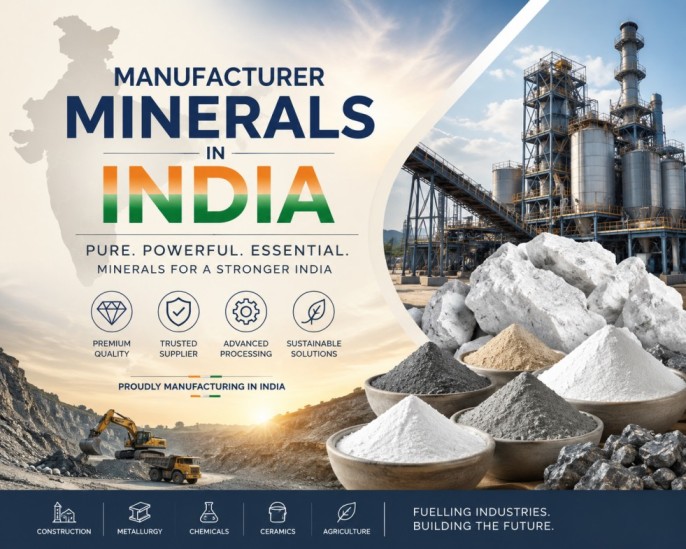
This growing industrial demand has significantly increased the role of professional Manufacturer Minerals in India that can support modern industries with organized supply systems and technically processed mineral products.
Today, companies want suppliers that can become long-term operational partners instead of simply acting as traders. Reliable supply chains, technical understanding, and consistent product performance are now essential requirements for industrial buyers across India.
Among the companies operating in this sector, HTMC Group is known for supplying industrial minerals and industrial chemical products to multiple manufacturing industries.
Why Are Industrial Minerals Important for Manufacturing Industries?
Industrial minerals are essential because they directly influence the quality, durability, efficiency, and performance of manufactured products. In many industries, minerals are not just supporting ingredients; they are core production materials that determine final product quality.
For example, the ceramics industry relies on minerals for strength and finish quality. Paint manufacturers use minerals to improve texture, brightness, and durability. Plastic industries depend on mineral fillers for improving product strength while reducing production costs. Construction sectors require minerals for cement, tiles, glass, and infrastructure materials.
Without properly processed industrial minerals, modern manufacturing systems would struggle to maintain quality standards and production efficiency.
The importance of minerals continues increasing because industries are now producing more advanced and technically specialized products. As a result, buyers are actively searching for experienced Mineral Suppliers capable of delivering consistent quality for industrial applications.
This shift has transformed the mineral sector from a traditional trading market into a highly technical and quality-focused industry.
What Problems Do Industries Face While Purchasing Raw Materials?
One of the biggest challenges for manufacturing industries is maintaining consistent raw material quality over long production cycles. Even a small variation in mineral composition can create major production issues.
Factories often face problems such as:
- Uneven particle size
- Impurities in mineral composition
- Delayed transportation
- Irregular inventory availability
- Packaging damage during transit
- Lack of technical support from suppliers
These issues may lead to machine inefficiency, product rejection, production downtime, and financial losses.
For industries operating on tight production schedules, supply interruptions can become extremely expensive. This is why many manufacturers now prefer organized and experienced Bulk Mineral Suppliers in India that can maintain stable production and delivery systems.
Professional suppliers help industries reduce operational risks by offering consistent material quality, structured logistics management, and long-term supply planning.
Why Is Consistent Quality More Important Than Cheap Pricing?
In competitive industries, product quality directly affects customer trust and market reputation. Using low-quality minerals may initially reduce procurement costs, but it often increases manufacturing problems later.
Poor-quality raw materials can result in:
- Product defects
- Lower durability
- Color inconsistency
- Production wastage
- Increased maintenance costs
- Customer complaints
- Higher rejection rates
On the other hand, consistent mineral quality improves production efficiency and helps maintain stable manufacturing standards.
This is why experienced industrial buyers often prioritize supplier reliability over short-term pricing advantages.
Professional Suppliers of Minerals in Bulk usually invest heavily in mineral testing, processing systems, and quality control procedures to ensure that industrial buyers receive technically accurate materials suitable for large-scale production.
Over time, this approach helps industries reduce operational risks and improve overall profitability.
How Has Technology Changed the Mineral Industry?
The mineral sector has changed dramatically with the introduction of modern processing technology. Earlier, many mineral operations relied heavily on manual processing methods and basic machinery. Today, advanced technology allows companies to produce highly refined industrial minerals for specialized applications.
Modern processing systems now include:
- Automated grinding units
- Particle classification technology
- Precision micronization systems
- Moisture control equipment
- High-capacity screening machines
- Laboratory-based purity analysis
- Advanced packaging systems
Technology has helped improve consistency, reduce contamination, and increase production efficiency.
Industries now expect technically processed minerals that meet exact manufacturing specifications. As a result, companies operating as professional Manufacturer Minerals in India are continuously investing in advanced infrastructure and process automation.
This transformation has also increased competition within the mineral industry, pushing companies to improve both product quality and customer service standards.
Why Do Manufacturing Industries Prefer Bulk Procurement?
Large manufacturing industries consume significant quantities of minerals every month. Purchasing minerals in small quantities often creates logistical inefficiencies and increases procurement costs.
Bulk procurement offers several advantages:
Better Production Planning
When industries maintain stable inventory levels, production scheduling becomes more predictable and efficient.
Reduced Transportation Costs
Large shipments usually reduce transportation expenses compared to repeated smaller deliveries.
Lower Risk of Production Delays
Consistent bulk supply minimizes the possibility of manufacturing interruptions caused by raw material shortages.
Improved Supplier Coordination
Long-term bulk supply agreements help create stronger operational relationships between manufacturers and suppliers.
Because of these advantages, industrial buyers increasingly prefer working with organized Mineral Distributors capable of managing high-volume supply requirements efficiently.
Which Industries Depend Most on Industrial Minerals?
Industrial minerals are used in almost every major manufacturing sector. Their applications continue expanding as industries become more technology-driven.
Construction and Infrastructure
The construction industry requires minerals for cement production, tiles, insulation materials, glass manufacturing, and infrastructure projects. Rapid urbanization and infrastructure development in India continue increasing mineral demand in this sector.
Paint and Coating Industry
Minerals are used to improve paint texture, brightness, opacity, and durability. High-quality mineral fillers also help reduce manufacturing costs while maintaining product performance.
Ceramic Industry
Ceramic manufacturers depend heavily on minerals such as feldspar, quartz, and kaolin for producing tiles, sanitaryware, and industrial ceramics.
Plastic and Polymer Industry
Industrial minerals are used as fillers and reinforcement materials to improve product strength and processing efficiency.
Agriculture Sector
Several minerals are used in fertilizers, soil conditioning products, and crop-support solutions.
Because industrial minerals influence such a wide range of sectors, the demand for dependable supply systems continues increasing across the country.
What Should Companies Check Before Selecting a Mineral Supplier?
Choosing the right supplier requires careful evaluation because mineral quality directly affects manufacturing performance.
Before finalizing a supplier, industries should evaluate several important areas.
Processing Infrastructure
Advanced manufacturing facilities usually indicate stronger production capabilities and better quality control systems.
Quality Testing Procedures
Reliable suppliers maintain laboratory testing systems to ensure chemical and physical consistency.
Supply Capacity
Industrial buyers should confirm whether suppliers can handle large and continuous order volumes.
Logistics and Transportation
Strong logistics networks are essential for timely deliveries and stable inventory management.
Technical Knowledge
Experienced suppliers often provide better recommendations regarding mineral grades and industrial applications.
Market Reputation
Companies with strong industry experience generally maintain more reliable operational systems.
These factors help manufacturers reduce long-term procurement risks and maintain stable production operations.
How Is Sustainability Influencing the Mineral Industry?
Environmental responsibility has become increasingly important across industrial sectors worldwide. Industries now prefer suppliers that follow safer and more sustainable operational practices.
Modern mineral companies are focusing on:
- Resource optimization
- Waste reduction systems
- Energy-efficient processing
- Controlled mining practices
- Dust management systems
- Safer workplace operations
Sustainability not only improves environmental performance but also strengthens business credibility in competitive markets.
As global industries move toward responsible manufacturing practices, environmentally conscious mineral suppliers are expected to gain stronger market positions in the future.
How Is the Indian Mineral Industry Expected to Grow?
India’s industrial expansion is expected to continue strongly over the next decade. Government infrastructure projects, manufacturing growth, export expansion, and urban development are all increasing demand for industrial minerals.
Several sectors are expected to drive future growth:
- Renewable energy projects
- Smart city infrastructure
- Electric vehicle manufacturing
- Specialty chemical industries
- High-performance ceramics
- Advanced construction materials
As industrial requirements become more advanced, buyers will increasingly prefer suppliers with strong infrastructure, technical expertise, and scalable production capabilities.
This growth is expected to create major opportunities for organized mineral companies operating in both domestic and international markets.
How Does HTMC Group Support Industrial Buyers?
HTMC Group works with manufacturing industries requiring industrial minerals and chemical products for large-scale applications.
The company focuses on maintaining:
- Consistent product quality
- Industrial-grade processing systems
- Bulk supply support
- Organized dispatch operations
- Customer-focused service solutions
Its products support multiple sectors including construction, ceramics, paints, plastics, chemicals, rubber, and industrial manufacturing.
The company’s operational approach is designed to meet the changing needs of industries looking for dependable sourcing and long-term supply support.
Conclusion
Industrial minerals play a foundational role in India’s manufacturing economy. As industries continue expanding, the demand for quality-focused supply systems, consistent raw materials, and organized logistics networks is increasing rapidly.
Modern industries now expect far more from suppliers than simple product availability. They require technical reliability, bulk production support, quality assurance, and stable long-term partnerships.
This has increased the importance of experienced Manufacturer Minerals in India capable of supporting advanced industrial operations efficiently.
Similarly, professional Mineral Suppliers, reliable Bulk Mineral Suppliers in India, trusted Suppliers of Minerals in Bulk, and organized Mineral Distributors continue contributing significantly to industrial growth and manufacturing stability across India.
Businesses that prioritize reliable supply partnerships are better positioned to maintain product quality, improve operational efficiency, and compete successfully in rapidly growing industrial markets.