Instant Payment vs Token Payment: Why Car Sellers Should Avoid Payment Uncertainty
-

- Published Updated
- 7,622 views
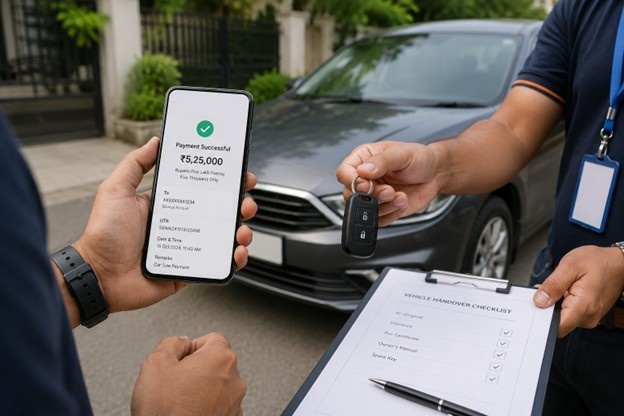
Ask any experienced used car seller what their biggest worry was during the transaction, and the answer most frequently is the payment. Not whether the car was priced fairly. Not whether the documents were in order. The payment. Specifically, whether the money would actually arrive in full, in the agreed form, before the car left their possession.
This worry is rational. Payment complications in informal used car transactions are common enough that they have created a set of widely shared bad experiences in the market. Bounced cheques from buyers who seemed reliable during negotiation. Token amounts collected followed by weeks of delay and renegotiation before the full amount arrived. Partial payments that somehow became the final payment through a process of gradual renegotiation after the seller had already committed to the transaction.
Understanding why these situations occur, and why payment certainty requires more than a buyer's promise, is the starting point for protecting yourself as a seller.
The Problem With Token Amounts and What They Actually Commit the Buyer To
A token amount, or advance payment, is a sum collected from a buyer at the time of agreement to demonstrate serious intent. In practice, token amounts in informal used car transactions often commit the buyer to very little that is legally enforceable.
The token amount is typically a small fraction of the total transaction value. A seller receiving a ten thousand rupee token on a five lakh car has received two percent of the value. The buyer knows that if they walk away, they forfeit the token. If the car's market value shifts slightly, or if they find something during a subsequent inspection that gives them renegotiation leverage, the financial cost of walking away is modest relative to the total transaction.
From the seller's perspective, accepting a token creates a different kind of commitment. The seller has effectively taken the car off the market. Other potential buyers are told the car is sold. The negotiating position changes. If the buyer then delays or attempts to renegotiate, the seller faces the choice of starting the entire process again from scratch or accepting revised terms.
Sellers who hand over the car before receiving confirmed, cleared payment are in the most vulnerable position. A buyer who takes possession of the car before full payment is completed has all the negotiating leverage. Recovering the car, or recovering the balance of the payment, from a buyer who has already driven away requires legal action that is slower, more expensive, and less certain than simply not handing over the car until payment is confirmed.
Why Bank Transfer Is Safer Than Cash for High-Value Sales
For car transactions above a few lakh rupees, cash carries specific risks that are worth being explicit about. Counting large amounts of cash under transaction pressure introduces the possibility of errors. Fake currency notes, while not the most common fraud, are a real risk in all-cash transactions. More practically, depositing large amounts of cash into a bank account after a private transaction can attract queries from the bank's compliance team about the source of funds.
Bank transfers create a paper trail that protects the seller in multiple ways. A confirmed NEFT or IMPS transfer to the seller's account creates irrefutable evidence of payment. The transaction reference number, the date and time of transfer, and the amount are all recorded and accessible to both parties through their respective bank statements. This record is valuable if any dispute arises later about whether payment was completed.
The question of whether to accept a cheque, rather than an NEFT transfer, is worth addressing directly. Cheques are not guaranteed funds. A cheque that appears valid can bounce due to insufficient funds, a stopped payment instruction from the buyer's account, or a frozen account. A bounced cheque initiates a legal process that takes months to resolve and does not guarantee recovery of the funds.
Cars24 processes payment exclusively through direct bank transfer. The payment is transferred directly to the seller's bank account before the car is picked up. There are no cheques, no cash transactions, and no intermediary handling the money. The digital transfer confirmation is verifiable by both the seller and the platform before the handover takes place.
How Instant Payment Before Pickup Changes the Negotiating Dynamic
The sequence of payment in a Cars24 transaction is deliberate. The final offer is confirmed through the live auction. The seller accepts or declines. If the seller accepts, payment is processed and the bank transfer is initiated before the car is physically picked up. The seller can verify the transfer has reached their account before handing over the vehicle.
This sequence is the reverse of how many informal transactions work. In informal markets, the car often moves first and payment clarification follows. Under the Cars24 model, payment moves first and the car moves only after confirmation.
The practical effect is that the seller is never in the position of having handed over the car without confirmed payment. The moment of handover is a routine exchange, not a moment of the platform. The financial risk has already been resolved.
The platform’s documentation confirms that in most cases, the entire process from online valuation and home inspection to payment can be completed within 24 hours, with funds in the seller's account before the vehicle leaves their possession. This speed eliminates the drawn-out waiting period that characterises many informal transactions.
What Fake UTRs and Delayed Transfers Look Like and How to Protect Against Them
Sellers who transact outside organised platforms occasionally encounter fraudulent payment confirmations. A fake UTR, or Unique Transaction Reference number, is a string that appears to be a bank transfer reference but corresponds to no actual transaction. A dishonest buyer might share a screenshot of a fake bank transfer confirmation to create the impression that payment has been made, hoping the seller will hand over the car before verifying the funds.
The defence against this is straightforward: always verify the credit in your bank account directly, not through a message or screenshot sent by the buyer. Log into your bank's own app or internet banking portal and confirm that the funds have arrived and are available. A pending transfer is not the same as a completed credit. Some transfer modes can show as pending for a period before the funds become available.
For sellers using RTGS for large amounts, the receiving bank may have a brief processing window before the funds appear in the account. NEFT transfers, which process in batches, may have short delays depending on when the batch cycle runs. In both cases, the seller should wait for the credit confirmation to appear in their account before handing over the car.
The Cars24 payment process removes this verification burden from the seller because the platform handles payment processing internally and confirms transfer completion before scheduling pickup. The seller does not need to independently verify a buyer-initiated transfer. The confirmation comes from the platform, and the pickup is only scheduled after the payment is confirmed complete.
Why Negotiation After a Final Offer Is a Payment Risk Signal
In a properly structured used car transaction, the price is agreed once through a transparent process, and payment at that price follows. Any attempt to renegotiate the price after the inspection, after the agreement, or after a token has been collected is a signal that the transaction may not complete as expected.
Post-inspection renegotiation is a common tactic in informal transactions. A buyer who agreed to a price before seeing the full inspection results may use any documented finding, however minor, as grounds to request a reduction. In many informal transactions, sellers feel pressured to accept a lower amount because they have already committed time and effort to the sale and are reluctant to restart the process.
The platform conducts the inspection and runs the auction as a unified process. The final offer from the live auction is the Cars24 offer. If the seller accepts it, the transaction proceeds at that price. There is no subsequent renegotiation based on findings that were already known at the time the offer was made.