How Better Inventory Control Helps Businesses Stay Profitable and Organized
-

- Published Updated
- 108 views
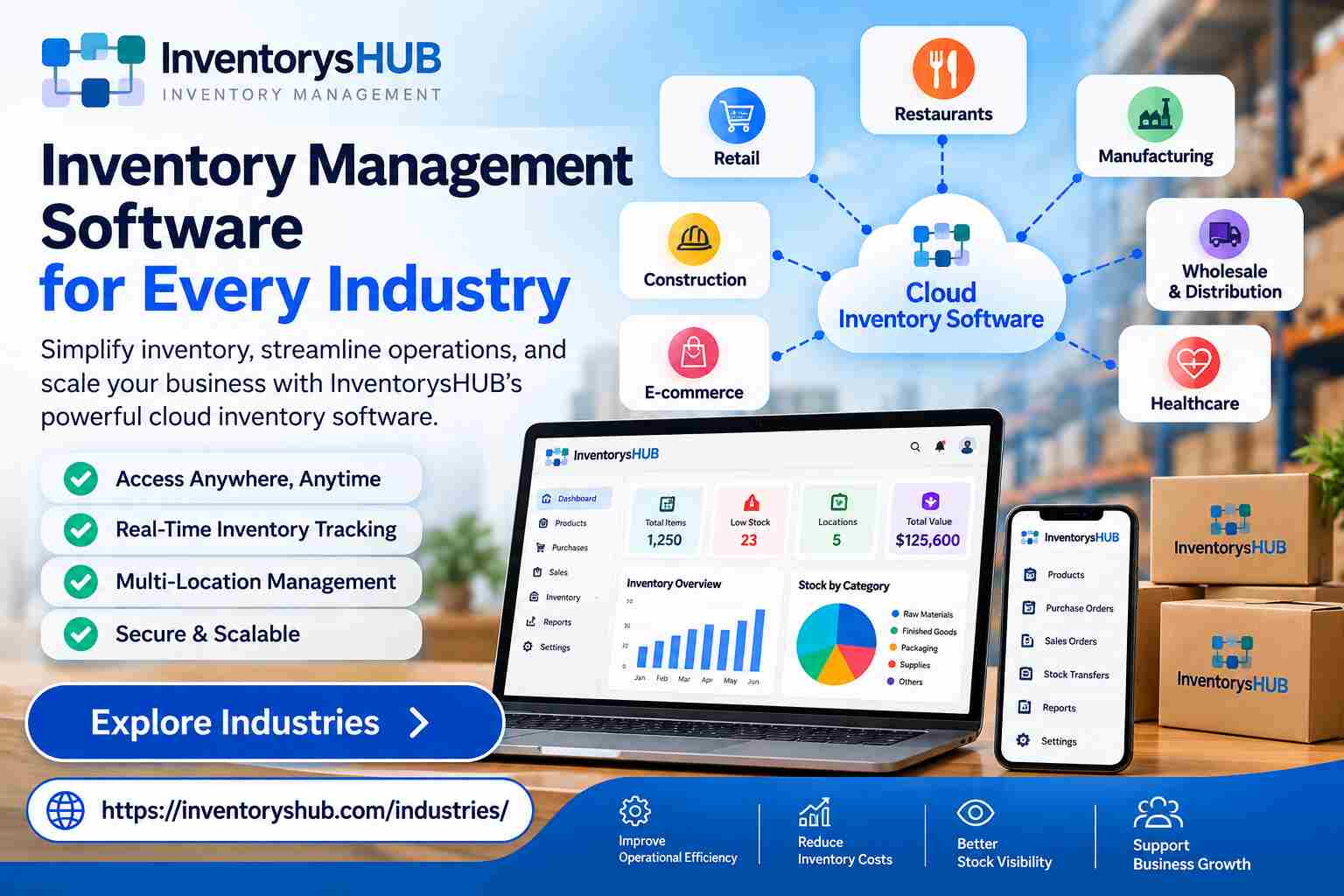
Every business wants to serve customers efficiently, control expenses, and maintain smooth daily operations. However, managing products, supplies, and materials becomes challenging when stock records are inaccurate or purchasing decisions are made without proper planning. Poor inventory control can result in unnecessary spending, delayed orders, and products sitting unused in storage. A structured approach supported by Inventory Management Software for Every Industry can help businesses improve stock visibility, organize inventory records, and make more informed operational decisions.
Why Inventory Control Matters for Modern Businesses
Inventory is closely connected to a company's financial performance. Every product stored in a warehouse represents money invested in purchasing, transportation, storage, or production. When inventory is not managed properly, businesses may lose money through excess stock, damaged products, expired materials, or missed sales opportunities.
For example, a retailer needs popular products available when customers are ready to buy. A manufacturing company must maintain sufficient raw materials to avoid production delays. Restaurants need to balance ingredient availability with freshness, while construction businesses must ensure that essential materials are available when projects require them.
Although these businesses operate differently, they share one important requirement: knowing what stock is available and understanding when additional supplies are needed.
Common Inventory Control Problems
1. Inaccurate Stock Records
When employees update inventory records inconsistently, the quantities shown in the system may not match the actual stock. This creates confusion during purchasing, order preparation, and stock verification.
Businesses can reduce these discrepancies by recording every relevant stock movement, including deliveries, sales, returns, transfers, and adjustments. Regular physical stock checks also help identify missing items and incorrect entries before they affect important decisions.
2. Unnecessary Purchasing
Purchasing products without reviewing current inventory can lead to duplicate orders and excessive storage costs. Businesses may also tie up working capital in products that are not selling quickly.
Before placing new orders, purchasing teams should review available quantities, previous demand, incoming deliveries, and supplier lead times. This simple habit helps businesses purchase according to their actual requirements rather than relying on assumptions.
3. Poor Demand Planning
Customer demand changes because of seasonal trends, promotions, market conditions, and changing preferences. Businesses that rely only on past experience may struggle to predict these changes accurately.
Reviewing historical sales, identifying popular products, and monitoring demand patterns can improve planning. Forecasts should be reviewed regularly and adjusted when actual demand differs from expectations.
4. Limited Warehouse Organization
A warehouse can contain the correct products and still operate inefficiently if employees cannot locate them quickly. Poor labeling, inconsistent storage practices, and unclear product locations increase the time required to pick, count, and dispatch stock.
Organizing products by category, assigning clear storage locations, and maintaining consistent labeling procedures helps employees locate inventory more efficiently.
Practical Ways to Improve Inventory Control
Establish Clear Stock Management Procedures
Every employee involved in inventory handling should understand how products are received, stored, moved, counted, and issued. Written procedures reduce confusion and help maintain consistent records across different shifts or departments.
Businesses should also define who can approve stock adjustments and how discrepancies should be reported. Clear responsibilities make it easier to investigate problems and maintain accountability.
Identify High-Priority Products
Not every item requires the same level of attention. Products that contribute significantly to revenue, are essential for production, or have long supplier lead times may need closer monitoring.
Businesses can categorize products according to their value, usage, and operational importance. This helps teams prioritize stock checks and allocate their time where inventory problems would have the greatest impact.
Set Appropriate Reorder Points
A reorder point indicates when a product should be replenished. Businesses should consider average demand, supplier delivery time, and an appropriate safety stock level when setting these thresholds.
For example, a product with consistent demand and a long delivery period may need to be reordered earlier than an item that is readily available from a local supplier.
Reorder points should not remain fixed forever. Reviewing them periodically helps businesses respond to changes in sales patterns and supplier performance.
Review Slow-Moving Inventory
Products that remain unused or unsold for long periods can consume valuable storage space and working capital. Regularly reviewing slow-moving inventory helps businesses identify items that may require different purchasing strategies.
Depending on the product and business model, possible actions include adjusting future order quantities, offering suitable promotions, reallocating stock between locations, or reducing purchases until existing inventory moves.
How Technology Supports Inventory Accuracy
As businesses expand, tracking stock through separate spreadsheets and manual records can become increasingly difficult. Information may be duplicated, updates may be delayed, and managers may struggle to obtain a consistent view of inventory across locations.
Inventory management technology can help organize product information and make stock movements easier to review. Depending on the solution selected, businesses may be able to monitor quantities, record incoming deliveries, review inventory reports, and coordinate stock across multiple locations.
The greatest benefit comes from combining appropriate technology with reliable operating procedures. Even a well-designed system depends on employees recording transactions accurately and following established processes.
Before adopting a solution, businesses should evaluate their product volumes, warehouse requirements, team workflows, reporting needs, and budget. The goal is to choose tools that solve practical problems without adding unnecessary complexity.
Measuring Inventory Performance
Businesses need measurable indicators to understand whether their inventory procedures are improving. Reviewing performance regularly helps managers identify problems and make adjustments based on evidence.
Useful indicators include:
Inventory accuracy: How closely recorded quantities match physical stock.
Stockout frequency: How often products become unavailable when needed.
Inventory turnover: How frequently inventory is sold or used during a particular period.
Carrying costs: The expenses associated with storing and maintaining stock.
Order fulfillment performance: How effectively the business completes customer orders on time.
These indicators should be evaluated in the context of the business. For example, high inventory turnover may be beneficial for some products, while essential spare parts may need to remain available even when they move slowly.
Regular reviews help businesses identify meaningful trends rather than making decisions based on a single measurement.
Building a More Reliable Inventory Process
Improving inventory control does not require changing every procedure at once. Businesses can begin by identifying their most frequent inventory problems, correcting inaccurate records, and establishing consistent stock-checking routines.
Next, they can improve purchasing schedules, organize storage locations, and train employees to follow standardized procedures. Once these foundations are established, suitable technology and performance reporting can provide additional visibility into daily operations.
Small, consistent improvements often create more sustainable results than complicated processes that employees find difficult to follow.
Conclusion
Effective inventory control helps businesses maintain accurate stock records, reduce unnecessary purchases, improve warehouse organization, and make better operational decisions. By combining regular stock reviews, sensible replenishment planning, clear employee responsibilities, and appropriate technology, businesses can reduce avoidable inventory problems and protect their working capital.
A reliable inventory process also creates a stronger foundation for business growth. When managers understand stock availability and purchasing requirements, they can plan more confidently, respond to changing demand, and keep daily operations organized.