Is AI for Content Writing Good? Practical Guide, Checklist & Trade-offs
-

- Published Updated
- 260 views

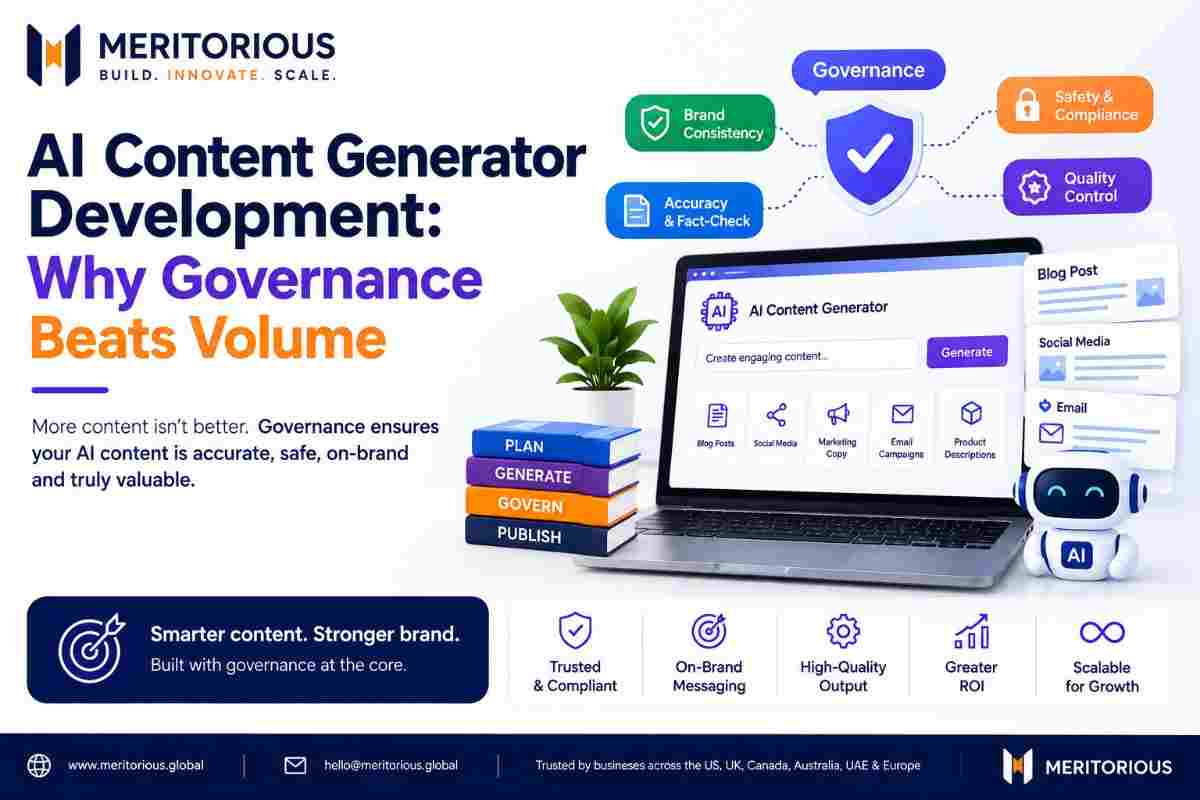
AI for content writing is a tool, not a replacement: it automates routine drafts, scales idea generation, and speeds repeated tasks while still needing human direction for accuracy, nuance, and strategic value. This guide explains where AI helps, where it fails, a simple framework to use it safely, and practical steps to get immediate results.
- AI can increase speed and volume but requires human oversight for quality, accuracy, and voice.
- Use the CLEAR Content Checklist to evaluate outputs: Clarity, Legitimacy, Engagement, Accuracy, Relevance.
- Common mistakes: over-reliance, failing to fact-check, and not tailoring AI tone to audience.
How AI for content writing helps — clear use cases
AI excels at pattern-based text tasks: drafting outlines, generating topic ideas, rephrasing, producing metadata, and summarizing long documents. This increases throughput for teams that need regular content such as product descriptions, newsletters, or SEO-driven blog posts. It also supports content iteration—producing multiple variants for A/B testing or localization adaptions.
Where AI falls short and why human control is required
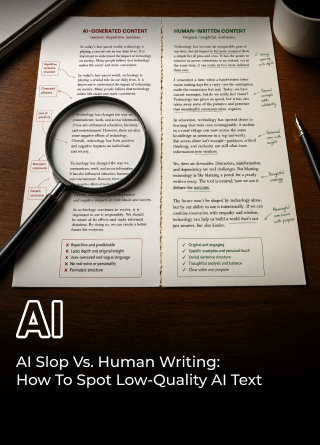
Limitations include hallucinations (fabricated facts), weak domain-specific reasoning, inconsistent brand voice, and potential copyright or privacy issues when training data is unclear. Search engines and platforms emphasize useful, people-first content; automated outputs should be edited and validated to meet those standards (Google Search Central).
CLEAR Content Checklist — a named framework for safe AI use
Use the CLEAR Content Checklist when reviewing AI drafts. Apply each step as a quick pass before publishing.
- Clarity: Is the message and call-to-action explicit?
- Legitimacy: Are claims sourced and verifiable?
- Engagement: Is the tone appropriate for the audience?
- Accuracy: Are facts, dates, and numbers correct?
- Relevance: Does the piece meet the user intent and search quality signals?
Quick real-world example
A small ecommerce team uses AI to generate initial product descriptions for 200 SKUs. The AI produces draft descriptions and SEO titles; humans apply the CLEAR Checklist to verify technical specs, add brand voice, check images and accessibility text, then run automated content quality checks for duplicates and keyword stuffing before publishing. Output speed increases while product accuracy and brand tone are preserved.
Practical tips for using AI in content production
- Define the task clearly: prompt the AI with intended audience, purpose, and constraints (word count, tone, must-include facts).
- Always fact-check: verify any specific claims, dates, names, or statistics against primary sources.
- Use AI for drafts and variants, not final publishing: treat outputs as starting points for human refinement.
- Maintain a style guide and train team members to edit AI outputs to match brand voice consistently.
- Implement automated content quality checks (duplicate detection, readability, metadata completeness) as part of the workflow.
Trade-offs and common mistakes when using AI
Trade-offs include speed versus originality, and scale versus control. Common mistakes to avoid:
- Publishing unreviewed AI text that contains inaccuracies or invented sources.
- Relying on AI to produce strategic content (e.g., cornerstone thought leadership) without expert input.
- Ignoring SEO and accessibility rules: AI-generated content must still meet structured data, alt text, and semantic markup standards.
- Using AI to obfuscate low-quality content at scale—this increases risk of penalties from platforms prioritizing human-focused content.
Workflow model: ASSIST approach for human-AI collaboration
ASSIST is a simple workflow model to manage tasks and responsibility:
- Assess task suitability — choose tasks that benefit from automation (e.g., summaries, outlines).
- Set constraints — input tone, audience, and accuracy requirements into prompts.
- Scrutinize outputs — run the CLEAR Checklist and fact checks.
- Integrate edits — apply brand voice and legal review as needed.
- Sign-off — a human approves before publishing.
- Track performance — measure engagement, accuracy issues, and revise process.
Measuring success and monitoring risks
Track metrics such as time-to-publish, revision rate, engagement, and error incidents. Establish incident handling for factual errors and a feedback loop to improve prompts and editorial standards. Keep an audit trail showing human edits and approval for compliance and quality control.
FAQ
Is AI for content writing accurate enough to publish without edits?
No. AI can produce plausible-sounding content that contains errors or invented facts. Apply the CLEAR Content Checklist, fact-check, and ensure a human review before publishing.
What types of content are best suited for AI content generation?
Routine, high-volume, or pattern-based content: product descriptions, meta descriptions, first-draft blog outlines, summaries, and language localization drafts. Strategic, technical, or investigative pieces still require subject-matter experts.
How should teams combine human editing with AI content tools?
Use a defined workflow like ASSIST: pick appropriate tasks, set prompt constraints, review outputs with the CLEAR Checklist, integrate brand and legal edits, and have a human sign-off before publishing.
What are the risks if AI-generated content is not reviewed?
Risks include factual errors, reputational harm, copyright issues, reduced search visibility if content fails people-first guidelines, and legal exposure depending on claims made.
How to run automated content quality checks for AI outputs?
Combine tools for duplicate content detection, readability scoring, metadata completeness, and accessibility checks. Pair automated checks with manual spot-checks and analytics monitoring to catch user experience or accuracy problems early.