ISO Certification in Mumbai: A Practical Guide for Businesses
-
- Published Updated
- 3,625 views
Mumbai's position as a major commercial and financial hub means businesses across manufacturing, services, and finance regularly encounter situations where demonstrating structured, reliable processes genuinely matters. ISO certification in Mumbai gives these businesses a recognized way to show that their internal operations meet consistent, verifiable standards, rather than relying on informal assurances alone.
Understanding what certification actually involves, and how to approach it strategically, helps businesses in the city treat the process as a genuine improvement opportunity rather than a formality completed only to satisfy a client request.

Why Certification Matters for Mumbai Businesses
Competing Within a Dense, High-Stakes Market
Mumbai's business environment is genuinely competitive, and certification offers a tangible way for businesses to differentiate themselves through demonstrable process discipline rather than claims alone.
Meeting Expectations from Corporate and Financial Sector Clients
Many businesses in the city work alongside large corporations and financial institutions that increasingly expect evidence of structured management systems as part of standard due diligence.
Choosing the Right Standard for Your Business
Matching the Standard to Your Priorities
Quality management, information security, environmental responsibility, and workplace safety each have dedicated standards, and choosing the right one depends on what matters most to your organization and its stakeholders.
Considering Sector-Specific Relevance
Financial and professional services firms often prioritize information security standards, while manufacturing and logistics businesses may find quality or safety standards more directly relevant to their operational risks.
What the Certification Journey Typically Involves
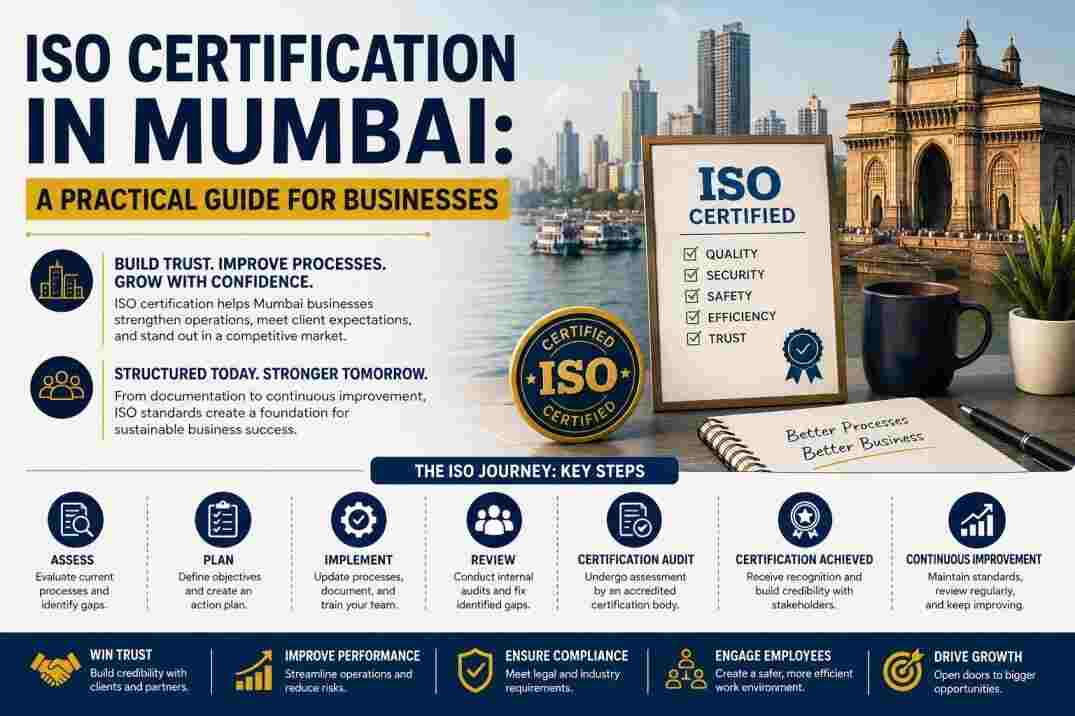
Most organizations begin by comparing current practices against the chosen standard's requirements, identifying gaps, and implementing necessary changes before undergoing formal assessment. This tends to work best when treated as a genuine operational improvement rather than a rushed documentation exercise.
Exploring isocertification in mumbai resources can help local businesses understand which standards are most relevant to their industry and what the certification process typically involves from start to finish.
Who Should Consider Certification
Manufacturing and logistics businesses supplying larger clients are common candidates, but the relevance extends well beyond that. Financial services firms, IT companies, and professional services businesses across the city increasingly pursue certification to formalize practices that support consistent, reliable operations.
Growing businesses preparing to scale or pursue larger contracts often find certification particularly useful, since it provides structure precisely when informal processes begin to strain under expansion.
Preparing Internally Before You Begin
Reviewing Current Documentation Honestly
Taking an honest look at how well current processes are actually documented, rather than assuming everything is captured accurately, helps set realistic expectations for how much preparation work lies ahead.
Identifying Internal Champions
Having at least one internal team member who genuinely understands the chosen standard and can coordinate preparation efforts tends to make the entire process considerably smoother.
Sustaining the System after Certification
Certification isn't a finish line — it reflects an ongoing commitment to maintaining the practices that earned it in the first place. Regular internal reviews and continued staff engagement help keep the system genuinely effective over time.
Common Challenges Businesses Face
Balancing Certification with a Fast-Moving Market
Mumbai's business pace can make it challenging to dedicate consistent time to certification preparation. Approaching the process in manageable phases tends to make it considerably more workable alongside daily priorities.
Building Genuine Staff Engagement
A management system only functions well if staff genuinely understand its purpose, rather than treating it as documentation imposed from above. Clear, ongoing communication about why the system matters tends to make a real difference.
What to Expect During the Process
Documenting Key Processes Clearly
Certification generally requires documenting core processes clearly enough that they can be followed consistently, regardless of which staff member happens to be involved.
Conducting Internal Reviews before Formal Assessment
Most organizations benefit from reviewing their own system internally before formal assessment, catching and correcting gaps early rather than discovering them during the actual review.
The Value of Approaching Certification Strategically
Connecting Certification to Business Development Goals
Organizations that link certification to broader goals, such as winning larger contracts or entering new markets, tend to get more genuine value from the process than those treating it as an isolated task.
Involving Leadership from the Start
Certification tends to progress more smoothly when leadership is genuinely engaged from the outset, rather than delegating the entire effort to a single department without visible organizational support.
What Makes a Strong Certification Journey
Treating Certification as a Genuine Improvement Opportunity
Businesses that treat certification as a genuine opportunity to improve, rather than a hurdle to clear quickly, tend to see far more meaningful, lasting change in how their operations function day to day.
Measuring Success beyond the Certificate Itself
The real measure of a successful certification journey isn't the certificate alone, but whether the underlying processes genuinely improved and continue delivering value well after formal assessment concludes.
Common Questions about Certification in Mumbai
Is Certification Relevant for Smaller Businesses?
Yes. Certification standards are designed to scale, and many smaller businesses find the structured approach genuinely useful for organizing operations as they grow and take on larger clients.
How Long Does the Process Typically Take?
The timeline varies considerably depending on organizational size and how mature existing processes already are, since more established systems generally require less preparation work.
Learning From Organizations That Have Already Certified
Recognizing Common Early Missteps
Organizations that rush toward certification without genuine internal buy-in often find the resulting system fragile, requiring significant rework later.
Building on Lessons from Similar Companies
Reviewing how comparable companies within your specific sector have approached certification can offer practical insight into which challenges are most likely to arise.
Bringing It All Together
As competition intensifies across Mumbai's diverse business landscape, ISO certification offers a structured, credible way to demonstrate that a business's processes genuinely meet recognized standards. Approaching the process with real commitment, rather than treating it as a box to check, tends to be what determines whether certification delivers lasting operational value across the years that follow.
Visit: