IZI GO X Lite Gimbal Guide: Practical Setup, Tips, and Trade-offs for Smartphone Creators
-
- March 20th, 2026
- 192 views

Get a free topical map and start building content authority today.
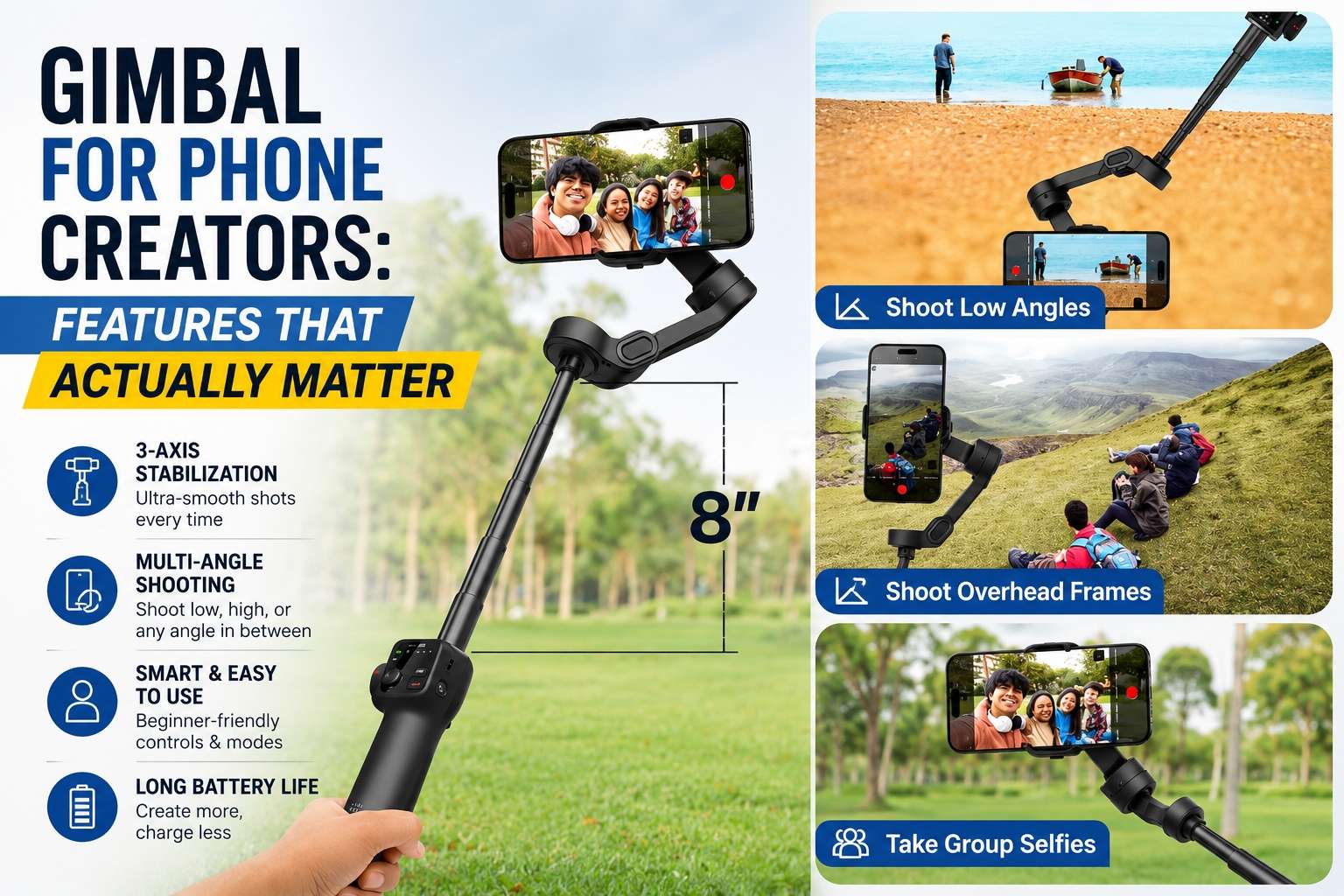
New smartphone stabilizers arrive regularly, but the IZI GO X Lite gimbal stands out as a compact option aimed at creators who need reliable, on-the-go stabilization. This guide covers what the IZI GO X Lite gimbal offers, how to set it up, real-world uses, and the trade-offs to consider before purchasing.
- Intent: Commercial Investigation
- Primary focus: evaluating the IZI GO X Lite gimbal for smartphone video and photo stabilization
- Includes a setup checklist, practical tips, common mistakes, and a short real-world example
IZI GO X Lite gimbal: Key specs and features
The IZI GO X Lite gimbal is positioned as a compact 3-axis stabilizer for smartphones, offering basic motorized stabilization, an integrated battery, and standard mounting options. Specifications commonly found in this class include a payload range suitable for most phone+case combinations, motor torque for walking shots and pans, and Bluetooth or app-based controls for follow modes and timelapse. The product targets creators wanting a portable stabilizer without the complexity of pro-grade rigs.
Who should use this smartphone gimbal for content creators?
This smartphone gimbal for content creators fits several use cases: travel vloggers who prioritize lightness, social media creators capturing handheld movement, and small-business owners recording product and demo clips. It is less suitable for heavy mirrorless setups or multi-accessory productions that require external monitors or follow-focus systems.
STABILIZE Checklist: Quick setup and best practices
Use the STABILIZE Checklist when unboxing and preparing the gimbal. This named framework ensures reliable results every session.
- Secure mount — Confirm the phone is seated and clamped tightly, including with a thin case.
- Trim balance — Adjust the axis so the phone stays level before powering on.
- Align firmware — Update the gimbal firmware and app for bug fixes.
- Battery check — Fully charge the gimbal and phone; verify battery level in the app.
- Install app — Pair the phone and test follow modes and joystick response.
- Lock settings — Use lock or follow modes that match the planned shot.
- Inspect mounts — Confirm accessory mounts (tripod, mic, lights) fit and don’t overload weight limits.
- Zoom/sensor test — Check the phone camera zoom and stabilization while moving slowly.
- Execute a short test recording — Review footage for micro-shake before important takes.
Practical setup: step-by-step actions
1. Balance the phone cold
Turn the phone off or keep the screen dark while sliding it into the clamp. Adjust the phone position until it stays roughly level without motors engaged. Proper balancing reduces motor load and conserves battery.
2. Power on and calibrate
Power the gimbal and follow any on-device calibration steps. Confirm the app recognizes the device and run auto-calibration for smoother follow behavior.
3. Choose the right mode
Use locked mode for static pans, follow mode for walk-and-talks, and sport mode only for very fast movement where some roll control is acceptable. Test each mode before critical shots.
Real-world example: travel vlogger scenario
A travel vlogger records a 3-minute walking tour through a city market. Using the IZI GO X Lite gimbal, the phone is balanced, follow mode is enabled, and a small on-camera LED provides fill light. Shots include steady forward walking, slow reveal pans of vendors, and a low-angle tracking shot. Battery lasts through two 20-minute sessions after following the STABILIZE Checklist and charging the gimbal overnight. The result is noticeably smoother footage than handheld capture, with minimal post-stabilization required.
Practical tips for better results
- Carry a small travel tripod to anchor the gimbal for timelapses or group shots.
- Use wired microphone adapters or clip-on mics to avoid Bluetooth dropouts and improve audio capture.
- Keep phone firmware and camera app optimized — sensor updates can affect image stabilization performance.
- Balance for the heaviest configuration to prevent drift when adding accessories like microphones or lights.
Trade-offs and common mistakes
Trade-offs
- Portability vs. torque: Compact stabilizers like the IZI GO X Lite gimbal are light but may struggle with heavy phones or add-ons compared with full-size 3-axis gimbals.
- Feature set vs. price: Lower cost models often omit advanced follow algorithms or payload capacity found on higher-end units.
- Battery life vs. weight: Longer runtime requires larger batteries, increasing size and weight.
Common mistakes
- Failing to balance the phone before powering on — leads to motor strain and reduced runtime.
- Using sport mode for slow walking — causes jittery footage in slow-motion segments.
- Ignoring firmware updates — misses stabilization improvements and bug fixes.
Core cluster questions
- How to set up a smartphone gimbal for smooth video?
- What are the main differences between compact 3-axis stabilizers and full-size gimbals?
- How long does a typical gimbal battery last in real use and how should it be charged?
- Can a gimbal work with phone cases, external mics, and small lights attached?
- Which stabilization settings work best for vlogging, slow motion, and tracking shots?
Safety and battery guidance
Rechargeable lithium-ion batteries are standard in handheld stabilizers. Follow manufacturer charging instructions and avoid exposure to extreme temperatures. For authoritative consumer guidance on lithium-ion battery safety, refer to the CPSC lithium-ion battery safety guidance.
FAQ
Is the IZI GO X Lite gimbal worth buying for smartphone creators?
It is worth considering if portability and ease-of-use are primary priorities. For creators needing a lightweight stabilizer for vlogging, travel, or casual social media production, the IZI GO X Lite gimbal offers good value. However, for heavier phones, pro accessories, or demanding motion work, a larger gimbal with higher payload and torque is a better fit.
How long does the gimbal battery usually last and how should charging be handled?
Battery life varies by model and usage; typical runtimes in this class run from 6 to 12 hours on standby and 3 to 8 hours of active use. Charge fully before a shoot and carry a power bank or spare battery solution when extended shooting is planned.
Can the gimbal stabilize phones with bulky cases or lenses attached?
Most compact stabilizers handle phones with slim cases, but bulky cases, clip-on lenses, or stacked accessories may exceed payload limits. Remove oversized cases or use a lighter configuration for reliable stabilization.
What are the best practice settings for vlogging and walking shots?
Use follow mode for walking shots and locked mode for static pans. Enable low-speed follow or increase stabilization smoothing in the app to reduce micro-jitter. For quick movements, a higher responsiveness or sport mode can be used sparingly.
How to maintain and store a small gimbal to extend its life?
Store the gimbal balanced in a protective case, avoid leaving batteries fully discharged for long periods, update firmware periodically, and clean moving parts from dust and salt after outdoor use.