Kerassentials Review: Ingredients, Evidence, and Safety Guide Before Buying
-
- March 23rd, 2026
- 254 views
Researching a topical or supplement approach for nail fungus often starts with product searches. This Kerassentials review explains what the product claims, what its listed ingredients do, where evidence exists, and practical safety checks to use before buying.
- Detected intent: Commercial Investigation
- Primary keyword: Kerassentials review
- Core takeaways: Kerassentials contains plant extracts and oils commonly used for skin and nail health; clinical evidence for oral or topical antifungal efficacy is limited for many ingredients; consult a clinician for persistent onychomycosis.
- Core cluster questions:
- What ingredients are in Kerassentials and what do they do?
- How does topical Kerassentials compare to prescription antifungals?
- Are there safety or allergy concerns with natural nail treatments?
- How long does it take to see improvement in nail fungus?
- What clinical evidence supports oil-based nail treatments?
Kerassentials review: ingredients, evidence, and safety
What Kerassentials is and how it is marketed
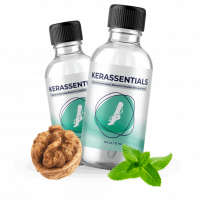
Kerassentials is sold as a topical nail and skin serum that promises to improve nail appearance and support healthy skin around the nail. Products like this typically combine carrier oils, plant extracts, and sometimes active antifungal botanicals. Packaging and marketing often emphasize "natural" ingredients and user testimonials rather than clinical trials.
Kerassentials ingredients: what's inside
Common ingredient categories listed for products of this type include:
- Carrier oils (e.g., almond oil, jojoba oil) — used to hydrate and help delivery of actives.
- Essential oils (e.g., tea tree oil, lavender) — some have laboratory antifungal activity but variable clinical results and allergy risk.
- Plant extracts (e.g., lemongrass, clove) — often included for antimicrobial properties.
- Vitamin or antioxidant additives (e.g., vitamin E) — support skin barrier health rather than direct antifungal action.
None of these categories alone guarantees cure of fungal nail infections (onychomycosis). For clinically significant infections, dermatology guidelines prioritize proven topical prescription agents or oral antifungals depending on severity.
Evidence and standards — what to expect
Laboratory (in vitro) studies may show antifungal activity for some essential oils and extracts. However, translating lab activity into reliable clinical cure in nails is challenging because the nail plate is a tough barrier and treatment duration must be long. Official sources on fungal diseases, such as the U.S. Centers for Disease Control and Prevention, outline standard approaches for diagnosis and treatment of onychomycosis and emphasize evidence-based therapies. CDC: Onychomycosis (nail fungus)
Checklist: CLEAR model to evaluate topical nail products
Use the CLEAR checklist to quickly assess a nail product before purchase.
- Composition — Are ingredients listed clearly with concentrations?
- Labeling — Does packaging state intended use, warnings, and manufacturer contact?
- Evidence — Any published studies, clinical trials, or third-party testing available?
- Allergies & interactions — Are potential allergens noted (essential oils) and interactions disclosed?
- Regulatory context — Is the item sold as a cosmetic, supplement, or drug? Drug claims require regulatory approval.
Real-world example
A 56-year-old with yellowed, thickened toenails used a natural oil serum daily for 6 months with modest cosmetic improvement but persistent fungal infection confirmed by laboratory testing. After consulting a dermatologist, the clinician recommended a course of prescription topical ciclopirox and debridement, which produced clearer results over 9–12 months. The serum helped nail hydration but was not the primary antifungal treatment in this case.
Practical tips before buying or using Kerassentials
- Check the ingredient list for known allergens (tea tree oil, citrus oils) and perform a patch test on skin before applying to nails.
- If nails are painful, discolored with separation from the nail bed, or symptoms worsen, seek medical evaluation rather than relying only on over-the-counter oils.
- Use the product consistently and long enough to judge effect — nails grow slowly; expect months to notice visible change if any.
- Avoid mixing unverified products with prescription topical medications without clinician approval to prevent interactions or irritation.
- Document baseline photos and symptoms to track changes objectively over time.
Trade-offs and common mistakes
Trade-offs:
- Natural ingredients can be gentler but may lack robust clinical proof for cure compared with prescription antifungals.
- Topical oils may improve nail appearance but usually act slower and less reliably than prescription options for established onychomycosis.
Common mistakes:
- Assuming "natural" equals safe — essential oils can cause contact dermatitis or photosensitivity.
- Stopping treatment too early — nail recovery requires long courses and patience; premature judgment leads to false conclusions.
- Using consumer testimonials as proof — anecdote is not a substitute for controlled studies.
When to see a clinician
Consult a primary care provider or dermatologist when diagnosis is uncertain, symptoms are severe, or if underlying conditions (diabetes, peripheral vascular disease, immunosuppression) raise risk. Clinicians can confirm diagnosis with microscopy or culture and recommend topical prescription treatments (e.g., ciclopirox, efinaconazole) or oral antifungals when appropriate.
Core cluster questions for related articles and internal linking
- What ingredients are in Kerassentials and what do they do?
- How does topical Kerassentials compare to prescription antifungals?
- Are there safety or allergy concerns with natural nail treatments?
- How long does it take to see improvement in nail fungus?
- What clinical evidence supports oil-based nail treatments?
Kerassentials review: Is it effective for nail fungus?
Effectiveness depends on the severity and type of nail problem. For mild cosmetic concerns, oil-based serums may improve hydration and appearance. For confirmed fungal infections, expect limited likelihood of cure from unproven oils alone; evidence supports prescription topical or oral antifungals for reliable results. Clinical evaluation is recommended for persistent or severe cases.
Can Kerassentials ingredients cause side effects?
Yes. Essential oils and botanical extracts can cause contact dermatitis, irritation, or allergic reactions. Patch testing and reading ingredient lists carefully reduces risk. Discontinue use and seek medical advice if severe skin reactions occur.
How long before a treatment shows nail improvement?
Nails grow slowly. Expect at least 3–6 months to see visible changes in fingernails and 6–12 months for toenails; full cosmetic recovery can take longer. This is true for both natural and prescription approaches, though prescription agents may produce higher cure rates in clinical trials.
Do medical guidelines recommend natural oil treatments?
Major dermatology guidelines focus on treatments with demonstrated clinical efficacy. Natural oils with in vitro antifungal activity are sometimes discussed, but most guidelines recommend evidence-based topical or systemic antifungals for onychomycosis management.
Where to find reliable information on fungal nail disease?
Trusted sources include public health and specialty organizations such as the U.S. Centers for Disease Control and Prevention and professional dermatology societies. The CDC provides an overview of onychomycosis diagnosis and treatment approaches. CDC: Onychomycosis (nail fungus)