Massage Chair Buying Guide: Everything to Know Before You Choose One
-

- Published Updated
- 4,710 views
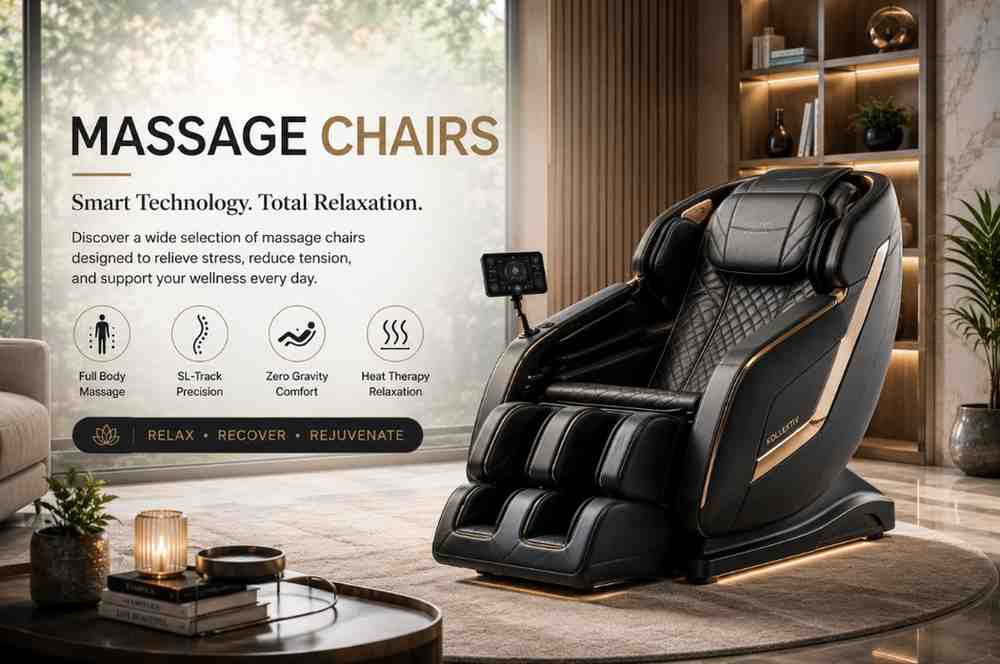
A massage chair is one of those purchases that looks simple from the outside — sit down, press a button, get a massage — until you actually start comparing models and realize how much variation exists underneath that basic idea. Track types, roller technology, airbag counts, recline positions, price tiers spanning thousands of dollars: the category is a lot more layered than it first appears.
This guide walks through what a massage chair actually does, the features that matter most, realistic price expectations, and how to figure out which type fits your specific needs rather than just picking whichever one looks nicest in photos.
What a Massage Chair Actually Does
At a mechanical level, a massage chair combines a few core systems working together:
- Rollers, embedded in the backrest, that move along a track to knead, press, and glide across the back and spine.
- Airbags, positioned around the arms, shoulders, hips, calves, and feet, that inflate and deflate to apply compression the rollers can't reach.
- Recline mechanisms, ranging from basic reclining seats to full zero-gravity positioning that lifts the legs to roughly heart level.
- Heat elements, usually concentrated at the lower back, that warm muscles to make the massage more effective.
- A control system, whether a physical remote, touchscreen, or app, that runs pre-set programs or allows manual adjustment.
Together, these systems are designed to replicate — not perfectly, but meaningfully — what a human massage therapist does by hand, on demand and without needing to book an appointment.
Key Features to Understand Before Comparing Models
Track type
The track determines how far the rollers can travel along your back. L-track systems curve at the base to reach the glutes; SL-track systems extend that curve further, following the spine's natural shape from the neck down through the hips. Longer tracks generally mean more complete coverage, particularly for the lower back and glutes.
Roller technology
Roller systems have evolved through generations: 2D rollers move in a fixed pattern with constant pressure; 3D rollers add adjustable depth; 4D rollers add dynamic changes in speed and rhythm during a session, closer to how a human hand actually varies pressure. Higher generations generally mean a more natural, less repetitive feel.
Airbag count and placement
Airbags handle compression across areas rollers can't reach — arms, hands, hips, calves, feet. More airbags, spread across more zones, generally means more complete full-body coverage rather than a chair that's really only focused on the back.
Zero-gravity recline
This position elevates the legs to roughly heart level, reducing spinal pressure and distributing weight more evenly. It's become close to a standard feature outside of the most basic entry-level chairs.
Heat therapy
Localized heat, typically at the lumbar area, works alongside the massage program to loosen muscles before rollers and airbags engage. It's common on mid-range chairs and above.
Massage Chair Price Tiers: What to Expect
| Tier | Typical Price | What's Usually Included |
|---|---|---|
| Entry-level | $1,000–$2,000 | Basic L-track, 2D/3D rollers, limited airbags, simple recline |
| Mid-range | $2,000–$4,500 | Extended tracks, 3D/4D rollers, moderate-to-high airbag counts, zero gravity, heat |
| High-end / luxury | $4,500–$9,000+ | 4D rollers, extended SL-tracks, 40+ airbags, body scanning, voice/app control |
Sale periods can shift these ranges considerably, with discounts of 30–70% common during major promotional events, so it's worth checking current pricing before assuming a tier is out of reach.
Who Benefits Most From Owning a Massage Chair
People managing chronic tension from desk work. Prolonged sitting tends to concentrate tension in the neck, shoulders, and lower back — exactly the areas most massage chair programs are built around.
Active individuals recovering from exercise. Post-workout muscle soreness responds well to the combination of roller pressure, airbag compression, and heat that a massage chair provides in a single session.
Anyone who travels frequently. Long flights and drives contribute to lower back stiffness and leg swelling, both of which zero-gravity recline and calf/foot airbags are specifically designed to address.
Households looking to reduce ongoing massage therapy costs. A single professional massage session commonly costs $80–$150; frequent users often recoup the cost of a mid-range chair within a year or two of regular use.
Common Mistakes When Buying a Massage Chair
- Focusing only on price. The cheapest chair in a comparison often cuts track length or airbag count in ways that noticeably affect the actual massage experience.
- Skipping room measurements. Most chairs need close to 30 inches of doorway clearance plus additional space behind for a full recline — measuring beforehand avoids a delivery-day surprise.
- Assuming "full body" always means complete coverage. The label gets applied loosely across the market; actual coverage depends on track length and airbag placement, not the name alone.
- Overlooking warranty terms. A massage chair is a multi-year purchase, and warranty length and coverage details matter as much as the feature list.
- Not accounting for body fit. Height and weight capacity vary significantly between models — checking your own measurements against the spec sheet avoids a chair that doesn't fit comfortably.
How to Match a Chair to Your Actual Needs
Rather than starting with a budget or a specific model, it helps to start with what you're actually trying to solve:
- Identify your primary issue — general tension, travel recovery, workout recovery, or a mix — and prioritize features that directly address it (zero gravity for travel, 4D rollers for general daily tension, targeted airbags for specific muscle groups).
- Set a realistic budget range based on the tier that includes the features you actually need, rather than the highest-spec chair available.
- Confirm your space can accommodate the chair's clearance requirements before narrowing down specific models.
- Check body fit specs against your own height and weight, especially if buying for a household with multiple users.
- Compare warranty and return terms across your shortlist, since these vary more than people expect between otherwise similar chairs.
FAQ
How much does a good massage chair cost? Entry-level chairs typically start around $1,000–$2,000, mid-range models run $2,000–$4,500, and high-end or luxury chairs range from $4,500 to $9,000 or more, though sale pricing often brings these down significantly.
What's the difference between a massage chair and a regular recliner with vibration? A true massage chair uses rollers that move along a track to knead and press the back, combined with airbags for compression elsewhere on the body. Basic vibrating recliners typically only offer surface-level vibration without the mechanical roller and airbag systems.
Is a massage chair worth it compared to regular professional massages? For frequent users, often yes — a single professional massage typically costs $80–$150, so regular use can exceed the cost of a mid-range chair within a year or two, after which sessions are effectively free.
How much space does a massage chair need? Most models require roughly 30 inches of doorway clearance and additional room behind the chair for a full recline, though exact requirements vary by track length and model.
Do massage chairs come with a warranty? Most reputable brands offer standard warranties, commonly in the 2–3 year range, with extended coverage often available on higher-end models. Terms vary meaningfully between brands, so it's worth checking before purchasing.
How often should I use a massage chair for real benefit? Many users find noticeable benefit from 15–20 minute sessions, three to five times a week, though frequency can be adjusted based on personal comfort and activity level.
Final Thoughts
Choosing a massage chair comes down to matching features to how you'll actually use it, rather than chasing the highest spec sheet or the lowest price tag. Track length, roller technology, and airbag placement tend to matter more for day-to-day comfort than secondary extras, and taking the time to measure your space and check body-fit specs upfront avoids the most common buying mistakes. With a clear sense of your actual needs, it's realistic to land on a chair that delivers real, consistent value well beyond the initial purchase.
Originally published on:
https://kollecktiv.com/product-category/massage-chair/