Not All Tall Bodies Are Tall the Same Way: A Body-Type Guide to Massage Chair Fit
-

- Published Updated
- 2,380 views
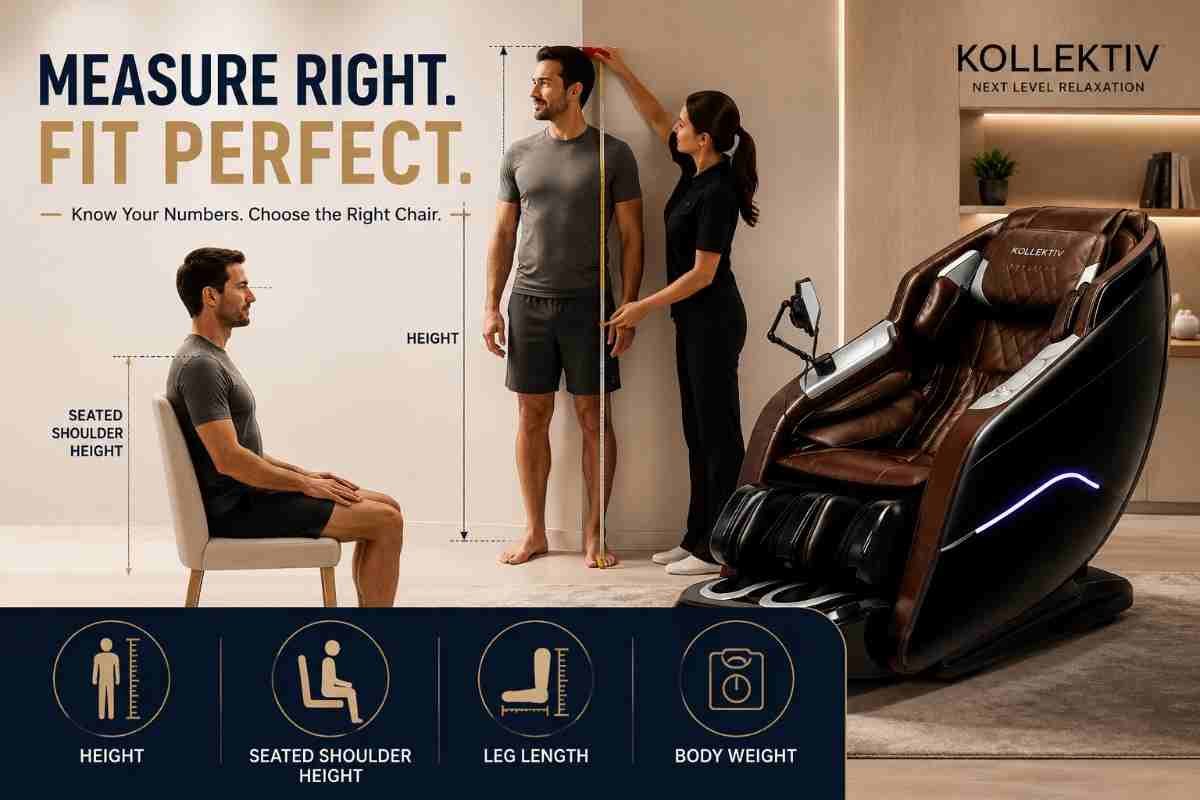
Quick answer: A massage chair’s fit isn’t decided by your height alone – it’s decided by four of your measurements matched against four numbers on the chair’s spec sheet: your standing height vs. the maximum supported height, your seated shoulder height vs. where the track starts, your leg length vs. the footrest extension range, and your weight vs. the rated capacity. Measure yourself first, then compare. That order matters more than most buyers realize.
"I'm 6'2", so I need a chair rated for 6'2"" sounds like sound logic, right up until it isn't. Two people at the exact same standing height can have completely different proportions — one carrying most of that height in a long torso, the other in long legs — and those two people need meaningfully different things from the same chair. Our Kollecktiv Massage Chairs for Tall People measurement guide walks through the specific numbers to take before you buy. This piece takes a step back and looks at the problem through a different lens: which body-type category you actually fall into, and what that category should be prioritizing.
Why "Tall" Isn't One Category
Standing height is a single number that hides a lot of variation underneath it. A chair engineered around an "average tall" proportion — moderate torso length, moderate leg length, both scaled up together — can genuinely underperform for someone whose height comes from an unusual proportion split, even if that person's standing height sits comfortably within the chair's published range. The chair isn't wrong for "tall people" in general; it's wrong for a specific type of tall body.
Recognizing which type you are is a faster way to know what to prioritize than working through every individual spec in isolation.
Type 1: The Long-Torso Body
If most of your height comes from your upper body rather than your legs, you'll typically notice this most clearly when sitting rather than standing — your shoulders sit noticeably higher relative to a seat than someone of average torso proportion at the same standing height.
What goes wrong for this body type: Neck and shoulder rollers that land too low, stopping around the mid-back instead of reaching the neck and shoulders where the tension actually is. The chair's overall height rating can clear your standing height easily while the track still runs out of room before it reaches you properly.
What to prioritize: Track length specifically, not just the chair's stated maximum height. A longer SL-track gives the rollers enough travel distance to still reach your upper back and shoulders even after covering the extra distance created by a longer torso.
Type 2: The Long-Leg Body
If your height comes disproportionately from your legs rather than your torso, your seated shoulder height will read closer to average even at a taller standing height — the difference shows up below the waist instead.
What goes wrong for this body type: A footrest that stops a few inches short, leaving your calves and feet extending past the roller and airbag zone rather than resting fully within it. The upper-body massage can feel completely appropriate while the lower body gets shortchanged.
What to prioritize: Footrest extension range specifically. An auto-extendable or electrically adjustable footrest, rather than one with a short fixed range, is what actually adapts to a longer leg measurement instead of forcing your legs to adapt to the chair.
Type 3: The Broad-Framed Body
Height and shoulder width don't always scale together. Someone tall and comparatively narrow-framed can fit a standard-width seat comfortably, while someone tall and broad through the shoulders and chest may find that same seat feels tight, regardless of how well the height rating fits.
What goes wrong for this body type: A chair that clears your height rating easily but feels constrictive across the shoulders or hips during recline, an issue standing height alone won't reveal.
What to prioritize: Published seat width and shoulder width specifically, where available. Not every manufacturer lists these numbers, but where they do, it's worth checking them directly rather than assuming a chair's height compatibility guarantees width compatibility too.
Type 4: The Proportionally Tall Body
Some tall buyers genuinely are built close to the "average tall" proportion the chair was engineered around — torso and legs scaled up together fairly evenly.
What this body type gets right by default: A chair's overall height rating is a fairly reliable single indicator for this proportion type, since torso and leg length are both roughly in line with what the manufacturer assumed when building the chair.
What's still worth checking: Even with proportionate scaling, it's worth confirming the chair's maximum height rating gives you real margin rather than sitting right at the ceiling — a chair rated to your exact height, with no buffer, tends to feel tighter in practice than the number alone suggests.
A Quick Way to Identify Your Type
If you're not sure which category fits, this rough test helps: sit upright in a regular dining chair with your back against the seat back. If your shoulders feel notably high relative to the chair back compared to what you'd expect for your height, you're likely long-torso. If your legs feel like they extend well past a typical footrest position when you stretch them out, you're likely long-leg. If neither stands out and everything feels roughly proportionate, you're likely in the proportionally tall category — standard height-range comparisons will probably serve you reasonably well.
Comparing the Four Types at a Glance
| Body Type | Where the Mismatch Shows Up | What to Prioritize |
|---|---|---|
| Long-torso | Neck/shoulder rollers landing too low | Track length, not just height rating |
| Long-leg | Feet and calves extending past the footrest | Footrest extension range |
| Broad-framed | Tightness across shoulders or hips | Published seat and shoulder width |
| Proportionally tall | Generally fits well, but check margin | Buffer below the stated max height |
Why This Matters More Than Just Reading the Height Range
A chair's published height range is built around an assumed proportion, not a guarantee for every body that happens to fall within that number. Identifying which of these four categories actually describes your body lets you skip straight to the spec that matters most for your specific proportions, rather than treating every number on the spec sheet as equally important to your particular fit.
FAQ
Can two people with the same height need completely different massage chairs? Yes. Standing height doesn't capture how that height is distributed between torso and legs, and that distribution determines whether track length or footrest reach matters more for a given person.
How do I know if I'm long-torso or long-leg for massage chair purposes? Sit upright in a regular chair with your back against the seat back. Notably high shoulder position relative to the chair suggests long-torso; legs extending well past a typical footrest position suggests long-leg.
Does shoulder width matter separately from height for massage chair fit? Yes. Height and shoulder width don't always scale together, so a chair that comfortably fits your height rating can still feel narrow through the shoulders if that specific measurement isn't checked separately.
What if I don't fit clearly into any of these categories? If your proportions feel generally balanced relative to your height, you likely fall into the proportionally tall category, where a chair's stated height range is a fairly reliable single indicator, though it's still worth leaving some margin below the maximum rating.
Is footrest extension range something all massage chairs offer? No, some chairs have a fixed, short-range footrest rather than an auto-extendable or electrically adjustable one. This distinction matters most for long-leg body types specifically.
Final Thoughts
"Tall" isn't a single body type, and treating it as one is exactly how a chair that technically clears your height rating still ends up feeling like a mismatch once you're actually sitting in it. Identifying whether you're long-torso, long-leg, broad-framed, or proportionally tall tells you which specific number to prioritize — and our Kollecktiv Massage Chairs for Tall People guide walks through exactly how to take those measurements yourself before comparing them against any chair's spec sheet.