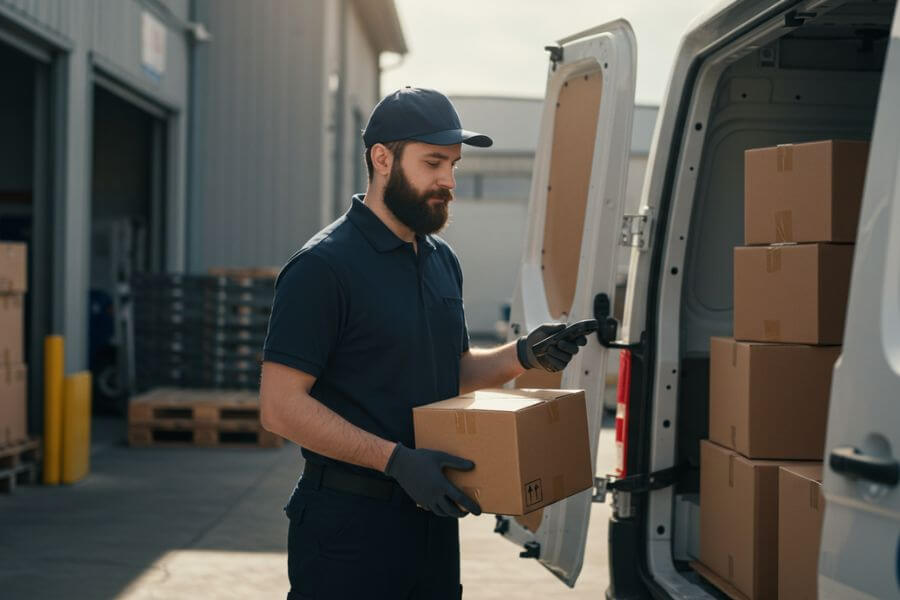
Cut Costs and Save Time: 5 Ways Material Handling Carts Improve Warehouse Efficiency
-

- February 23rd, 2026
- 1,265 views

Get a free topical map and start building content authority today.
Material handling carts are a common element in warehouses, retail backrooms, manufacturing floors, and healthcare facilities because they streamline movement of goods and reduce the time and money spent on repetitive transport tasks.
- Material handling carts lower labor costs by reducing trips and manual lifting.
- They improve workplace ergonomics and safety, cutting injury-related downtime.
- Better handling prevents product damage and lowers replacement and waste expenses.
- Customized cart systems raise throughput and support lean workflows.
- Modular carts enable scalability and faster adaptation to changing operational needs.
Material handling carts reduce labor time and associated costs
One of the most direct savings from material handling carts is reduced labor time. Carts allow a single worker to move larger volumes or heavier loads in fewer trips, lowering total hours required for transport tasks and increasing effective labor productivity.
Fewer trips, faster cycles
Using carts sized to match common load volumes shortens cycle time for restocking, picking, and delivery tasks. Reduced walking and handling time contributes to higher throughput per worker and can decrease reliance on overtime during peak periods.
Task consolidation and cross-training
Carts support consolidation of related tasks—such as picking and transport—so staff can complete multiple steps in one trip. This can simplify scheduling and reduce the headcount needed for a given workload without altering shift patterns.
Improve safety and ergonomics to lower injury-related expenses
Ergonomics is a major factor in workplace injury rates. Properly designed material handling carts reduce manual lifting, twisting, and awkward postures, helping lower the incidence of musculoskeletal disorders (MSDs) and the costs associated with workers' compensation and lost time.
Design features that protect workers
Adjustable handles, appropriate wheel types for floor surfaces, and load platforms at ergonomic heights reduce strain. Using carts for heavy or bulky items decreases reliance on manual lifts that are common sources of injury.
Regulatory guidance and best practices
Regulatory bodies and research organizations publish guidance on safe materials handling and ergonomics. Following industry standards and guidance can help reduce regulatory risk and improve workplace safety culture. Relevant recommendations are available from occupational safety authorities and ergonomics research groups; for general U.S. workplace references see the OSHA materials handling resource at osha.gov/SLTC/materialhandling.
Prevent product damage and reduce inventory losses
Damaged goods create direct replacement costs, delays, and customer dissatisfaction. Material handling carts with secure shelving, clip-in bins, or cushioning reduce the chance of product drops, collisions, and stack collapse.
Protection features
Options such as enclosed sides, floor-level straps, and soft-edge bumpers protect fragile items and help prevent load shifts during transport. Fewer damaged units mean lower write-offs and fewer expedited replacement shipments.
Better inventory accuracy
Organized carts designed for specific SKUs simplify counting and reduce mis-picks, improving inventory accuracy and lowering the labor and financial costs of reconciliation.
Increase throughput and streamline workflows
Material handling carts support faster, more consistent workflows by enabling continuous movement, batch processing, and efficient route planning. These improvements reduce delays and increase the volume of work completed per shift.
Support for lean and just-in-time operations
Carts that fit into Kanban or pick-face systems reduce travel time between replenishment points and production lines. Integration with standard operating procedures helps maintain steady flow and minimize inventory buffers.
Compatibility with automation and conveyors
Carts can be configured to interface with conveyors, staging areas, or AGV/AMR systems, enabling semi-automated workflows that raise throughput without full-scale capital investments.
Flexible, scalable solutions that lower long-term costs
Investing in modular, durable carts supports changing operational needs. Scalable carts avoid repeated one-off purchases and can be repurposed as processes evolve, improving return on investment over time.
Modularity and customization
Interchangeable shelves, bins, and attachments let a single cart type serve multiple roles—picking, kitting, returns handling—reducing the need for separate specialized vehicles.
Durability and lifecycle costs
Higher-quality carts may cost more upfront but often reduce total cost of ownership through fewer replacements, lower maintenance, and consistent performance. Tracking lifecycle metrics helps compare purchase costs against operational savings.
Implementation tips to maximize savings
Match carts to tasks and facilities
Perform a workflow analysis to determine optimal cart sizes, wheel types, and ergonomic features. Consider floor types, aisle widths, and typical load weights when specifying equipment.
Train staff and monitor performance
Provide training on safe pushing/pulling techniques and standardized loading procedures. Monitor metrics such as cycle time, damage rates, and near-miss incidents to quantify benefits and refine practices.
Frequently asked questions
How do material handling carts reduce labor costs?
Carts reduce the number of trips and amount of manual handling required to move goods. This shortens cycle times, increases the amount of work completed per worker, and can reduce overtime and headcount needs for transport tasks.
Are material handling carts a safe solution for heavy loads?
When selected and used correctly, carts designed for specific load weights, with appropriate wheels and braking, improve safety compared with repeated manual lifts. Proper training and maintenance are essential to maintain safe operation.
Can carts be integrated with automated systems?
Yes. Many carts can be adapted to work with conveyors, staging docks, and semi-automated systems. Planning for compatibility during procurement reduces integration costs later.
What maintenance is needed to keep carts cost-effective?
Regular inspection of wheels, handles, and fasteners, timely replacement of worn components, and periodic cleaning extend service life and prevent unexpected downtime.
Related Posts