Building Stronger Science Programs with Microscopes for Education
-

- August 20th, 2026
- 2,733 views
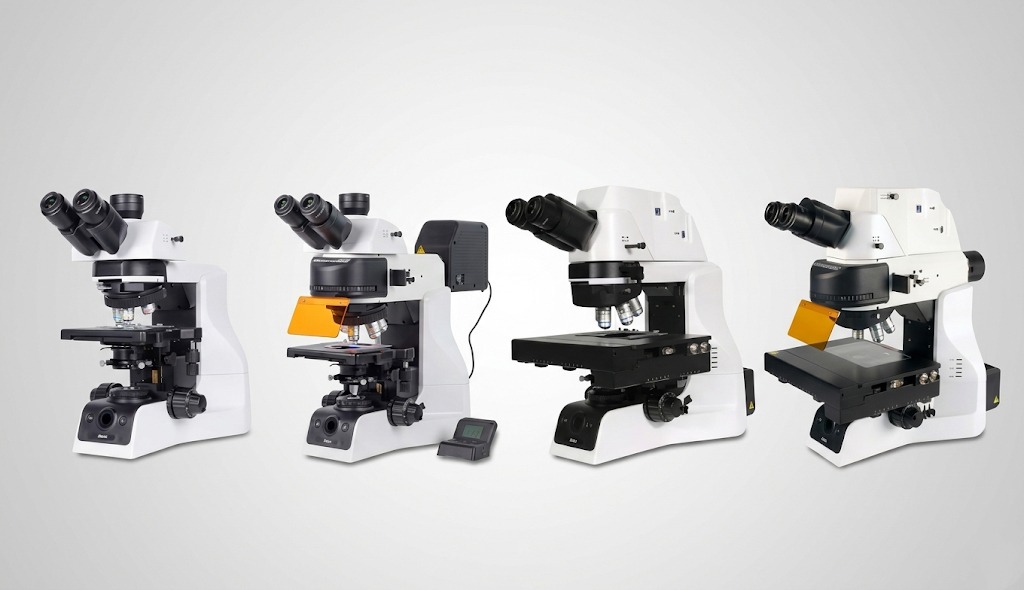
Most science classrooms still look the way they did a generation ago. Textbooks open, diagrams on the board, students copying notes. The content has changed, but the experience largely has not.
That gap is exactly where microscopes for education earn their place. Not as fancy equipment that sits in a cabinet, but as the thing that makes abstract science suddenly feel real to a 12-year-old staring at a living cell for the first time.
Strong science programs are built on moments like that. The right tools make those moments possible, and repeatable.
Why Science Class Works Better When Students Actually Do Something
Passive learning has a ceiling. At some point, diagrams and definitions stop sticking, and students start tuning out. Here is why hands-on science has become the standard worth protecting:
Curiosity needs a trigger. Reading about microorganisms is forgettable. Watching them move in a water sample is not. That single moment of visual confirmation does more for a student's engagement than three lesson plans combined.
Abstract concepts become concrete faster. Cell walls, tissue layers, pollen structure, these ideas land differently when students can observe them directly rather than imagine them from a labeled sketch.
Retention improves significantly with lab-based learning. Inquiry-driven science, the kind that educational microscopes support naturally, has consistently shown stronger knowledge retention compared to lecture-only instruction across multiple studies.
It builds scientific habits early. Observation, patience, recording findings, questioning what you see, these are real skills. Students develop them at the microscope, not at their desks.
Science education that skips the hands-on component is always going to feel incomplete.
What Actually Makes a Microscope Work in a Classroom
Not every microscope belongs in a school. Some are built for research labs where trained professionals handle them carefully. Others are designed with classrooms in mind, where 30 students share the same unit across multiple periods every single day.
That difference matters more than most buying guides admit.
Durability Comes Before Everything Else
A microscope for education needs to survive real classroom conditions. Metal-bodied units hold up. Plastic ones rarely last a full academic year under shared use.
Simplicity Determines Whether Students Actually Use It
If focusing takes too much effort or the controls feel confusing, younger students give up quickly. Smooth knobs, clear labeling, and intuitive design keep the learning on track rather than on the equipment.
Optical Quality Cannot Be an Afterthought
Crisp, accurate imagery is the whole point. A blurry or distorted view teaches students nothing useful and creates frustration fast.
Magnification Range Should Match the Curriculum
For most K-12 programs, a 40x to 400x range covers everything from basic cell biology to introductory microbiology without overwhelming beginners.
How Microscopes for Education Support Every Stage of Learning
Science curiosity does not look the same at every age. A ten-year-old and a sixteen-year-old bring completely different expectations to a lab session, and the microscope experience should reflect that. Here is how it breaks down across grade levels.
Elementary School: Where Wonder Comes Before Understanding
At this stage, the goal is not precision. It is ignition. Young students examining salt crystals, flower petals, or an insect wing for the first time are not learning biology yet. They are learning that science is worth paying attention to. Simple monocular units with prepared slide kits work well here because they keep the focus on discovery rather than technique.
Middle School: Connecting What They See to What They Study
This is where microscopy starts pulling real curriculum weight. Cell structure, basic tissue types, bacteria introductions — these topics all benefit enormously from direct observation. Students at this level are ready for guided lab sheets that ask them to sketch, label, and compare what they find. Group microscope sessions also build collaborative science habits that carry forward through high school.
High School and Advanced Programs: Building Skills That Actually Transfer
By this point, the microscope is no longer just a curiosity tool. It becomes a measurement and documentation instrument. AP Biology, anatomy, forensics, and environmental science programs all rely on microscopy in ways that directly prepare students for college-level lab work. Connectivity features matter more here because students need to record, present, and discuss their findings, not just observe them.
A well-structured microscopy program does not treat all grade levels the same. It meets students where they are and asks slightly more of them each year. That progression is exactly what separates a science program people remember from one they simply complete.
Common Mistakes Schools Make When Buying Educational Microscopes
Purchasing microscopes for a school program sounds straightforward until the units arrive and the problems start showing up. Most buying mistakes are avoidable, but they tend to repeat themselves across districts because the same assumptions get made every time.
Choosing Price Over Build Quality
Budget pressure is real, but plastic-bodied microscopes rarely survive a full school year under shared classroom use. Opting for the cheapest option per unit almost always costs more in replacements over time. Metal-framed units cost more upfront and last significantly longer under daily handling.
Over-Specifying for the Actual Curriculum
Research-grade microscopes in a middle school classroom are overkill. Schools sometimes purchase advanced units because they look impressive, but if the curriculum only requires basic cell observation, that extra capability goes completely unused. Match the specification to what students will actually do with the equipment.
Forgetting the Ongoing Costs
The microscope purchase is not the final expense. Replacement bulbs, blank slides, cover slips, prepared slide kits, and cleaning supplies all add up across a semester. Schools that do not budget for consumables end up with functional microscopes and nothing useful to observe under them.
Buying Units Without a Storage Plan
Microscopes need proper storage to stay in working condition. Wall-mounted racks or padded carrying cases are not optional extras. Without them, objective lenses get knocked out of alignment, eyepieces collect dust, and cords get damaged. A microscope left on a shelf without protection rarely makes it to the following school year intact.
Skipping Teacher Training Entirely
Microscopes for education only deliver results when teachers feel confident using them. Equipment that sits unused because staff were never properly shown how to operate it is not a science investment. It is an expensive cabinet decoration. A short training session at the start of each academic year makes a measurable difference.
Why Investing in Educational Microscopes Makes Financial Sense
School administrators and budget approvers are not always scientists. They need a practical case, not an emotional one. Here is what the numbers and outcomes actually show:
Quality microscopes last a long time: A well-built unit with proper care runs for 10 to 15 years. Spread that cost across a decade of students and the per-year expense becomes very reasonable.
Lab-equipped programs produce better science outcomes: Schools with active microscopy programs consistently show higher student performance on standardized science assessments. That result is hard to ignore when accountability metrics matter.
Microscopes for education signal academic seriousness: Families notice when a science program has real equipment. It builds school reputation in ways that a new coat of paint simply cannot.
STEM interest increases with hands-on exposure: Students who engage with real lab tools earlier are statistically more likely to pursue science-related career paths later.
To Summarize
Science programs are not built on textbooks alone. They are built on moments that make students stop, look closer, and ask questions they did not have before.
Microscopes for education create those moments consistently. Across every grade level, every budget range, and every curriculum goal, the right equipment quietly does the work that no lesson plan fully can.
Schools that invest in proper microscopy tools are not just buying equipment. They are deciding what kind of science experience their students deserve. That decision shapes more futures than most people in the room ever realize.