Mobile App Development Services: Building Smarter Digital Solutions for Businesses
-

- Published Updated
- 4,938 views
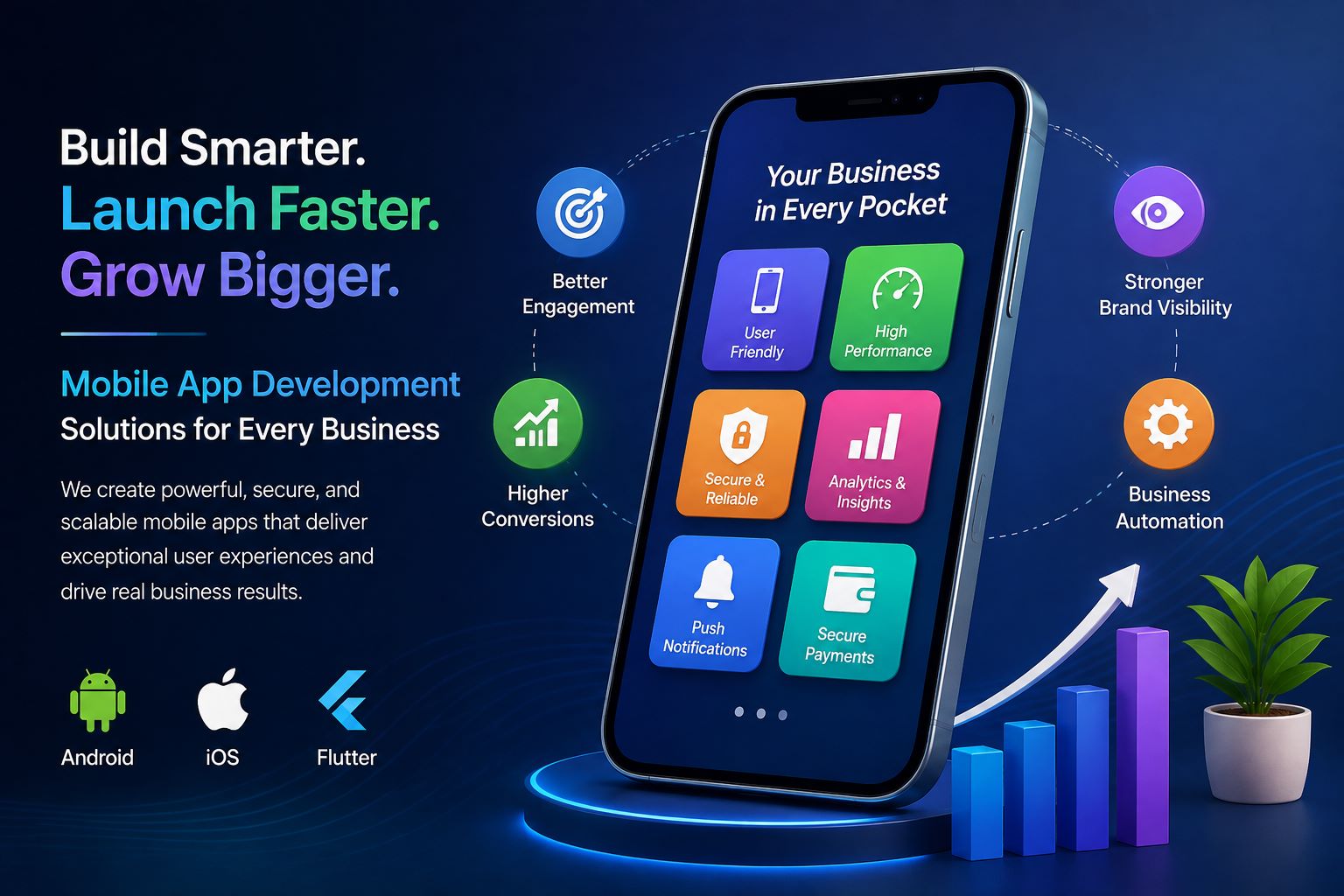
Mobile applications have become an important part of modern business. Customers now use smartphones for shopping, payments, bookings, communication, education, entertainment, healthcare, and many other everyday activities. For businesses, this creates an opportunity to connect with customers directly through a dedicated mobile application.
Professional mobile app development services help businesses transform their ideas into functional, secure, and user-friendly applications. From startups launching their first digital product to established companies improving their existing services, a well-planned mobile application can support customer engagement, operational efficiency, and business growth.
What Is Mobile App Development?
Mobile app development is the process of designing, building, testing, deploying, and maintaining applications for smartphones and tablets. Depending on the target audience and business requirements, applications can be developed for Android, iOS, or multiple platforms.
A professional development process usually begins with understanding the business idea and target users. Developers and designers then plan the application's features, interface, technology, database, security requirements, and overall architecture.
The goal is not simply to create an application but to develop a solution that provides real value to its users.
Why Businesses Need Mobile Applications
A mobile application can give businesses a direct communication channel with their customers. Instead of relying completely on websites or third-party platforms, companies can provide their services through their own branded application.
Mobile apps can help businesses:
- Improve customer engagement
- Provide faster access to services
- Increase brand visibility
- Simplify business operations
- Offer personalized experiences
- Send real-time notifications
- Support online payments
- Improve customer communication
- Collect useful business insights
For example, an eCommerce business can use a mobile application to allow customers to browse products, place orders, make payments, and track deliveries from one platform.
Android App Development
Android app development allows businesses to reach users across a wide range of smartphones and devices. Android applications can be customized according to specific business requirements.
Businesses can develop Android apps for eCommerce, education, healthcare, logistics, finance, food delivery, entertainment, and many other industries.
Features such as secure login, push notifications, payment integration, GPS, booking systems, and third-party APIs can be incorporated depending on the project's requirements.
iOS App Development
iOS app development focuses on creating applications for Apple's ecosystem. Businesses targeting iPhone and iPad users can benefit from dedicated iOS applications designed around their audience's expectations.
A professionally developed iOS application should provide smooth navigation, reliable performance, secure data handling, and a consistent user experience.
Businesses targeting both Android and iOS users can develop separate native applications or consider cross-platform development depending on their requirements.
Flutter and React Native Development
Cross-platform technologies such as Flutter and React Native allow businesses to develop applications for multiple platforms while sharing a significant amount of code.
This approach can be useful for startups and businesses that want to reach both Android and iOS users efficiently. However, the right technology should be selected according to the application's features, performance requirements, budget, and future scalability.
Custom Mobile App Development
Every business has different requirements, which is why custom mobile app development can be valuable.
A healthcare company may need appointment booking and patient communication, while a logistics company may require live location tracking, delivery management, and notifications.
Common custom application features include:
- User registration and login
- Online payments
- Booking and appointment systems
- Product catalogs
- Order management
- Push notifications
- GPS and location services
- Customer support
- Analytics
- API integrations
- Cloud services
Custom development allows these features to be designed around the company's specific workflow.
UI/UX Design
Good design is an essential part of mobile application development. Even a technically advanced application can struggle if users find it confusing or difficult to navigate.
Professional UI/UX design focuses on creating clear navigation, readable content, consistent layouts, simple interactions, and an attractive interface.
The development team should understand the target audience before creating the design. User expectations, device sizes, accessibility, and business goals should all be considered.
Mobile App Development Process
A successful project generally follows several stages.
1. Requirement Analysis: The team understands the business objectives, target audience, required features, and technical requirements.
2. UI/UX Design: Designers create the application's interface and user journey.
3. Development: Developers build the frontend, backend, database, APIs, and required integrations.
4. Testing: The application is tested for functionality, usability, compatibility, security, and performance.
5. Deployment: The completed application is prepared and published on the appropriate app stores.
6. Maintenance: After launch, the application requires updates, bug fixes, security improvements, performance optimization, and new features when necessary.
Security and Performance
Security should be considered throughout the development lifecycle. Applications that handle personal information, business data, or online payments require appropriate security measures.
Secure authentication, protected APIs, secure data transmission, payment security, and regular updates can help reduce security risks.
Performance is equally important. Slow loading, crashes, complicated navigation, and poor responsiveness can negatively affect the user experience. Testing and optimization can help deliver a more reliable application.
Industries Using Mobile Applications
Mobile applications are being used across many industries, including eCommerce, healthcare, education, finance, logistics, real estate, travel, food delivery, fitness, entertainment, and professional services.
The purpose of the application should always be connected to a genuine business or customer need. Adding unnecessary features can make an application more complicated without providing additional value.
Choosing the Right Development Partner
Choosing the right mobile app development company is an important decision. Businesses should consider development experience, technical expertise, previous projects, UI/UX capabilities, testing procedures, communication, security practices, scalability, and post-launch support.
A reliable development partner should understand both the technology and business objectives behind the application.
Conclusion
Mobile applications can help businesses create stronger customer relationships, improve digital services, and streamline operations. However, successful mobile app development requires careful planning, user-focused design, suitable technology, security, testing, and continuous improvement.
Whether you need Android app development, iOS app development, Flutter development, React Native development, or custom mobile app development, the right strategy can turn an idea into a practical digital solution.
Quick Infotech provides professional mobile app development services for businesses looking to build secure, scalable, and user-friendly applications. From initial concept and UI/UX design to development, testing, deployment, and maintenance, a complete development approach can help businesses build mobile solutions that support long-term digital growth.