Mobility and Flexibility Training for Injury Prevention: A Practical Guide
-

- Published Updated
- 419 views

Mobility and flexibility training should be a deliberate part of any fitness plan because it directly affects range of motion, movement efficiency, and injury risk. This guide explains practical, evidence-informed ways to add mobility and flexibility training to workouts, with a named checklist, sample routines, and troubleshooting for common mistakes.
Mobility and Flexibility Training: Why It Prevents Injury
Mobility and flexibility training reduce injury risk by improving movement quality, distributing loads across joints and tissues, and reducing compensatory patterns that cause overload. Mobility refers to active joint control through a usable range, while flexibility refers to soft-tissue length (muscle and fascia). Both matter: mobility without adequate flexibility or flexibility without control can still leave gaps that increase strain.
Key Concepts and Related Terms
Important related terms include range of motion (ROM), active versus passive flexibility, dynamic stretching, static stretching, proprioception, neuromuscular control, fascia, and joint capsule. Programs that integrate mobility drills, soft-tissue work, and strength across a joint's range are most effective for realistic, sport-specific movement.
SAFE Mobility Checklist (a practical framework)
Use the SAFE Mobility Checklist to design short, repeatable sessions that fit into warm-ups, cooldowns, or active recovery days.
- Screen: Identify limited joints or painful ranges (simple tests: overhead squat, single-leg balance, hip hinge).
- Activate: Use low-load muscle activation to reinforce control (glute bridges, scapular pulls).
- Flow: Perform joint mobility exercises and dynamic stretching routines that move the joint through functional patterns (cat-cow, shoulder circles, leg swings).
- Evaluate: Re-test briefly and note changes; track progress over weeks.
Sample joint mobility exercises
Examples include ankle dorsiflexion drills, thoracic spine rotations, hip CARs (controlled articular rotations), and 90/90 hip switches. These joint mobility exercises should be slow, controlled, and pain-free.
When to use dynamic stretching routines vs static stretches
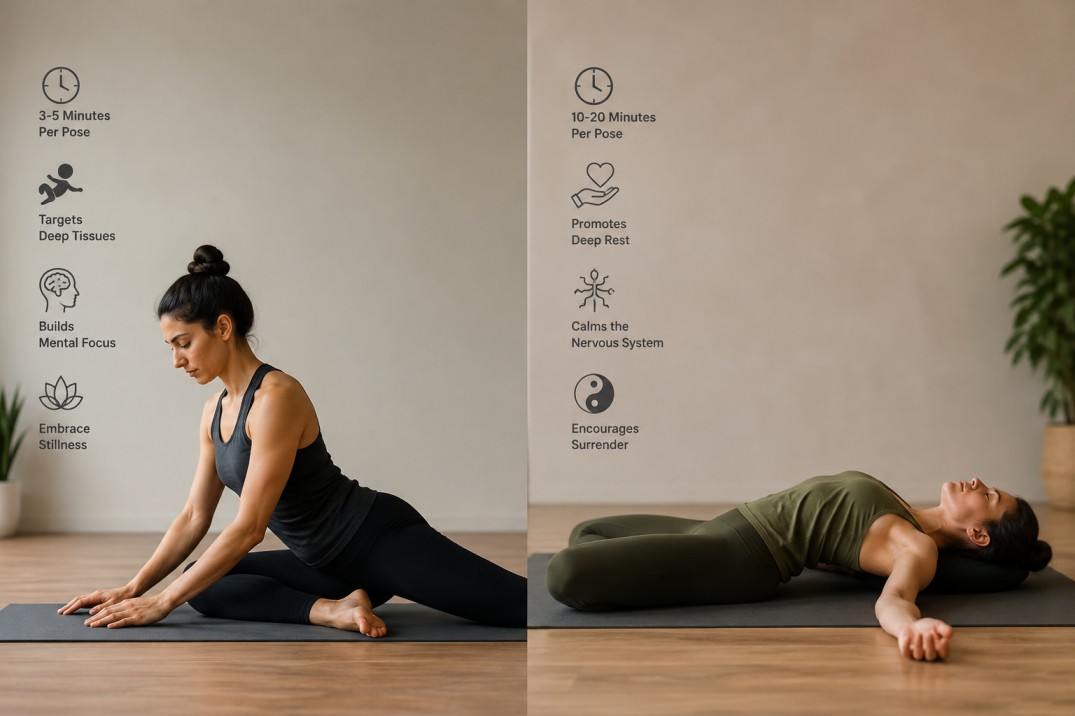
Dynamic stretching routines are best before activity because they raise temperature, enhance neuromuscular readiness, and practice sport-specific ranges. Save static flexibility or PNF (proprioceptive neuromuscular facilitation) techniques for post-workout or dedicated flexibility sessions when the tissue is warm and relaxation can be achieved safely.
Practical Routine Example (real-world scenario)
Example: A recreational runner experiencing mild lateral knee discomfort adds a 6-minute pre-run routine. Screen with a single-leg squat, activate glutes with 2 sets of 10 glute bridges, flow with 8 leg swings and 6 hip CARs per side, and evaluate by repeating the single-leg squat. Over three weeks, the runner reports improved control and reduced discomfort. For guidance on safe stretching basics, see the NHS advice on stretching and flexibility here.
Practical Tips
- Keep sessions short and consistent: 5–15 minutes daily yields better results than sporadic long sessions.
- Prioritize movement quality over depth: control the range before trying to force greater motion.
- Combine mobility with strength: include loaded movements at end ranges (e.g., split squats through full hip flexion) to build tissue resilience.
- Progress from general to specific: start with general joint drills, then add sport- or task-specific patterns.
Trade-offs and Common Mistakes
Trade-offs
Time allocation: dedicating time to mobility reduces time for other training components; prioritize based on deficits revealed by screening. Intensity trade-off: aggressive flexibility work can reduce muscle activation temporarily—avoid heavy skill or max strength work immediately after long static stretching.
Common mistakes
- Relying only on passive stretching (flexibility) without building active control (mobility).
- Using pain as a guide—sharp or increasing pain is a signal to stop and reassess.
- Neglecting multijoint coordination: isolated stretching might not translate to improved movement patterns.
Measuring Progress
Simple measures include improved results on basic screens (overhead squat, single-leg balance), reduced stiffness or pain during movements, and being able to perform sport-specific tasks through fuller ranges. Document baseline findings and re-test every 2–6 weeks.
FAQ: How does mobility and flexibility training reduce injury risk?
Mobility and flexibility training reduce injury risk by improving joint mechanics, distributing load across muscles and connective tissue, and reducing compensatory movement patterns. Controlled mobility supports joint stability, while flexibility increases tissue tolerance and allows safe movement through broader ranges.
FAQ: What are safe dynamic stretching routines to use before exercise?
Safe dynamic routines include leg swings, walking lunges with rotation, arm circles, and inchworms. Choose movements that mimic key patterns required for the upcoming activity and perform 8–12 controlled reps per side.
FAQ: How often should joint mobility exercises be performed?
Brief daily practice (5–15 minutes) is effective for most people. If time is limited, include a 3–6 minute mobility warm-up before training and a focused 10–15 minute session 2–3 times per week.
FAQ: Can mobility work replace strength training for injury prevention?
No. Mobility work improves range and control, while strength training builds load tolerance. Combining both produces the best outcomes for resilience and injury prevention.
FAQ: When should flexibility injury prevention exercises be progressed or modified?
Progress when movement becomes controlled and pain-free; increase range or add load gradually. Modify if persistent pain, swelling, or loss of function occurs and consult a qualified clinician if needed.