MRI vs CT Scan: Which Imaging Test Do You Need?
-

- Published Updated
- 6,402 views
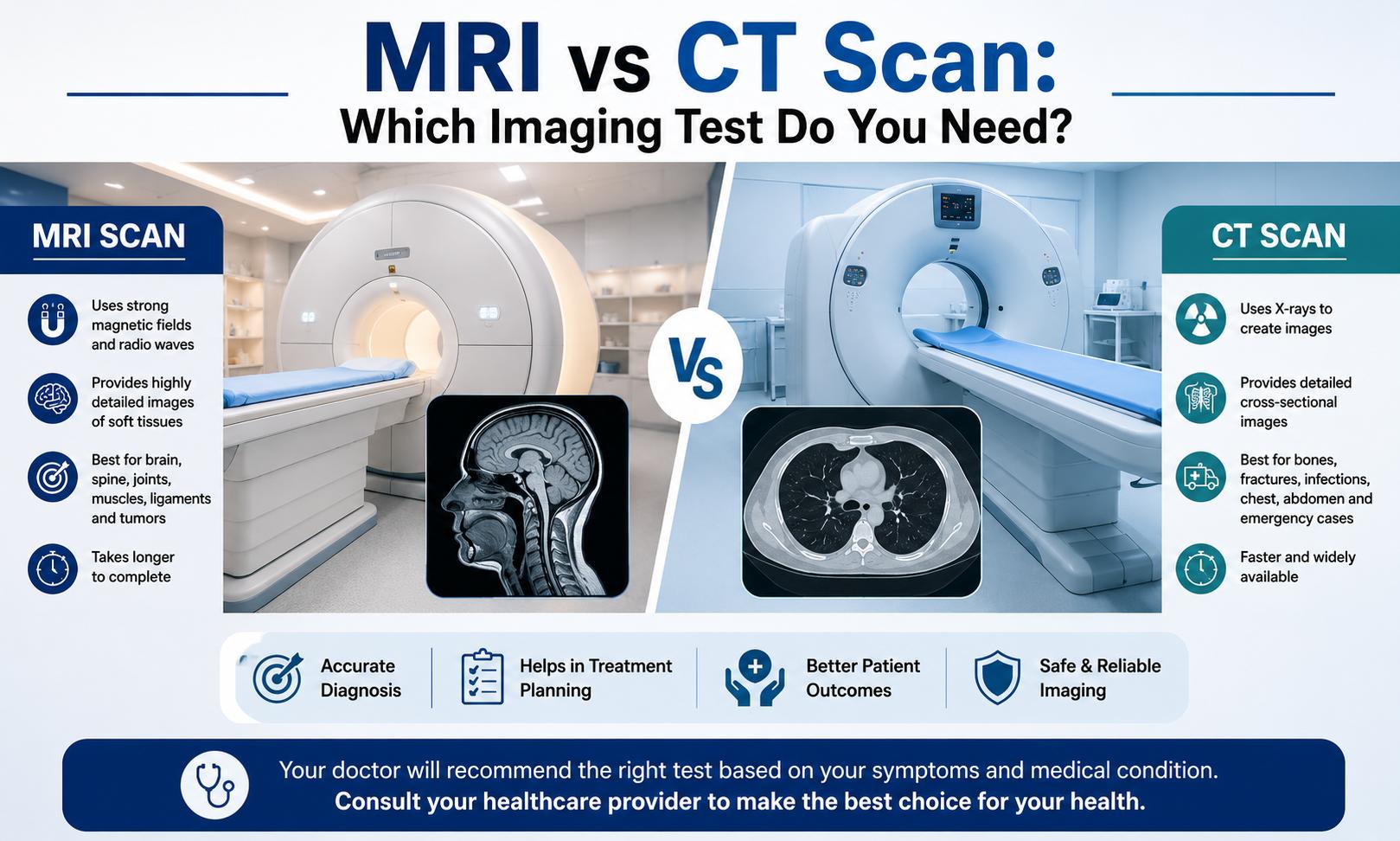
Medical imaging plays a crucial role in diagnosing and monitoring a wide range of health conditions. Among the most commonly used imaging tests are MRI (Magnetic Resonance Imaging) and CT (Computed Tomography) scans. While both tests provide detailed images of the body's internal structures, they work differently and are used for different medical purposes. Understanding the differences between MRI and CT scans can help patients better understand their doctor's recommendations and the diagnostic process.
What Is an MRI Scan?
MRI, or Magnetic Resonance Imaging, is an advanced imaging technique that uses powerful magnets and radio waves to create highly detailed images of organs, soft tissues, muscles, ligaments, nerves, and the brain. Unlike CT scans, MRI does not use ionizing radiation.
MRI scans are particularly useful for examining:
- Brain and spinal cord disorders
- Joint and ligament injuries
- Muscle damage
- Herniated discs
- Tumors and certain cancers
Because MRI provides excellent detail of soft tissues, doctors often recommend it when a more precise image is needed for diagnosis.
What Is a CT Scan?
CT, or Computed Tomography, combines multiple X-ray images taken from different angles to create cross-sectional images of the body. CT scans are fast, accurate, and widely used in emergency and routine medical settings.
CT scans are commonly used to evaluate the following:
- Bone fractures
- Internal injuries after accidents
- Lung diseases
- Abdominal conditions
- Kidney stones
- Blood vessel abnormalities
- Certain cancers
A CT scan can often be completed within minutes, making it an ideal choice when quick diagnosis is required.
Key Differences Between MRI and CT Scan
Although both tests help doctors diagnose medical conditions, there are several important differences:
Technology Used
MRI uses magnetic fields and radio waves, while CT scans use X-rays to create images.
Imaging Detail
MRI provides superior images of soft tissues such as muscles, ligaments, nerves, and the brain. CT scans are generally better for viewing bones, internal bleeding, and certain organ structures.
Scan Duration
CT scans are much faster and usually take only a few minutes. MRI scans may take between 20 and 60 minutes, depending on the area being examined.
Radiation Exposure
MRI does not involve radiation exposure. CT scans use a controlled amount of ionizing radiation, which is generally considered safe when medically necessary.
Patient Comfort
MRI machines can be noisy and may feel enclosed, which can be challenging for individuals with claustrophobia. CT scanners are more open and typically provide a quicker experience.
When Is an MRI Recommended?
Doctors may recommend an MRI when they need detailed images of soft tissues or neurological structures. Common situations include:
- Persistent headaches or neurological symptoms
- Spinal cord injuries
- Sports injuries involving muscles or ligaments
- Brain tumors
- Joint disorders
- Multiple sclerosis evaluation
MRI is often chosen when detailed tissue visualization is essential for accurate diagnosis and treatment planning.
When Is a CT Scan Recommended?
- CT scans are often preferred when speed is critical or when evaluating bones and internal organs. Common uses include:
- Emergency trauma assessment
- Suspected internal bleeding
- Bone fractures
- Chest and lung examinations
- Abdominal pain investigations
- Detection of kidney stones
Because CT scans provide rapid results, they are frequently used in emergency departments and urgent care settings.
Preparing for Your Imaging Test
Preparation requirements vary depending on the type of scan. Patients may be asked to avoid food or drinks for a few hours before the test, especially if contrast material is being used. It is important to inform the healthcare provider about any medical conditions, allergies, implants, pacemakers, or pregnancy before undergoing imaging. For MRI scans, patients must remove all metal objects before entering the scanning room. CT scans generally require less preparation and can often be completed quickly.
Conclusion
Both MRI and CT scans are valuable diagnostic tools that help healthcare professionals identify and monitor medical conditions accurately. MRI is ideal for examining soft tissues, nerves, and the brain, while CT scans are often preferred for evaluating bones, internal injuries, and emergencies. The choice between MRI and CT depends on your symptoms, medical history, and the specific information your doctor needs. By selecting the most appropriate imaging test, healthcare providers can make accurate diagnoses and develop effective treatment plans that support better patient outcomes.
Importance of Choosing a Reliable Diagnostic Centre
The accuracy of MRI and CT scan results depends greatly on the quality of equipment and the expertise of radiologists. Choosing a trusted diagnostic center ensures high-quality imaging, accurate reporting, and timely results. Modern imaging technology helps doctors make informed decisions, leading to better treatment planning and improved patient care. Always follow your healthcare provider's recommendations when selecting an imaging facility.