Understanding Nanotechnology with Circumference of Earth Explained Simply
-

- Published Updated
- 8,810 views
Nanotechnology and Circumference of Earth: A Simple Guide to Modern Science and Our Planet
Science is full of fascinating ideas that help us understand both the smallest particles and the largest structures in the universe. Two very different but interesting topics are Nanotechnology and the circumference of earth. One deals with extremely tiny materials, while the other measures the massive size of our planet. In this article, we will explore both in a simple, human-friendly way so anyone can understand them easily.
What is Nanotechnology?
Nanotechnology is the science of working with materials at an extremely small scale—so small that it is measured in nanometers. A nanometer is one-billionth of a meter. To imagine this size, think about a human hair. A single strand of hair is about 80,000 to 100,000 nanometers wide. That means nanotechnology works at a level far too small for the human eye to see.
At this scale, materials behave differently. Gold, for example, may change color or become more reactive when reduced to nanoparticles. This opens up new possibilities in medicine, electronics, energy, and even clothing.
How Nanotechnology is Used in Real Life
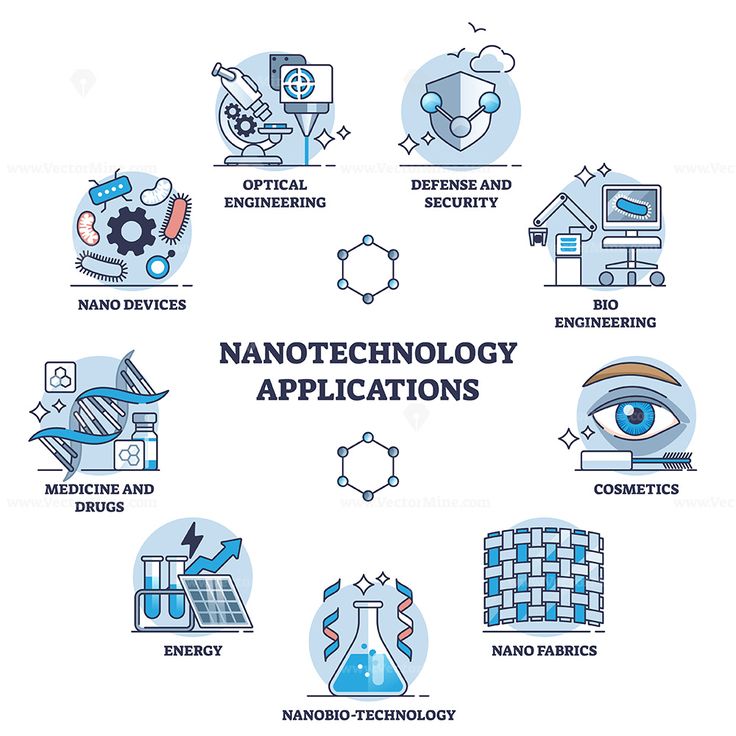
Nanotechnology is not just a scientific concept—it is already part of our daily lives. Here are some examples:
- Medicine: Nanoparticles are used to deliver drugs directly to cancer cells without harming healthy cells.
- Electronics: Smaller and faster computer chips are made using nanotechnology.
- Sunscreen: Many sunscreens use nano-sized zinc oxide to protect skin without leaving a white layer.
- Textiles: Clothes can be made stain-resistant or water-repellent using nano-coatings.
- Food packaging: Nanotechnology helps keep food fresh for longer periods.
This technology is still growing, and scientists believe it will revolutionize the future even more.
Benefits and Importance of Nanotechnology
The importance of nanotechnology lies in its ability to improve efficiency and solve complex problems.
- Better Healthcare: Early detection of diseases and targeted treatments.
- Environmental Protection: Nanofilters can clean water and air more effectively.
- Energy Efficiency: Solar panels using nanotech can capture more sunlight.
- Stronger Materials: Lightweight but strong materials are used in airplanes and sports equipment.
However, nanotechnology also raises concerns, such as its environmental impact and safety risks. Scientists are still researching to ensure it is safe for long-term use.
Understanding the Circumference of Earth
Now let’s move from the smallest science to the largest scale—our planet. The circumference of earth refers to the total distance around the Earth.
The Earth is not a perfect sphere; it is slightly flattened at the poles and wider at the equator. Because of this shape, the circumference is measured in two ways:
- Equatorial circumference: about 40,075 kilometers
- Polar circumference: about 40,008 kilometers
This difference happens because the Earth bulges slightly in the middle due to its rotation.
How Was Earth’s Circumference Measured?
The concept of measuring the Earth’s size goes back thousands of years. One of the first accurate measurements was made by an ancient Greek scientist named Eratosthenes. He used simple observations of shadows in different cities to calculate the Earth’s size with surprising accuracy.
Today, scientists use satellites, GPS systems, and advanced technology to measure the Earth much more precisely.
Why the Circumference of Earth Matters
Understanding the circumference of earth is important for many reasons:
- Navigation: Helps ships and airplanes travel accurately across the globe.
- Mapping: Used in creating world maps and GPS systems.
- Space science: Helps scientists calculate satellite orbits.
- Climate studies: Understanding Earth’s size helps in weather prediction models.
Without knowing Earth’s size, modern transportation and communication systems would not work as efficiently as they do today.
Nanotechnology vs. Circumference of Earth: A Unique Connection
At first glance, Nanotechnology and the circumference of earth may seem completely unrelated. One deals with atoms and molecules, while the other deals with a planet that is billions of times larger.
However, both are deeply connected through science and measurement.
- Nanotechnology focuses on the smallest scale of matter.
- Circumference of Earth represents one of the largest measurable scales in human life.
Both require precise tools and advanced understanding. For example:
- Nanotechnology uses electron microscopes to see tiny particles.
- Earth measurement uses satellites and space technology.
In both cases, science helps humans understand things that cannot be seen with the naked eye.
The Role of Technology in Understanding Both Scales
Modern technology plays a major role in exploring both fields:
In Nanotechnology:
- Atomic-level imaging systems
- Nano-fabrication machines
- Advanced chemical engineering
In Earth Measurement:
- GPS satellites
- Space telescopes
- Geographical Information Systems (GIS)
These technologies show how science connects the tiniest and largest parts of our universe.