Natural vs Dramatic Hyaluronic Acid Filler Results: How to Customize Treatments for Balanced, Predictable Outcomes
-

- March 06th, 2026
- 383 views
Choosing between natural vs dramatic hyaluronic acid filler results depends on anatomy, desired change, product selection, and injection technique. This guide explains the differences, outlines a reproducible customization framework, and gives practical, clinician-tested steps to get predictable outcomes with dermal fillers.
Detected intent: Commercial Investigation
- Goal: Learn trade-offs between subtle (natural) and bold (dramatic) filler results and how to customize treatment.
- Core framework: BALANCE Framework (Assess, Anatomy, Layer, Amount, Needle/Cannula, Communication, Expectations).
- Safety reference: see FDA guidance on dermal fillers for regulatory context.
- How does filler choice affect the natural look vs dramatic look?
- What injection techniques create subtle facial rejuvenation?
- When is a staged approach better than a single dramatic session?
- How to manage complications and reverse hyaluronic acid filler?
- What patient factors predict satisfaction with subtle versus dramatic results?
Natural vs dramatic hyaluronic acid filler results: how to choose
Understanding the difference between natural vs dramatic hyaluronic acid filler results starts with clear goals: restore and blend, or create a noticeable transformation. Key decisions include filler rheology (cross-linking, G' or stiffness), injection plane, and volume strategy. Related terms include dermal filler, volumization, hyaluronidase, cannula, needle, and tissue remodeling.
BALANCE Framework: A repeatable model for customizing filler treatment
Use the BALANCE Framework as a checklist before any filler session. It standardizes assessment and reduces common mistakes.
- B — Build the consultation: document goals, photos, and medical history.
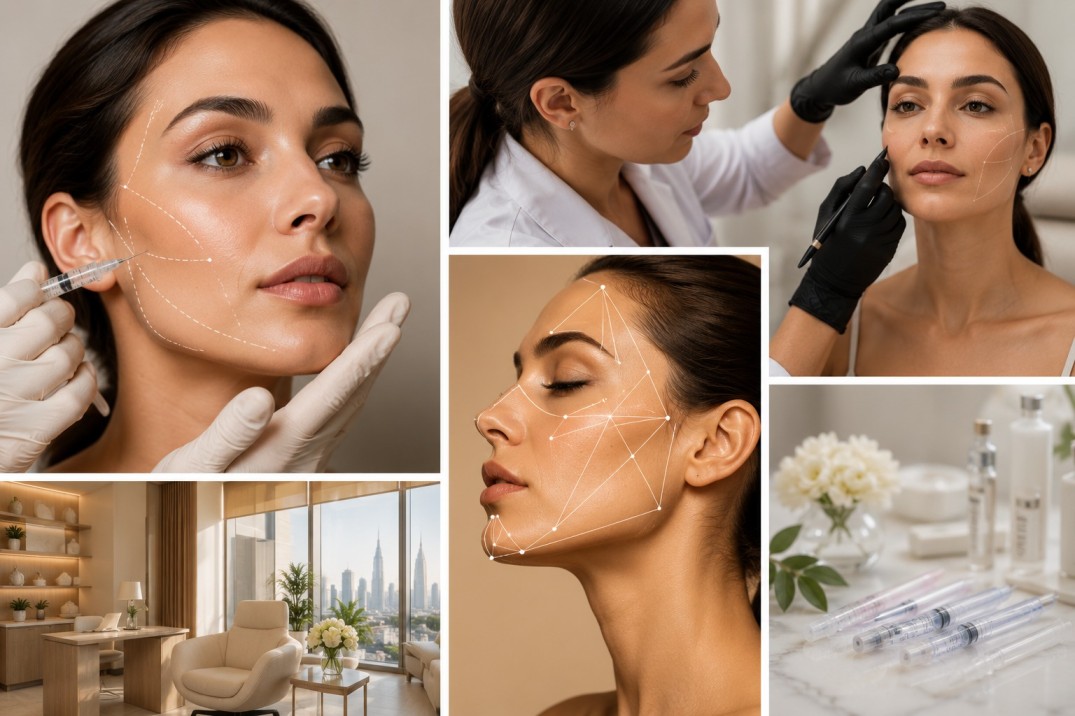
- A — Anatomy mapping: mark vessels, nerves, fat compartments, and skin quality.
- L — Layer selection: choose supraperiosteal, deep fat, subcutaneous, or intradermal placement based on effect desired.
- A — Amount planning: plan conservative volumes for natural looks, higher volumes or boluses for dramatic change.
- N — Needle vs Cannula: cannula for broader distribution and safety, needle for precision microboluses.
- C — Communicate expectations: outline swelling, downtime, staging, and possible need for touch-ups.
- E — Exit strategy & safety: hyaluronidase availability, complication plan, follow-up timeline.
How product choice and injection technique change the outcome
Filler properties (rheology) and their effect
Higher G' (stiffer) fillers provide lift and structure—useful for dramatic contouring of cheeks or jawline. Softer, more flexible fillers spread and integrate, producing subtler, natural-looking smoothing in lips or under-eye hollows. Cross-linked hyaluronic acid formulas and particle size affect durability and palpability; selecting product by indication matters.
Technique differences: precision vs volume
For a natural result, favor micro-droplet boluses in multiple layers, conservative volumes, and a staged approach (treat less now, retouch later). For dramatic results, targeted deep boluses over bone, higher total volume, and structural lift techniques achieve noticeable change but increase risk of swelling and a less subtle appearance.
Real-world scenario: subtle cheek lift vs dramatic midface transformation
Scenario: A patient wants to appear refreshed but not obviously treated. Using the BALANCE Framework, the provider maps deep medial cheek and zygomatic arch, chooses a softer volumizing filler in 0.2–0.4 mL microboluses placed supraperiosteally and in deep fat compartments, and schedules a 2-week follow-up. Result: lifted, blended cheek contour with minimal downtime.
Contrast: For a patient seeking a dramatic midface transformation, the plan includes higher G' product, larger boluses at the zygomatic eminence and preauricular region, possible single-session approach, and clear counseling about increased swelling and a longer settling period.
Practical tips for customizing toward natural or dramatic results
- Start conservative: treat less first and offer staged touch-ups to reach a dramatic endpoint if desired.
- Match filler rheology to goal: choose softer fillers for surface smoothing and stiffer formulas for structural lift.
- Document with standardized photos and mark anatomy to reduce asymmetry and vascular risk.
- Use cannula in high-risk zones (nasolabial, tear trough) to minimize vascular events and bruising when aiming for natural results.
- Always have a reversal plan: hyaluronidase can promptly address vascular compromise or overfilling.
Trade-offs and common mistakes
Trade-offs:
- Natural approach: lower immediate visual impact, fewer complications, higher likelihood of patient acceptance long-term, but may require more sessions.
- Dramatic approach: quicker, noticeable change and fewer return visits if target achieved, but higher risk of swelling, uneven settling, and dissatisfaction if anatomy wasn’t suited.
Common mistakes to avoid
- Overfilling in a single session without staging—can create unnatural contours and make reversal more complex.
- Ignoring skin quality—poor elasticity limits how natural a volumized area will look.
- Not planning the exit strategy—lack of hyaluronidase or no follow-up plan delays management of complications.
Safety, standards, and resources
Follow established safety protocols: documented consent, photography, aseptic technique, and emergency plans for vascular occlusion. For regulatory overview and product safety information, refer to the FDA guidance on dermal fillers.
Checklist before injecting (quick usable checklist)
- Confirm goals: natural vs dramatic, and record them.
- Perform anatomy map: mark vessels and plan entry points.
- Select product by rheology and indication.
- Plan volumes and injection planes; decide needle vs cannula.
- Prepare hyaluronidase, emergency kit, and follow-up appointment.
Outcome measurement and follow-up
Measure results at 2 weeks and 3 months. Natural results typically settle sooner; dramatic sessions may need 3 months for full remodeling. Use patient-reported outcome measures (satisfaction scales) and standardized photos for objective comparison.
FAQ
Natural vs dramatic hyaluronic acid filler results: which is reversible?
Most hyaluronic acid fillers are reversible with hyaluronidase. Reversal can quickly reduce volume and is part of the exit strategy for both natural and dramatic treatments, but timing and completeness vary by product, amount injected, and tissue plane.
How long do natural-looking filler results typically last?
Longevity depends on product, placement, and metabolism. Subtle corrections with less cross-linked fillers often last 6–12 months; structural, cross-linked products can persist 12–24 months. Individual variation applies.
Can a natural result be made more dramatic later?
Yes. A staged approach is recommended: begin conservatively and plan for a follow-up session if more volume or projection is desired. This reduces overcorrection risk.
What are the signs of vascular occlusion after filler injection?
Immediate severe pain, blanching, livedo reticularis, and progressive discoloration require urgent assessment. Apply the emergency protocol, consider hyaluronidase, and seek immediate medical care.
How to choose between needle and cannula for a natural look?
Cannula tends to produce broader, blended distribution with less bruising—often preferred for natural-looking smoothing. Needles provide pinpoint precision useful for small volume placements when a targeted, crisp result is desired.