Non-Metallic Gaskets Market Disruptions Signal Rapid Change In Industrial Sealing And Supply Chains
-

- Published Updated
- 6,051 views
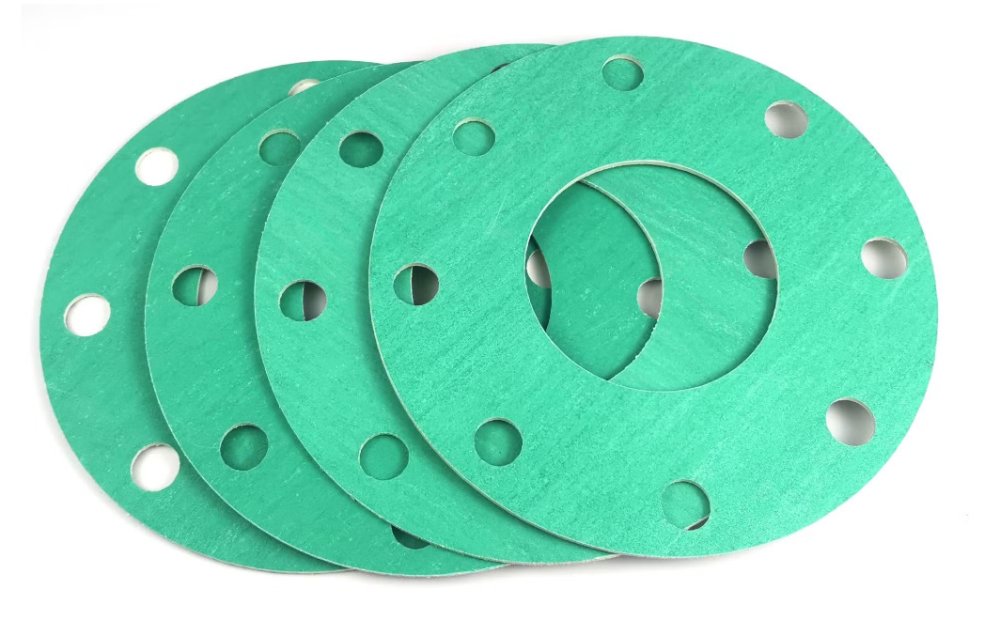
Manufacturing leaders are increasingly confronted with unpredictable failures that begin at the smallest sealing points and escalate into large scale system interruptions. These challenges are intensifying as non-metallic gaskets market disruptions reshape expectations around durability, material behavior, and industrial reliability.
What once appeared to be a stable component category is now exposed to volatility driven by raw material shifts, design complexity, and performance gaps under extreme operating conditions. The reality is that even minor inconsistencies in sealing materials can trigger costly downtime across entire production networks, forcing engineers to rethink long established assumptions.
Across multiple sectors, decision makers are now re evaluating procurement strategies, especially as sealing performance becomes directly tied to operational continuity and safety outcomes. This shift marks a deeper transformation rather than a temporary adjustment.
Non Metallic Gaskets Market Hidden Disruptions Reshaping Industrial Reliability
The non metallic gaskets market is experiencing structural pressure as industries demand higher resilience from sealing components without increasing system complexity. This tension is creating hidden disruptions that are not always visible at the procurement stage but become critical during real world operations.
One major challenge lies in the widening gap between traditional material capabilities and modern industrial requirements. Sectors such as chemical production, energy systems, and fluid handling units are reporting inconsistencies where sealing integrity weakens under fluctuating pressure and temperature conditions. These issues are not isolated but increasingly interconnected across supply chains and production environments.
The evolving non metallic gasket market growth trends reflect a shift toward advanced composites and engineered polymers, yet adoption is uneven. Many organizations still rely on legacy specifications that do not fully align with new operational demands. This mismatch contributes to unexpected maintenance cycles and higher lifecycle costs.
At the same time, procurement teams are under pressure to balance cost efficiency with long term reliability. This is especially evident in environments where industrial sealing solutions for chemical processing must withstand corrosive exposure while maintaining structural stability. When these expectations are not met, the resulting disruptions extend beyond equipment failure into production delays and resource inefficiencies.
Non Metallic Gaskets Material Shifts And Engineering Pressure Points
Material innovation is at the center of current transformation, yet it is also where most friction emerges. Engineers are increasingly evaluating high performance non metallic sealing materials that promise improved endurance, but real world implementation often reveals compatibility challenges with existing systems.
These challenges become more pronounced in high load environments such as oil refining and fluid transport infrastructure. Here, non metallic gasket applications in oil and gas demonstrate both the potential and limitations of modern sealing technologies. While advanced materials offer improved resistance, they also demand precise installation conditions and tighter process control.
Another pressure point arises from cost driven decision making. Organizations seeking cost efficient sealing solutions industrial equipment often prioritize short term savings over long term stability. This approach can lead to recurring failures that outweigh initial procurement benefits. The imbalance between upfront cost and operational reliability continues to shape procurement behavior across multiple sectors.
Design complexity further compounds these issues. As machinery becomes more compact and energy efficient, sealing components are required to perform under tighter spatial constraints and more aggressive operating cycles. This increases dependency on precise material engineering and reduces tolerance for variability.
In parallel, maintenance strategies are also evolving. Predictive approaches are gaining attention, but their effectiveness depends heavily on accurate data from sealing performance history. Without consistent benchmarking, even advanced monitoring systems struggle to prevent unexpected failures.
Industry Realignment Through Sealing Reliability Challenges
The broader industry response is shifting toward integrated design thinking where sealing performance is no longer treated as a secondary consideration. Instead, it is becoming central to system architecture decisions. This change is gradually influencing supplier relationships, material research priorities, and engineering validation standards.
Manufacturers are beginning to prioritize cross functional collaboration between material scientists and system designers. This helps reduce mismatch between theoretical material performance and real operating conditions. However, the transition is gradual and uneven across regions and sectors.
Supply chain resilience is also becoming a key focus area. Disruptions in raw material availability directly affect sealing component quality and consistency. As a result, companies are exploring diversified sourcing strategies and localized production models to reduce dependency risks.
At the same time, digital simulation tools are being used to predict sealing behavior under stress conditions. These tools are helping reduce trial and error in design phases, although they still require accurate input data to be fully effective.
The ongoing transformation suggests that sealing technology is no longer a static engineering component but a dynamic factor influencing operational continuity. As industries continue to modernize, the demand for reliable, adaptable, and performance driven sealing solutions will only intensify.
Conclusion
The evolution of sealing technologies is exposing deeper structural changes in industrial systems where reliability, material science, and operational efficiency are tightly connected. The non metallic gaskets market is no longer defined only by material selection but by its ability to support complex and high pressure environments without failure.
Organizations that adapt early to these shifting conditions will be better positioned to reduce operational risks and improve system stability. Those that delay adjustment may face recurring inefficiencies that quietly accumulate into larger disruptions.
The future of industrial sealing is unfolding as a critical pillar of performance engineering, where even the smallest component decisions can reshape entire production outcomes.