Nubia AI Agent Smartphone Launch Confirmed: World's First Mass-Produced Phone That Acts as Your Personal Assistant
-

- September 08th, 2026
- 4,094 views
Reference (Original News): https://thesiliconreview.com/2026/07/nubia-ai-agent-smartphone-launch-waic-2026
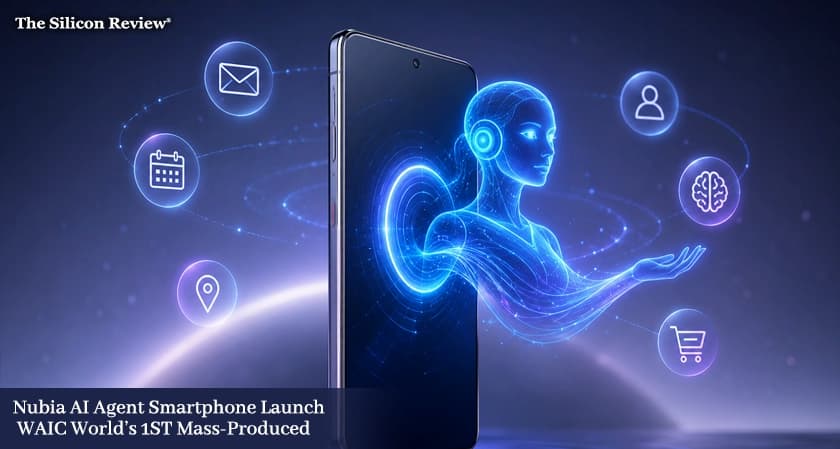
Artificial intelligence is entering a new phase, and smartphones are at the center of this transformation. Nubia has officially confirmed that it will unveil what it describes as the world's first mass-produced AI agent smartphone, a device designed to do far more than answer questions or generate text. Instead, the upcoming flagship aims to function as a true personal assistant capable of understanding requests, planning tasks, and completing them with minimal user intervention.
The announcement has generated significant attention across the technology industry because it signals a shift from traditional AI-powered features to a fully integrated AI agent that can operate across applications. Rather than simply suggesting what users should do next, the phone is expected to carry out many of those actions itself.
A New Era of AI Smartphones
Most smartphones today include AI capabilities such as voice assistants, image editing, live translation, and text generation. However, these features generally require users to switch between apps and manually complete each step of a task.
Nubia's upcoming AI agent smartphone promises something different.
The company says the AI will be deeply integrated into the operating system, allowing it to understand natural language instructions and execute multi-step tasks automatically. Whether booking travel, comparing prices, scheduling appointments, or managing daily routines, the AI agent is designed to navigate different applications on behalf of the user.
This represents a significant evolution from today's smartphone experience, moving closer to the long-promised vision of a digital assistant that genuinely works for its owner.
What Makes an AI Agent Different?
Unlike conventional AI assistants that simply respond to prompts, an AI agent can make decisions, plan actions, and complete workflows.
For example, instead of asking for flight prices and leaving users to complete the booking themselves, the AI agent could:
- Search multiple travel platforms
- Compare ticket prices
- Select the preferred option
- Fill in passenger details
- Proceed through the booking process
- Request user confirmation before payment
The objective is to reduce repetitive smartphone interactions while improving productivity.
Industry experts view this as one of the most meaningful advances in mobile computing since the introduction of voice assistants.
Launch Expected at WAIC 2026
Nubia has confirmed that the new smartphone will debut during the World Artificial Intelligence Conference (WAIC) 2026 in Shanghai.
Company executives have described the handset as the world's first commercially available AI agent smartphone, marking an important milestone in bringing agent-based artificial intelligence to mainstream consumers.
Although several companies have showcased AI concepts over the past two years, Nubia appears ready to commercialize the technology on a larger scale.
Built on Earlier AI Innovations
The upcoming device is widely believed to build upon the technology first demonstrated in Nubia's earlier AI-focused smartphone developed alongside ByteDance's Doubao AI platform.
That earlier model showcased the ability to understand user intent, operate multiple applications, and complete complicated workflows using natural language commands.
The new generation is expected to significantly improve:
- Context awareness
- Long-term memory
- Continuous conversations
- Cross-app automation
- Personalized recommendations
These enhancements aim to create an experience where the smartphone feels less like a tool and more like an intelligent digital companion.
Why This Matters for Consumers
The AI smartphone market has become increasingly competitive, with nearly every manufacturer promoting AI-powered features.
However, many of those capabilities remain limited to:
- Photo editing
- Writing assistance
- Translation
- Voice transcription
- Chatbot integration
Nubia's strategy attempts to redefine the smartphone entirely by allowing AI to perform actions rather than merely provide information.
If successful, users may spend significantly less time navigating menus and more time simply describing what they want accomplished.
This could improve productivity for professionals, simplify everyday tasks for casual users, and make smartphones more accessible for people with disabilities.
Challenges Ahead
Despite the excitement, several hurdles remain.
Many popular applications maintain strict security controls that limit automated interactions. Banking apps, payment platforms, messaging services, and authentication systems often require direct user input to prevent fraud.
As a result, AI agents may still face restrictions when attempting sensitive operations.
Privacy also remains a major concern. An AI capable of accessing multiple applications, personal calendars, emails, and financial information must be designed with strong security safeguards.
Consumers will likely demand transparent controls that determine exactly what the AI can access and when it can take action.
Building trust may prove just as important as developing the technology itself.
Competition Is Heating Up
Nubia is not alone in pursuing AI-native devices.
Major technology companies including Samsung, Google, Apple, and several Chinese manufacturers continue investing heavily in on-device artificial intelligence.
Meanwhile, chipmakers such as Qualcomm are working with AI developers to create next-generation hardware capable of supporting increasingly autonomous digital assistants.
The arrival of Nubia's AI agent smartphone could accelerate this industry-wide shift, encouraging competitors to move beyond chatbot experiences toward fully autonomous mobile assistants.
The Future of Smartphones
The smartphone industry has experienced relatively incremental innovation over the past several years, with improvements largely focused on cameras, displays, battery life, and processing power.
Artificial intelligence now appears positioned to become the next major differentiator.
If Nubia delivers on its promises, the company may establish a new category of smartphones where users interact primarily through intent rather than touch.
Instead of opening apps individually, searching menus, and manually completing tasks, future smartphone owners may simply tell their device what they need—and let the AI handle the rest.
Whether this vision becomes mainstream will depend on reliability, privacy protections, app compatibility, and consumer trust.
For now, Nubia's announcement represents one of the most ambitious attempts yet to redefine what a smartphone can be. As the company prepares for its official unveiling at WAIC 2026, the technology industry will be watching closely to see whether AI agents truly become the next evolution of personal mobile computing.