OEM vs OBM: What's the Difference and Which Model Is Right for Your Brand?
-

- Published Updated
- 5,940 views
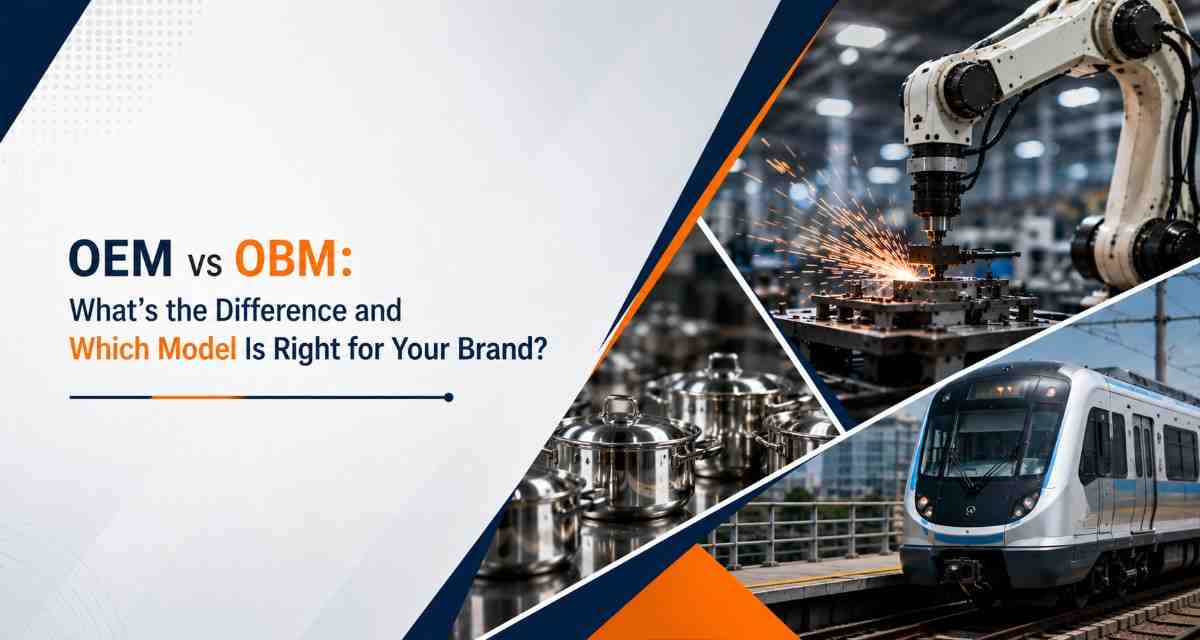
Manufacturing businesses today have several ways to bring products to market, but two of the most common models are OEM (Original Equipment Manufacturing) and OBM (Original Brand Manufacturing). While both involve designing and producing products, they differ significantly in terms of branding, market control, investment requirements, and business strategy.
For companies planning to launch new products or expand their manufacturing operations, understanding the difference between OEM and OBM is essential. Choosing the right model can impact production costs, profit margins, scalability, customer relationships, and long-term business growth.
Whether you are a startup, an established manufacturer, or a growing brand, knowing how OEM and OBM work will help you make smarter business decisions.
In this guide, we explain the differences between OEM and OBM, their advantages and challenges, and how to determine which model best fits your business goals.
What Is OEM (Original Equipment Manufacturing)?
OEM stands for Original Equipment Manufacturing. In this model, a manufacturer produces products or components that are sold under another company's brand name.
The OEM manufacturer focuses on production, engineering, fabrication, assembly, and quality control, while the client company manages branding, marketing, sales, and customer relationships.
This manufacturing model is widely used across industries such as automotive, metro rail, infrastructure, electronics, industrial equipment, and consumer products.
For example, a company may sell stainless steel kitchenware under its own brand, but the products are actually manufactured by an OEM partner. Similarly, automotive brands often rely on OEM suppliers for specialised components used in vehicles.
OEM manufacturing allows businesses to launch products without investing heavily in factories, machinery, and production facilities.
What Is OBM (Original Brand Manufacturing)?
OBM stands for Original Brand Manufacturing. Unlike OEM manufacturers, OBM companies manufacture products and sell them under their own brand names.
In this model, the company controls every aspect of the business, including product development, manufacturing, branding, marketing, distribution, and customer support.
An OBM company is responsible for building brand awareness, attracting customers, managing sales channels, and maintaining product reputation in the market.
Many well-known consumer brands operate under the OBM model because they want complete control over how their products are positioned and perceived.
For example, a cookware company that designs, manufactures, brands, and sells its own products directly to customers is operating as an OBM business.
Understanding the Core Difference Between OEM and OBM
The biggest difference between OEM and OBM lies in ownership of the brand.
OEM manufacturers produce products for other companies. Their expertise lies in manufacturing efficiency, engineering capabilities, and production quality.
OBM companies manufacture and market products under their own brands. Their success depends not only on manufacturing excellence but also on branding, marketing, customer engagement, and distribution strategies.
OEM businesses primarily serve other businesses, while OBM companies typically interact directly with customers or retailers.
This distinction affects everything from investment requirements to profit potential.
Why Many Businesses Choose the OEM Model
OEM manufacturing has become increasingly popular because it allows businesses to focus on their strengths while relying on manufacturing specialists for production.
One of the biggest advantages of OEM manufacturing is reduced capital investment. Building and maintaining manufacturing facilities requires significant financial resources. By partnering with an OEM manufacturer, businesses can avoid these costs and allocate resources toward product development, sales, and market expansion.
OEM partnerships also provide access to specialised expertise. Experienced manufacturers often have advanced machinery, skilled engineers, established quality control systems, and efficient production processes that may be difficult for individual brands to develop on their own.
Another advantage is scalability. As demand increases, businesses can often expand production more easily through an established OEM partner than by investing in additional manufacturing infrastructure themselves.
For companies looking to launch products quickly, OEM manufacturing also shortens time-to-market. Instead of building factories and production systems from scratch, businesses can leverage existing manufacturing capabilities and start production sooner.
Benefits of the OBM Model
While OEM offers operational advantages, OBM provides opportunities for stronger brand building and potentially higher profitability.
One of the biggest benefits of the OBM model is brand ownership. Companies have complete control over how their products are presented, marketed, and positioned in the market.
A strong brand creates customer loyalty and allows businesses to differentiate themselves from competitors. Over time, successful brands often become valuable assets that contribute significantly to company valuation.
OBM companies also have greater control over pricing strategies. Since they own the brand and customer relationships, they can establish premium positioning and potentially achieve higher profit margins.
Direct interaction with customers provides valuable market insights as well. OBM businesses can gather feedback, identify trends, and make product improvements based on customer needs.
For companies with strong marketing capabilities and long-term growth ambitions, OBM can be an attractive path.
Challenges of OEM Manufacturing
Despite its many benefits, OEM manufacturing is not without challenges.
One limitation is that OEM manufacturers do not own the brands associated with the products they produce. Even if a manufacturer produces high-quality products, the market recognition typically belongs to the client company.
OEM businesses may also face pricing pressure, especially in highly competitive industries where multiple manufacturers offer similar capabilities.
Additionally, OEM companies often depend on long-term customer contracts. Losing a major client can significantly impact production volumes and revenue.
However, many successful OEM manufacturers overcome these challenges by focusing on innovation, engineering expertise, and operational excellence.
Challenges of OBM Manufacturing
OBM businesses face a different set of challenges.
Building a brand requires substantial investment in marketing, advertising, distribution, and customer acquisition. These costs can be significant, particularly in competitive markets.
OBM companies also assume greater business risk because product success depends heavily on consumer demand and market acceptance.
Unlike OEM manufacturers, which focus primarily on production, OBM companies must manage multiple functions, including branding, sales, customer service, and supply chain operations.
Establishing a recognised brand often takes years of consistent investment and effort. Businesses must be prepared for a longer growth journey.
Which Model Is Better for Startups?
For many startups, OEM manufacturing is often the more practical choice.
New businesses typically have limited resources and may not have the capital required to establish manufacturing facilities. OEM partnerships allow startups to bring products to market quickly while keeping initial investments manageable.
By working with experienced OEM manufacturers, startups can focus on building their brand, validating market demand, and growing their customer base.
Once the business achieves stability and generates consistent revenue, it may choose to expand into a more comprehensive OBM strategy.
This gradual approach helps reduce risk while creating opportunities for future growth.
Why Many Brands Start with OEM Before Moving Towards OBM
Many successful brands begin their journey by leveraging OEM manufacturing.
This strategy allows businesses to test products, understand customer preferences, and establish market presence without significant manufacturing investments.
As the brand grows, companies gain valuable experience in product development, customer acquisition, and market positioning.
Over time, some businesses decide to build stronger brand identities and transition towards the OBM model. This progression provides greater control over products and customer relationships while building long-term brand value.
For many companies, OEM serves as a stepping stone towards future brand ownership and market leadership.
Industries That Commonly Use OEM Manufacturing
OEM manufacturing is widely used across multiple industries because it provides flexibility, efficiency, and scalability.
The automotive industry relies heavily on OEM manufacturers for specialised components and assemblies.
Metro rail and mobility projects depend on OEM suppliers for structural components, interiors, and engineering systems.
Infrastructure development projects frequently utilise OEM manufacturing for public utility products, architectural solutions, and urban development applications.
Consumer goods brands often partner with OEM manufacturers to produce kitchenware, home products, appliances, and lifestyle products.
Industrial equipment manufacturers also rely on OEM partners for precision-engineered components and specialised manufacturing support.
As industries continue to evolve, demand for reliable OEM manufacturing solutions continues to grow.
How Jindal Lifestyle Supports OEM Manufacturing Requirements
For businesses seeking a reliable OEM manufacturing partner, experience and manufacturing capabilities are critical factors.
Jindal Lifestyle offers OEM manufacturing solutions across a wide range of industries, including metro rail and mobility, automotive components, infrastructure products, industrial applications, and consumer goods.
The company's expertise in stainless steel manufacturing enables it to support clients from product development through large-scale production.
Its OEM capabilities include design support, prototyping, fabrication, assembly, finishing, quality testing, and customised manufacturing solutions tailored to industry-specific requirements.
By partnering with an experienced OEM manufacturer such as Jindal Lifestyle, businesses can focus on innovation, market expansion, and customer acquisition while benefiting from dependable manufacturing support.
This approach helps brands reduce operational complexity while maintaining product quality and scalability.
How to Decide Which Model Is Right for Your Brand
Choosing between OEM and OBM ultimately depends on your business objectives.
If your primary goal is to launch products quickly, reduce manufacturing investments, and leverage specialised production expertise, OEM manufacturing may be the right choice.
If you want complete control over branding, customer relationships, product positioning, and long-term market presence, OBM may offer greater opportunities.
Many businesses find success by starting with OEM manufacturing and gradually strengthening their brand presence over time.
There is no single approach that works for every company. The best model depends on available resources, growth plans, market strategy, and long-term vision.
Conclusion
OEM and OBM are both valuable manufacturing models, but they serve different business objectives.
OEM manufacturing focuses on production efficiency, technical expertise, and manufacturing support for other brands. OBM manufacturing combines production with branding, marketing, and customer engagement under a company's own brand identity.
Businesses seeking lower investment requirements, faster market entry, and scalable production often benefit from OEM partnerships. Companies focused on building strong brands and creating direct customer relationships may find OBM more suitable for long-term growth.
Understanding these differences is essential for selecting the right path for your business.
For organisations seeking a dependable OEM manufacturing partner, Jindal Lifestyle provides the expertise, infrastructure, and manufacturing capabilities needed to support product development and business growth across multiple industries.