Ozone Test for Rubbers Durability for Industrial Uses
-

- May 28th, 2026
- 4,459 views

FREE SEO Topical Map Generator: Find Your Next Content Ideas
Rubber products are widely used across multiple industries including automotive, aerospace, electrical, construction, medical, and manufacturing. These products are constantly exposed to environmental conditions such as ozone, UV radiation, humidity, heat, and corrosive atmospheres that can reduce their durability and performance over time. To ensure long-lasting quality and reliability, manufacturers rely on advanced testing equipment such as the Azone Test Chamber, Salt Spray Chamber, and Xenon Arc Test Chamber.
These testing systems help industries evaluate the ozone test chamber for the resistance of rubber and polymer materials against environmental stress and aging conditions. By conducting accelerated durability tests, manufacturers can predict product lifespan, improve material quality, and comply with international testing standards.
Importance of Ozone Testing for Rubber Products
Ozone is one of the major causes of rubber degradation. Even a small concentration of ozone in the atmosphere can create cracks on rubber surfaces, especially when the material is under tension or stress. Ozone cracking affects the flexibility, strength, and durability of rubber components used in industrial applications.
Rubber products such as seals, gaskets, tires, hoses, conveyor belts, cables, and automotive components are highly vulnerable to ozone exposure. Therefore, ozone testing becomes essential for evaluating the performance and lifespan of rubber materials before they are used in real-world conditions.
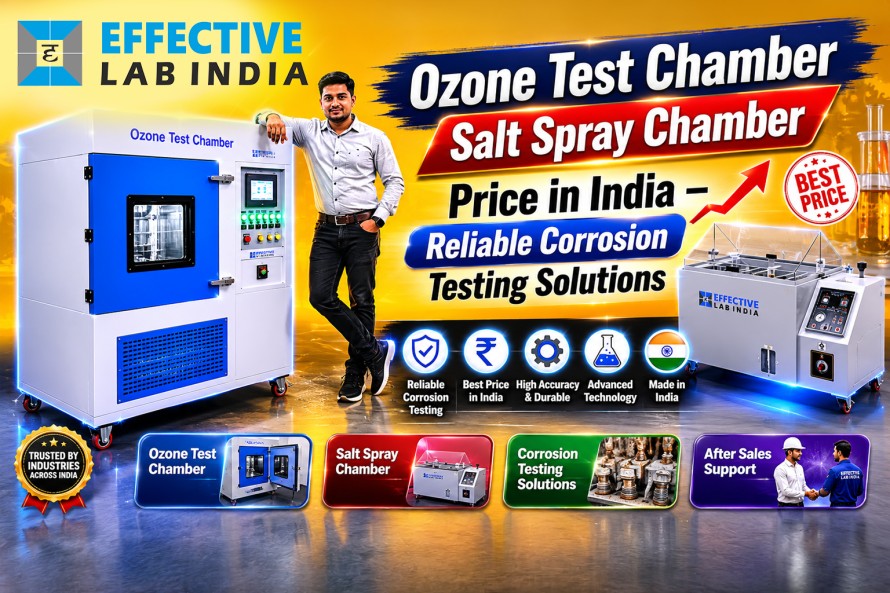
An Azone Test Chamber is specially designed to simulate ozone-rich environmental conditions and analyze the resistance of rubber materials against ozone cracking. These chambers provide controlled ozone concentration, humidity, and temperature conditions to perform accurate and repeatable tests.
Azone Test Chamber for Industrial Rubber Testing
The Azone Test Chamber is an advanced environmental testing equipment widely used for accelerated aging tests on rubber and polymer materials. It helps industries identify cracks, surface damage, and material deterioration caused by ozone exposure.
This chamber is commonly used in:
- Automotive industries
- Rubber manufacturing plants
- Research laboratories
- Electrical and cable industries
- Aerospace applications
- Industrial component testing
The chamber creates a controlled ozone environment to simulate long-term atmospheric exposure within a shorter testing duration. This allows manufacturers to evaluate the durability and performance of rubber products efficiently.
Features of Azone Test Chamber
- Precise ozone concentration control
- Uniform temperature and humidity distribution
- Digital control system with touch screen interface
- High-quality stainless steel construction
- Accurate testing environment for repeatable results
- Compliance with international testing standards
- Low maintenance and energy-efficient operation
Benefits of Using Azone Test Chamber
Using an Azone Test Chamber helps industries improve product quality and durability. It enables manufacturers to identify weak material formulations and develop ozone-resistant rubber compounds for industrial applications.
Key benefits include:
- Improved product reliability
- Enhanced rubber durability
- Reduced product failure risks
- Better quality assurance
- Compliance with international quality standards
- Increased customer satisfaction
Role of Salt Spray Chamber in Durability Testing
Apart from ozone exposure, industrial rubber and metal components are also affected by corrosion due to moisture and saline environments. The Salt Spray Chamber plays a vital role in evaluating corrosion resistance and material durability.
A Salt Spray Chamber simulates harsh environmental conditions by creating a fog of saline solution inside the testing chamber. This accelerated corrosion test helps manufacturers determine how materials and coatings perform in corrosive atmospheres.
Industries using Salt Spray Chambers include:
- Automotive manufacturing
- Metal coating industries
- Paint and surface treatment companies
- Aerospace industries
- Marine equipment manufacturing
- Fastener and hardware production
Importance of Salt Spray Testing
Rubber components are often combined with metal parts in industrial systems. Corrosion in these components can affect overall product performance and safety. Salt spray testing helps manufacturers identify corrosion-prone materials and improve protective coatings.
Features of Salt Spray Chamber
- Corrosion-resistant chamber body
- Uniform salt fog distribution
- Automatic temperature control
- Digital display and programmable settings
- Easy operation and maintenance
- Long-lasting construction
Advantages of Salt Spray Chamber
- Accelerated corrosion testing
- Improved coating quality
- Better product lifespan analysis
- Reliable quality control process
- Compliance with ASTM and ISO standards
By using Salt Spray Chambers, manufacturers can ensure that their products perform effectively even in highly corrosive environments.
Xenon Arc Test Chamber for Weathering Simulation
Environmental factors such as sunlight, heat, humidity, and rain also affect rubber and polymer materials over time. The Xenon Arc Test Chamber is designed to simulate natural weathering conditions and evaluate material resistance against UV radiation and climate exposure.
The Xenon Arc Test Chamber uses xenon arc lamps to reproduce full-spectrum sunlight, including ultraviolet rays, visible light, and infrared radiation. This testing method is widely used for accelerated weathering tests on rubber, plastics, coatings, textiles, and automotive components.
Applications of Xenon Arc Test Chamber
- Rubber and plastic testing
- Automotive component testing
- Paint and coating evaluation
- Textile durability testing
- Packaging material testing
- Outdoor product performance analysis
Features of Xenon Arc Test Chamber
- High-intensity xenon arc lamps
- Controlled temperature and humidity system
- Rain spray simulation feature
- Advanced programmable controller
- Uniform light exposure system
- Durable chamber construction
Benefits of Xenon Arc Testing
The Xenon Arc Test Chamber helps manufacturers analyze color fading, cracking, loss of flexibility, and material degradation caused by prolonged sunlight exposure.
Benefits include:
- Accurate weather resistance testing
- Faster product development
- Improved material quality
- Reduced outdoor failure risks
- Compliance with international testing standards
Combined Importance of Environmental Testing
Industrial products face multiple environmental challenges during their operational life. Ozone exposure, corrosion, humidity, heat, and UV radiation can significantly impact material performance and durability.
Using advanced testing equipment such as the Azone Test Chamber, Salt Spray Chamber, and Xenon Arc Test Chamber allows manufacturers to conduct comprehensive environmental testing under controlled laboratory conditions.
These testing systems help industries:
- Improve product lifespan
- Ensure material reliability
- Reduce maintenance costs
- Prevent premature product failures
- Meet international quality standards
- Enhance customer confidence
Environmental testing also supports research and development activities by helping engineers create more durable and resistant materials for industrial applications.
Why Choose Advanced Testing Chambers for Industrial Applications
Modern industries require highly reliable products capable of performing under extreme environmental conditions. Advanced testing chambers provide precise simulation of real-world environments, helping manufacturers validate product quality before market release.
Choosing high-quality testing equipment offers several advantages:
- Accurate and repeatable test results
- Enhanced testing efficiency
- User-friendly operation
- Low operational cost
- Long service life
- Better compliance with industry regulations
Manufacturers investing in advanced environmental testing systems gain a competitive advantage by delivering high-performance and durable products to customers.
Conclusion
Ozone resistance, corrosion protection, and weather durability are critical factors for rubber and industrial products used in demanding environments. The Azone Test Chamber, Salt Spray Chamber, and Xenon Arc Test Chamber are essential testing solutions for evaluating material performance under accelerated environmental conditions.
These advanced chambers help industries improve product quality, durability, and reliability while ensuring compliance with international standards. From rubber testing and corrosion analysis to weathering simulation, environmental testing plays a major role in modern industrial quality assurance.
By using reliable testing equipment, manufacturers can develop stronger, longer-lasting, and more durable products suitable for automotive, aerospace, electrical, construction, and industrial applications.