Which Pipe Material Lasts the Longest in Residential Plumbing Systems?
-

- Published Updated
- 6,788 views
When homeowners invest in a plumbing system, one of the most common questions is how long the pipes will actually last. While installation cost often receives the most attention, long-term durability can have a much greater impact on maintenance expenses, repair frequency, and overall property value.
The lifespan of a plumbing system depends on several factors, including material quality, water conditions, operating pressure, installation standards, and the reliability of pipe connections. However, some pipe materials consistently outperform others when it comes to long-term residential use.
Why Pipe Lifespan Matters in Modern Homes
Unlike flooring, paint, or fixtures, plumbing systems remain hidden behind walls and beneath floors. Once installed, accessing them for repairs can be disruptive and expensive.
This is why builders, consultants, and homeowners increasingly evaluate piping systems based on lifecycle performance rather than simply initial installation cost.
A longer-lasting plumbing system can help:
Reduce maintenance expenses
Lower the risk of leakage
Improve water flow consistency
Minimize replacement costs
Support long-term building reliability
The importance of durable water infrastructure is also highlighted by the World Health Organization (WHO), which emphasizes the role of reliable plumbing systems in maintaining safe water delivery.
Comparing Common Residential Pipe Materials
Different pipe materials perform differently under daily operating conditions. Factors such as temperature changes, pressure fluctuations, and water quality can significantly influence lifespan.
GI (Galvanized Iron) Pipes
GI pipes were once widely used in residential construction because of their strength and availability.
However, long-term exposure to water can lead to internal corrosion and rust buildup, gradually reducing performance.
Common limitations include:
Internal rust formation
Reduced water flow over time
Higher maintenance requirements
Greater risk of corrosion-related failures
In many older buildings, pipe replacement projects are often linked to corrosion-related deterioration.
PVC Pipes
PVC pipes remain a common choice for drainage and certain water applications because they are lightweight and cost-effective.
Their advantages include:
Easy installation
Corrosion resistance
Affordable upfront cost
However, PVC may not be suitable for applications involving sustained high temperatures.
CPVC Pipes
CPVC pipes were developed to improve heat resistance compared to traditional PVC systems.
They are commonly used in residential hot and cold water plumbing.
Benefits include:
Better temperature handling
Corrosion resistance
Relatively simple installation
Potential challenges:
Expansion and contraction over time
Joint-related maintenance concerns
Copper Pipes
Copper has long been considered a premium plumbing material because of its durability and temperature resistance.
Many copper systems can remain functional for decades when installed correctly.
Advantages include:
Strong structural performance
Good heat resistance
Long service life
Challenges include:
Higher installation costs
Potential corrosion under certain water conditions
Why Composite Pipes Are Becoming More Common
Over the past decade, multilayer composite pipes have gained attention in residential construction because they combine the benefits of multiple materials within a single system.
These pipes typically use a PE-AL-PE structure, where aluminium is positioned between polymer layers to improve stability and performance.
As a result, they address several common limitations associated with traditional piping materials.
Key performance advantages include:
High corrosion resistance
Reduced thermal expansion
Better pressure stability
Lightweight installation
Long operational lifespan
Modern multilayer composite pipe systems are increasingly used in residential projects where durability and low maintenance are important priorities.
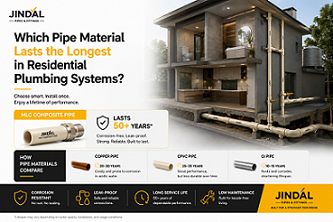
Pipe Lifespan Comparison
Pipe Material |
Typical Lifespan* |
GI Pipe |
10–20 Years |
PVC Pipe |
20–30 Years |
CPVC Pipe |
25–40 Years |
Copper Pipe |
40–50+ Years |
Composite Pipe |
50+ Years |
*Actual lifespan varies depending on water quality, installation practices, pressure conditions, and maintenance.
The Role of Pipe Connections in Longevity
Even durable pipes can experience problems if fittings and joints are not reliable.
Industry studies consistently show that leakage often begins at connection points rather than within the pipe itself.
This is why modern plumbing systems increasingly use advanced press-fit connection technologies designed to improve consistency and reduce installation-related errors.
Benefits of modern fitting systems include:
Better sealing performance
Reduced leakage risks
Faster installation
Improved long-term reliability
Many modern composite piping systems are paired with press-fit plumbing fittings to improve overall system lifespan.
What Factors Affect Pipe Lifespan?
The material itself is only one part of the equation.
Several external factors influence how long a plumbing system will last.
Important factors include:
Water quality
Pressure fluctuations
Installation quality
Temperature exposure
Pipe support and alignment
Fitting reliability
The U.S. Environmental Protection Agency (EPA) water infrastructure resources also emphasize the importance of proper infrastructure design and maintenance for long-term water system performance.
Why Builders Are Focusing on Lifecycle Value
The construction industry is gradually moving away from selecting materials solely on purchase price.
Instead, decision-makers increasingly evaluate:
Expected service life
Maintenance requirements
Operational reliability
Long-term ownership costs
This approach helps reduce unexpected repair expenses while improving overall building performance.
Manufacturers such as Jindal Tubes have contributed to the growing adoption of multilayer composite piping systems in India as builders increasingly prioritize long-term plumbing reliability over short-term cost savings.
FAQs
Which residential pipe material generally lasts the longest?
Modern multilayer composite pipes and high-quality copper systems are often considered among the longest-lasting residential plumbing materials when properly installed.
Do composite pipes last longer than GI pipes?
In many applications, composite pipes offer a significantly longer service life because they are resistant to corrosion and scaling.
Why do pipe joints fail before the pipe itself?
Joints are exposed to pressure variation, vibration, and installation-related inconsistencies, making them common leakage points.
Does water quality affect pipe lifespan?
Yes. Water chemistry can influence corrosion, scaling, and overall pipe performance regardless of material type.
Final Insight
There is no universal pipe material for every residential project, but long-term durability increasingly depends on corrosion resistance, pressure stability, connection reliability, and maintenance requirements.
As homeowners and builders place greater emphasis on lifecycle value, modern piping systems that combine durability with low-maintenance performance are becoming a more important part of residential plumbing discussions.