NIST Post-Quantum Cryptography Standards Explained: What Businesses Need to Know
-

- Published Updated
- 104 views
Introduction
Quantum computing is advancing rapidly, and while it offers exciting possibilities, it also raises serious questions about the future of cybersecurity. Encryption methods that protect business data, financial transactions, and online communications today may not remain secure against powerful quantum computers. To prepare for this challenge, the National Institute of Standards and Technology` (NIST) has introduced new cryptographic standards designed to withstand potential quantum attacks.
For businesses, understanding these standards is no longer just a technical concern. It is an important step toward protecting sensitive information and building long-term digital security.
What Is Post Quantum Cryptography?
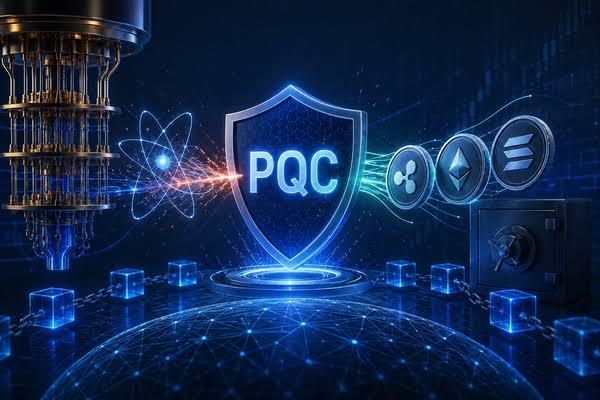
Post Quantum Cryptography (PQC) refers to cryptographic methods designed to protect digital information against attacks from both conventional and quantum computers.
Most existing encryption systems rely on mathematical problems that are difficult for today's computers to solve. However, sufficiently powerful quantum computers could eventually break some of the public-key cryptographic systems widely used across the internet.
This creates a concern known as “harvest now, decrypt later.” Attackers may collect encrypted data today and attempt to decrypt it when more powerful quantum technology becomes available.
Moving toward quantum-resistant cryptography can help organizations reduce this risk, especially when handling confidential information that must remain secure for many years.
Understanding the Three NIST Post-Quantum Standards
In August 2024, NIST finalized three important standards to help organizations prepare for this emerging threat.
1. ML-KEM (FIPS 203)
ML-KEM, previously known as CRYSTALS-Kyber, is designed to establish shared secret keys between communicating parties. These keys can then be used to protect information exchanged over networks.
It is particularly relevant to secure communications, cloud services, and other systems that depend on public-key cryptography.
2. ML-DSA (FIPS 204)
ML-DSA, formerly known as CRYSTALS-Dilithium, focuses on digital signatures. These signatures help verify who created or approved a digital message and whether the information has been altered.
This makes the standard useful for software verification, digital documents, and secure business transactions.
3. SLH-DSA (FIPS 205)
SLH-DSA is another digital signature standard, based on hash functions rather than the lattice-based approach used by ML-DSA.
It provides an alternative for organizations looking to diversify their cryptographic security options.
Together, these standards give businesses a practical starting point for updating systems that may become vulnerable to future quantum attacks.
Why PQC Encryption Matters for Businesses
Adopting PQC encryption is about more than preparing for a technology that may arrive in the future. It is also about protecting information that needs to remain confidential over the long term.
Industries such as banking, healthcare, manufacturing, and technology often manage sensitive customer records, financial information, intellectual property, and proprietary business data. If this information is intercepted today, future advances in quantum computing could create new risks.
However, switching to quantum-resistant cryptography requires careful planning. Businesses need to assess their existing encryption methods, identify vulnerable systems, and test new algorithms before deploying them at scale. Starting early gives organizations more time to address compatibility issues and avoid rushed security upgrades later.
How to Choose the Right PQC Solution
Choosing a suitable PQC solution starts with understanding where and how cryptography is used across the organization.
Businesses should begin by identifying their existing encryption algorithms, digital certificates, applications, and communication protocols. They can then prioritize systems that handle highly sensitive information or depend on cryptography that may be vulnerable to quantum attacks
Testing is equally important. New algorithms can affect system performance, network traffic, and application compatibility. Some environments may also benefit from hybrid approaches that combine traditional and post-quantum cryptography, where supported by the relevant standards and protocols.
Another important consideration is cryptographic agility. This means being able to update or replace cryptographic algorithms without rebuilding entire systems.
A well-planned transition helps businesses strengthen security while keeping essential operations running smoothly.
The Connection Between AI Security in Chennai and Quantum Readiness
As companies adopt artificial intelligence, cybersecurity needs are becoming more complex. Protecting AI systems involves securing sensitive training data, controlling access to models, preventing data leakage, and monitoring potential attacks.
Businesses exploring AI Security in Chennai should consider these risks alongside their wider cryptographic security strategy.
AI security and post-quantum cryptography solve different problems, but both contribute to stronger digital protection. AI security helps address threats targeting intelligent applications, while quantum-resistant cryptography prepares encryption and digital authentication systems for future advances in computing. For organizations investing in digital transformation, addressing both areas can support better risk management and long-term business resilience.
Conclusion
The NIST post-quantum cryptography standards mark an important step toward preparing digital systems for the quantum era. ML-KEM supports secure key establishment, while ML-DSA and SLH-DSA provide methods for creating quantum-resistant digital signatures.
Businesses do not need to replace every cryptographic system overnight. They should begin by understanding their current security infrastructure, identifying high-priority risks, and developing a phased migration plan.
Taking these steps today can help organizations protect sensitive information, maintain customer confidence, and prepare for the next generation of cybersecurity challenges.