Power Quality Equipment Market Intelligence Reveals Shifting Demand Across Digital and Energy Infrastructure
-

- September 03rd, 2026
- 2,846 views
Introduction
Stable electricity is becoming increasingly important as businesses, industries, and infrastructure operators depend on automated equipment, connected systems, and digital technologies. Manufacturing plants, data centers, healthcare facilities, telecommunications networks, utilities, commercial buildings, and transportation infrastructure all require reliable electrical power to maintain continuous operations.
Power quality equipment is used to manage electrical disturbances such as voltage fluctuations, harmonics, transients, surges, interruptions, and poor power factor. Major solutions include uninterruptible power supplies, voltage regulators, harmonic filters, surge protection devices, power conditioners, and monitoring systems.
The power quality equipment market intelligence points toward an industry increasingly shaped by digitalization, industrial automation, renewable energy integration, energy storage, electrification, smart-grid development, and rising expectations for energy efficiency. These developments are changing both customer requirements and competitive priorities.
Changing Role of Power Quality Equipment
Power quality equipment was traditionally viewed primarily as a protective layer for electrical systems. Today, its role is becoming broader.
Organizations increasingly want equipment that not only protects electrical assets but also monitors performance, identifies abnormal conditions, supports predictive maintenance, and provides useful operational data.
This shift is encouraging manufacturers to combine hardware with sensors, software, communication capabilities, and analytics.
The result is an industry moving toward integrated electrical management rather than standalone protection.
Industrial Automation Drives Reliability Requirements
Industrial automation is an important source of demand.
Modern manufacturing facilities use robotics, programmable logic controllers, sensors, variable-frequency drives, automated machinery, and connected production systems.
These technologies can be sensitive to voltage disturbances and harmonic distortion. An electrical problem can interrupt production, affect product quality, or increase equipment maintenance requirements.
Manufacturers are therefore increasingly evaluating power quality as part of broader operational reliability strategies.
Application-specific solutions designed for industrial environments can provide opportunities for equipment suppliers.
Data Centers Reshape Demand
Data center development is another major influence.
Cloud computing, artificial intelligence, digital platforms, high-performance computing, and online services require extensive computing infrastructure.
Data centers need highly reliable electricity because even brief interruptions can affect servers, storage, networking, and cooling systems.
UPS systems remain essential, but demand is increasingly extending toward intelligent monitoring, efficient power conversion, surge protection, and advanced power management.
Energy efficiency is particularly important because data centers operate continuously and electricity can represent a significant component of operating costs.
Renewable Energy Creates New Requirements
Renewable energy integration is changing the structure of electrical systems.
Solar and wind installations use inverters and power electronics that can influence voltage and harmonic characteristics.
As renewable generation becomes increasingly connected to industrial facilities, commercial properties, microgrids, and utility networks, power quality management becomes more complex.
Power quality solutions can support voltage regulation, harmonic mitigation, reactive power management, and system monitoring.
Hybrid energy systems combining renewable generation, grid electricity, and battery storage can further increase the need for integrated electrical management.
Energy Storage Expands the Opportunity
Battery energy storage is becoming a strategic component of modern power infrastructure.
Storage systems can provide backup electricity, support renewable generation, manage peak demand, and improve energy flexibility.
Power quality equipment can complement storage installations by providing electrical protection, monitoring, power conditioning, and control.
As energy storage becomes more integrated with renewable generation and commercial electricity systems, equipment manufacturers can develop solutions that combine power quality and energy-management functions.
Electric Vehicle Infrastructure
The expansion of electric vehicle charging infrastructure is creating another area of opportunity.
High-power charging equipment can produce significant electrical loads at fleet depots, logistics facilities, public charging locations, and commercial properties.
These systems may require voltage management, harmonic mitigation, surge protection, and load balancing.
When charging infrastructure is combined with renewable energy and battery storage, the electrical system becomes even more complex.
This can increase demand for intelligent monitoring and power quality management.
Smart Grid Transformation
Utilities are modernizing power networks through automation, smart metering, digital controls, distributed generation, and advanced monitoring.
These technologies require better visibility into electrical conditions across the network.
Power quality monitoring can help utilities identify voltage disturbances, harmonics, interruptions, and abnormal operating conditions.
The development of smart grids is therefore expanding the role of power quality equipment from individual facility protection toward broader network management.
Digital Monitoring Becomes Essential
Digital connectivity is changing customer expectations.
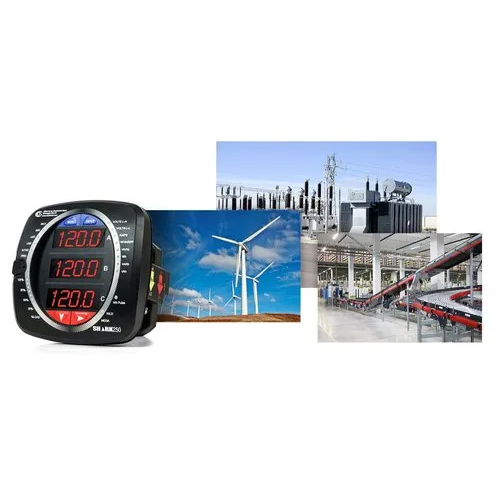
Modern power quality systems can continuously monitor voltage, current, frequency, harmonics, power factor, temperature, and equipment status.
Operators can access information through centralized dashboards and receive alerts when conditions become abnormal.
Remote monitoring can be particularly useful for organizations operating multiple facilities.
This capability can improve troubleshooting, maintenance planning, and operational visibility.
Predictive Maintenance Opportunities
Predictive maintenance is becoming increasingly important.
Traditional maintenance schedules may not accurately reflect actual equipment conditions.
Connected systems can collect operational data and identify unusual patterns that may indicate developing faults.
Analytics can help maintenance teams determine when inspection or servicing is required.
By supporting earlier intervention, predictive maintenance can reduce unplanned downtime and improve asset utilization.
For manufacturers, these capabilities also create opportunities for recurring monitoring and service offerings.
Energy Efficiency Influences Purchasing
Energy efficiency is increasingly becoming a purchasing priority.
Businesses are seeking to reduce electricity consumption and operating costs without compromising reliability.
Modern UPS systems, harmonic filters, power factor correction equipment, and power conditioners can support more efficient electrical operations.
Manufacturers are investing in improved power conversion efficiency, thermal management, and digital control technologies.
Products that provide measurable lifecycle savings can offer stronger value to cost-conscious customers.
Modular and Scalable Solutions
Infrastructure requirements can change as businesses expand.
Modular power quality equipment allows customers to increase capacity without replacing an entire system.
This approach can be valuable for data centers, manufacturing plants, commercial buildings, and renewable energy facilities.
Scalable systems can simplify expansion, maintenance, and upgrades.
They can also help organizations align capital investment with actual changes in electricity demand.
Competitive Intelligence
Competition is increasingly focused on complete solutions rather than individual components.
Manufacturers are differentiating themselves through efficiency, digital functionality, application-specific engineering, modularity, cybersecurity, and technical services.
Installation, commissioning, maintenance, remote diagnostics, and equipment upgrades can strengthen long-term customer relationships.
Partnerships with utilities, electrical contractors, automation providers, system integrators, and renewable energy companies can also help manufacturers reach specialized application markets.
Cybersecurity and Interoperability
Greater connectivity introduces additional technical requirements.
Power quality equipment may communicate with industrial networks, cloud platforms, building-management systems, and energy-management software.
Customers increasingly expect secure communication, authentication, controlled access, and reliable software updates.
Interoperability is also important because modern facilities often combine equipment from several manufacturers.
Solutions that integrate effectively with existing infrastructure can provide greater operational value.
Regional Demand Considerations
Demand characteristics vary across regions.
Developed economies can generate opportunities through infrastructure modernization, replacement of aging electrical systems, data center construction, and efficiency improvements.
Emerging markets may benefit from industrialization, urban development, telecommunications expansion, renewable energy projects, and new commercial infrastructure.
Local grid conditions, technical standards, industrial structures, and infrastructure maturity can influence product requirements.
Manufacturers with adaptable solutions and strong local support can respond more effectively to these differences.
Key Market Challenges
The industry faces several barriers.
Advanced equipment can involve significant initial investment, while legacy electrical systems can make integration complex.
Some organizations may lack technical personnel capable of managing sophisticated monitoring and analytics platforms.
Rapid technology development can also create interoperability concerns.
Simplified interfaces, modular products, training, technical support, and flexible deployment models can help reduce these barriers.
Future Intelligence Outlook
The industry is moving toward intelligent platforms that combine power protection, monitoring, analytics, energy management, and predictive maintenance.
Artificial intelligence could improve fault detection and equipment health assessment.
Edge computing may enable faster local analysis, while cloud-based platforms can support centralized management across multiple facilities.
The convergence of renewable energy, energy storage, EV charging, industrial automation, and smart-grid technologies will further increase electrical system complexity.
These developments are likely to strengthen the need for intelligent and integrated power quality solutions.
Conclusion
The power quality equipment market intelligence indicates that the industry is evolving from conventional electrical protection toward connected and intelligent power management.
Industrial automation, data center expansion, renewable energy, energy storage, EV charging, smart-grid modernization, and digital transformation are creating diverse opportunities.
At the same time, customers increasingly expect equipment to deliver energy efficiency, real-time monitoring, predictive capabilities, scalability, cybersecurity, and lifecycle support.
Manufacturers that successfully combine dependable electrical technologies with digital intelligence and service capabilities can strengthen their competitive position.
As electricity becomes more critical to modern operations, power quality equipment will remain an important foundation for reliable, efficient, and resilient electrical infrastructure.
Written as -https://www.pristinemarketinsights.com/power-quality-equipment-market-report