Things to Know Before Buying a Premium Yoga Mat for Serious Yoga Practice
-

- Published Updated
- 7,173 views
Buying a yoga mat sounds simple until you actually stand in front of ten different options and realize you have no idea what separates a good one from a bad one. Most people grab whatever looks decent and move on. Then six months later they are dealing with a mat that peels, smells strange, or slides across the floor every time they breathe.
If you are serious about yoga, even a little bit, your mat deserves more thought than that. Here is what actually matters before you spend your money.
Why the Material Underneath You Changes Everything
Walk into any sports store and you will see mats made from rubber, PVC, TPE, jute, and cotton. That variety exists because different materials genuinely feel different during practice.
Natural Materials Feel Different on the Body
Rubber mats have a certain weight and grip that synthetic ones struggle to match. When you press your palms down into a rubber mat, it holds. There is no sliding, no second-guessing. For people who sweat or practice in warm rooms, that grip makes a noticeable difference.
Jute and cotton mats have a texture that feels closer to a natural surface. Some people love it. Others find it too rough on sensitive skin. It really comes down to personal preference and what your body responds to.
Synthetic Options Are Practical for Daily Use
TPE and PVC mats are easier to wipe down, lighter to carry, and generally more resistant to everyday wear. If you roll your mat up five days a week and toss it in a bag, synthetic holds up better over time.
One thing worth knowing about cheaper PVC mats is the smell. Some off-gas a chemical odor that does not go away quickly. If you are someone who takes deep breathing seriously during practice, that matters more than people realize.
Getting the Size and Thickness Right
Do Not Assume Standard Size Works for Everyone
Most mats run around 68 to 72 inches long and 24 inches wide. For average height that works fine. But if you are taller or you practice styles that involve big sweeping movements, you will hit the edge of the mat constantly.
A Yoga Mat Male buyer who is above average height should specifically look for extended length options. An extra six inches of mat length sounds minor but feels significant when you are actually moving through a full sequence.
Thickness Is About More Than Comfort
Thicker mats feel luxurious. Six millimeters of cushioning under your knees during a low lunge is genuinely comfortable. But thickness also means distance from the floor, and that distance affects your balance during standing poses.
Thinner mats keep you grounded. You feel the floor through the mat, which helps with stability. The trade-off is that harder surfaces become more noticeable over time, especially on knees and wrists.
Most practitioners land somewhere in the middle around four millimeters. Enough cushion to protect joints, thin enough to feel stable.
Tips for Testing Grip Before You Commit
A Non-Slip Surface Is Not Just Marketing Language
Some mats advertise non-slip and deliver it. Others advertise it and definitely do not. The difference usually shows up in texture. Run your hand across the surface. It should feel slightly resistant, almost tacky. If it feels smooth like a plastic bag, it will slide.
Also think about where you practice. A mat that grips well on carpet may behave differently on a hardwood floor or a smooth studio surface.
What Happens When You Sweat
Hot yoga practitioners know this problem well. A dry mat grips fine. Add sweat and the surface becomes unpredictable. Some mats are specifically designed to grip better when wet. Those are worth seeking out if you run warm or practice in heated spaces.
Hygiene matters here too. A mat that absorbs moisture but cannot be cleaned properly will start to smell within weeks. Check whether the mat can be hand washed or machine washed before buying.
Guide to Spending the Right Amount of Money
Cheap Mats Are Not Always the Wrong Choice
If you are brand new to yoga and not sure how committed you will be, spending a lot upfront does not make sense. An affordable mat will get you through the early months while you figure out your practice style and what you actually need.
Just go in knowing that budget mats have a shorter lifespan. The surface tends to pill and thin out, and grip usually deteriorates faster than you expect.
When a Better Mat Pays for Itself
Someone who practices four or five times a week will go through a cheap mat in under a year. A quality mat bought once and cared for properly can last five years or more. Over time the math clearly favors spending more upfront.
A premium yoga mat also tends to perform more consistently. The grip does not change from session to session, the surface does not break down unevenly, and it keeps its shape through regular rolling and unrolling.
How to Think About Portability and Extra Features
Carrying Your Mat Should Not Be a Workout
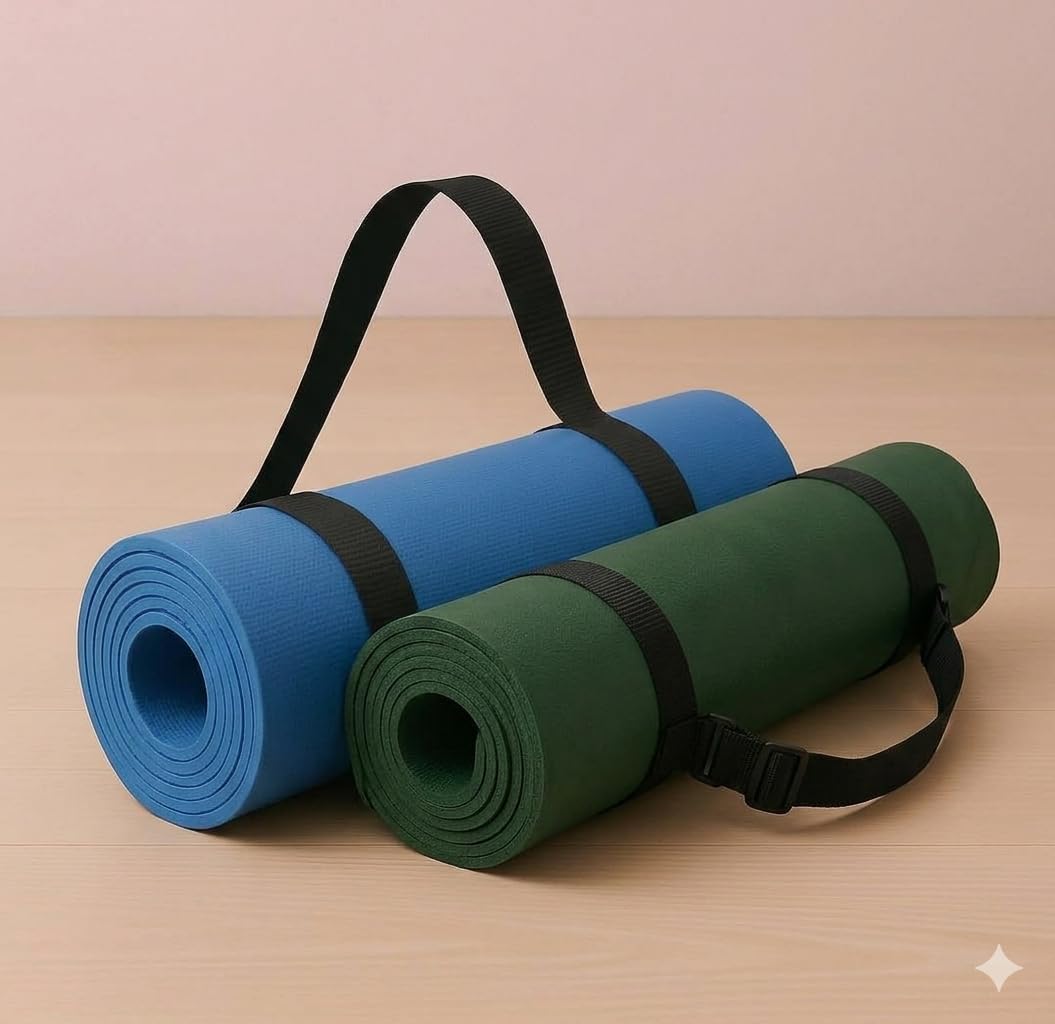
If you walk to a studio or commute by public transport, a heavy mat gets old fast. Lighter mats in the three to four kilogram range are noticeably easier to carry over any distance. A built-in carry strap or a separate bag makes the whole thing easier.
For people who travel frequently, foldable mats are worth considering. They fit into luggage in a way that a rolled mat simply cannot.
Small Extras That Actually Get Used
Some mats come with a yoga block or strap included. For newer practitioners those tools are genuinely helpful and buying them bundled together usually saves money compared to buying separately.
Design matters more than people admit. A mat you actually like looking at is a mat you are more likely to unroll when motivation is low. Whether that means a simple neutral color or something bolder is entirely personal.
One Last Thing Before You Buy
Take your time with this decision. Read reviews from people who have used the mat for at least six months, not just initial impressions. Check the return policy in case it does not feel right once you get it home.
Think about your honest practice habits, your body, your budget, and where you usually practice. The right mat fits all of those things together.
If you want a starting point worth trusting, Gravolite makes mats built around how real practitioners actually use them. The quality holds up, the materials are thoughtfully chosen, and the range covers different needs without overcomplicating the decision.