⚙️ How Production Scheduling Influences Industrial Kitchen Equipment Capacity Planning
-

- Published Updated
- 2,246 views
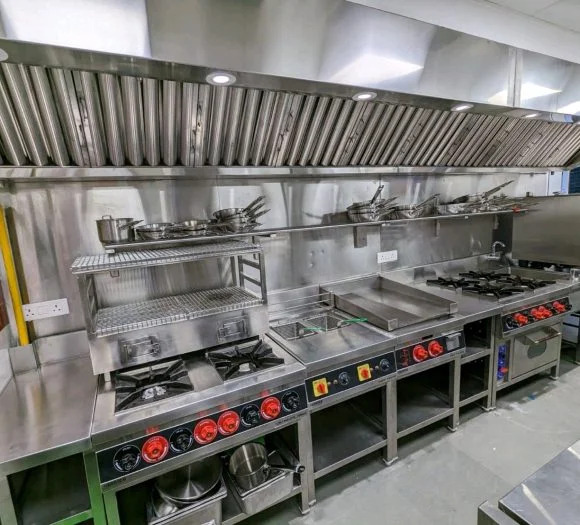
Production scheduling is an important part of industrial kitchen planning because equipment requirements depend not only on how much food a kitchen produces, but also on when that production takes place. A kitchen may process thousands of meals in a day, but if a large portion of that production is concentrated into a short peak period, equipment capacity must be planned differently.
This is why production scheduling and equipment capacity planning should be evaluated together. Understanding production timings, batch sizes, menu requirements, peak demand, preparation cycles, cooking times, holding requirements, and cleaning periods can help businesses determine the practical equipment capacity required for their operations.
For businesses comparing Industrial Kitchen Equipment Manufacturers, production scheduling can also provide a technical basis for selecting equipment instead of relying only on rated specifications.
What Is Production Scheduling in an Industrial Kitchen?
Production scheduling is the process of organising food preparation and production activities according to time, quantity, resources, equipment availability, and operational priorities.
A typical industrial kitchen may divide production into several stages:
- Raw material receiving
- Storage
- Preparation
- Cooking
- Holding
- Portioning
- Dispatch or service
- Cleaning and sanitation
Each stage requires time and resources. If several processes need the same equipment at the same time, a bottleneck can develop.
Production scheduling helps determine when equipment will be required, how long it will operate, and whether available capacity can support the planned production volume.
Why Scheduling Matters for Equipment Capacity Planning
Equipment capacity is often evaluated using a maximum or rated output. However, actual kitchen operations rarely run continuously at maximum capacity.
Equipment may need time for:
- Loading
- Unloading
- Batch changes
- Cleaning
- Inspection
- Temperature recovery
- Material transfer
- Operator handling
- Maintenance
Therefore, capacity planning should consider the complete production schedule rather than only the maximum theoretical output of a machine.
For example, equipment capable of processing a large batch may still be insufficient if multiple batches are required within a short peak window.
Average Demand and Peak Demand Must Be Separated
One of the most important principles of capacity planning is distinguishing average production from peak production.
Suppose a kitchen produces a relatively stable volume throughout most of the day but experiences a major demand increase before lunch service. Equipment may have enough daily capacity but still struggle during the peak period.
Capacity planning should therefore examine:
- Daily production volume
- Hourly production volume
- Peak-hour demand
- Batch frequency
- Production duration
- Equipment cycle time
- Recovery time
- Cleaning periods
This helps businesses avoid selecting equipment based only on daily averages.
How Production Schedules Reveal Equipment Bottlenecks
A production schedule can show where equipment demand exceeds available capacity.
For example:
Preparation → Cooking → Holding → Service
If preparation takes longer than cooking, the cooking equipment may spend time waiting for ingredients.
If cooking capacity is lower than preparation capacity, prepared ingredients may accumulate before the cooking stage.
If holding capacity is insufficient, completed batches may create congestion even when cooking equipment is performing efficiently.
These situations demonstrate why capacity should be analysed across the complete workflow.
Batch Size Influences Equipment Capacity
Batch production can significantly affect equipment requirements.
A kitchen may process food in large batches or several smaller batches depending on menu requirements, storage limitations, recipe specifications, and service schedules.
When evaluating equipment capacity, businesses should consider:
- Typical batch size
- Maximum batch size
- Number of batches per shift
- Time required per batch
- Loading and unloading time
- Cleaning between products
- Required production interval
Two kitchens with the same daily production volume may require completely different equipment configurations because their batch schedules differ.
Equipment Cycle Time Is a Critical Planning Factor
Cycle time refers to the time required to complete a particular equipment operation.
A realistic cycle may include:
- Loading
- Processing
- Unloading
- Transfer
- Cleaning or preparation for the next cycle
Ignoring loading, unloading, and cleaning time can lead to unrealistic capacity calculations.
For example, equipment that appears capable of completing ten batches during a shift may complete fewer batches when actual handling and cleaning periods are included.
Industrial Kitchen Equipment Suppliers in India should therefore be able to provide practical operating information rather than only headline capacity figures.
How Menu Complexity Affects Equipment Scheduling
Menu diversity can influence equipment utilisation and capacity requirements.
A kitchen producing a limited number of standard products may maintain a predictable schedule. A kitchen with many recipes may need frequent equipment changes, different cooking processes, or additional preparation stages.
Menu complexity can increase:
- Changeover time
- Cleaning requirements
- Equipment switching
- Preparation requirements
- Storage requirements
- Operator workload
Capacity planning should therefore be based on the actual menu and production process rather than assuming uniform equipment utilisation.
Production Scheduling Helps Identify Underused Equipment
Scheduling can also reveal equipment that is consistently underutilised.
If a machine is used only for a short period each day, businesses can investigate whether:
- The equipment is oversized
- Production can be rescheduled
- Multiple products can share the equipment
- Another workflow stage is limiting utilisation
- Demand is seasonal
- Backup capacity is intentionally maintained
Low utilisation does not automatically mean that equipment should be removed. Some equipment must retain available capacity for peak demand, emergency production, or future expansion.

How Scheduling Influences Equipment Quantity
Capacity planning is not always about choosing a larger machine. Sometimes the better solution is to use multiple equipment units.
For example, two appropriately sized machines may provide greater scheduling flexibility than one very large machine.
Multiple units can offer:
- Parallel production
- Backup capacity
- Easier maintenance scheduling
- Greater operational flexibility
- Reduced dependency on one machine
- Better production balancing
The right approach depends on production volume, space, utilities, budget, maintenance strategy, and workflow requirements.
Utility Planning Must Follow the Production Schedule
Equipment utility demand can change depending on how many machines operate simultaneously.
Important utilities may include:
- Electricity
- Gas
- Water
- Drainage
- Ventilation
- Exhaust
- Refrigeration connections
If production schedules require several high-load machines to operate at the same time, the facility must be able to support the combined demand.
This is an important consideration when selecting an Industrial Kitchen Equipment Manufacturer because utility planning should reflect actual operating conditions.
Equipment Placement Should Match the Production Sequence
Production scheduling and physical layout are closely connected.
If equipment is arranged according to the production sequence, operators can move ingredients and products efficiently.
A well-planned layout can reduce:
- Unnecessary walking
- Cross-traffic
- Material handling
- Waiting time
- Operator fatigue
- Transfer delays
Equipment placement should therefore be considered alongside the production schedule instead of being treated as a separate design decision.
Cleaning Schedules Affect Available Capacity
Cleaning and sanitation are essential parts of industrial kitchen operations, but they also consume time.
Equipment may need cleaning:
- Between product types
- Between production batches
- At scheduled intervals
- At the end of a shift
- After maintenance
- Before production begins
If cleaning time is ignored, calculated production capacity may be higher than the actual available capacity.
Capacity planning should include these non-production periods so that equipment requirements reflect real operating conditions.
Maintenance Scheduling Can Protect Production Capacity
Preventive maintenance should also be incorporated into production planning.
Maintenance activities may temporarily remove equipment from service. If all production depends on one critical machine, scheduled maintenance can create significant capacity limitations.
Businesses can reduce this risk by evaluating:
- Maintenance intervals
- Service duration
- Spare-part availability
- Equipment redundancy
- Backup capacity
- Service access
- Critical equipment dependencies
When comparing Industrial Kitchen Equipment Manufacturers in India, maintenance support and serviceability should therefore be part of the technical evaluation.
Future Growth Should Be Included in Capacity Planning
Production scheduling should not only reflect current demand.
Businesses may experience growth because of:
- Additional customers
- New menu categories
- Catering contracts
- Institutional orders
- Additional shifts
- New service locations
- Seasonal demand
If equipment is selected only for current production, the kitchen may reach its practical capacity sooner than expected.
A better approach is to understand current demand and estimate realistic future requirements before finalising the equipment configuration.
How to Evaluate Manufacturers Using Production Requirements
Businesses should provide potential manufacturers with practical production information.
Useful information includes:
- Daily production volume
- Peak-hour volume
- Operating hours
- Batch sizes
- Menu categories
- Number of shifts
- Available space
- Utility availability
- Cleaning schedule
- Maintenance requirements
- Future expansion plans
This allows Industrial Kitchen Equipment Manufacturers to evaluate equipment requirements according to actual operational conditions.
It also helps businesses compare manufacturers based on technical suitability rather than simply comparing prices.
Role of Industrial Kitchen Equipment Suppliers in India
Industrial Kitchen Equipment Suppliers in India can support businesses by providing different equipment categories and configurations.
However, buyers should verify whether the proposed equipment can work effectively within the planned production schedule.
Before purchasing, businesses should ask about:
- Rated capacity
- Practical throughput
- Cycle time
- Utility consumption
- Operating requirements
- Installation requirements
- Maintenance access
- Spare parts
- Service support
- Customisation options
This information helps determine whether the proposed equipment is suitable for the complete kitchen operation.
Manufacturer Selection Should Consider the Complete System
Choosing an Industrial Kitchen Equipment Manufacturer should not be based solely on individual product specifications.
A suitable manufacturer should understand how equipment interacts with:
- Production workflow
- Utilities
- Kitchen layout
- Operators
- Storage
- Refrigeration
- Ventilation
- Cleaning
- Maintenance
An Industrial Kitchen Equipment Manufacturer in India with experience in different commercial and industrial kitchen environments may be better positioned to evaluate these operational relationships.
Practical Capacity Planning Checklist
Before finalising industrial kitchen equipment, businesses can review:
- What is the total daily production volume?
- What is the peak hourly demand?
- What are the typical batch sizes?
- How long does each production cycle take?
- How much time is required for loading and unloading?
- How much cleaning time is required?
- Which equipment stages are potential bottlenecks?
- Which machines must operate simultaneously?
- What are the combined utility requirements?
- Is sufficient preparation capacity available?
- Is refrigeration capacity sufficient?
- Is holding capacity adequate?
- Can maintenance be performed without major production disruption?
- Is backup capacity required?
- Can the equipment support future production growth?
- Does the layout match the production sequence?
- Can the manufacturer provide technical guidance?
- Can the supplier provide installation and service support?
Why Production Scheduling Should Come Before Equipment Procurement
Equipment procurement becomes more accurate when production requirements are clearly understood before equipment is selected.
Without a realistic schedule, businesses may:
- Overestimate required capacity
- Underestimate peak demand
- Purchase oversized equipment
- Create workflow bottlenecks
- Underestimate utility requirements
- Ignore cleaning time
- Overlook maintenance downtime
Production scheduling provides a practical foundation for equipment sizing and system planning.
Instead of asking only how much equipment can produce, businesses should determine how much production must be completed within specific time periods.
Conclusion
Production scheduling plays an important role in industrial kitchen equipment capacity planning because actual kitchen requirements depend on timing, batch size, workflow, peak demand, cleaning, maintenance, and equipment interdependency.
A machine with high rated capacity may still be underutilised if another production stage creates a bottleneck. Similarly, equipment that appears sufficient based on daily production may become inadequate when demand is concentrated into a short peak period.
By analysing production schedules before procurement, businesses can make better decisions about equipment capacity, quantity, layout, utilities, maintenance, redundancy, and future expansion.
When comparing Industrial Kitchen Equipment Manufacturers, Industrial Kitchen Equipment Suppliers, and an Industrial Kitchen Equipment Manufacturer in India, businesses should therefore evaluate equipment according to the complete production schedule rather than relying only on individual technical specifications.
Frequently Asked Questions
Why is production scheduling important for industrial kitchen equipment planning?
Production scheduling shows when equipment is required, how much production must be completed, and where capacity limitations may occur. It helps businesses plan equipment according to actual operating conditions.
Should equipment capacity be based on average or peak production?
Both should be considered, but peak production is particularly important when a large portion of daily output is concentrated into a short period.
How does batch size affect equipment selection?
Batch size influences the number of cycles required, equipment operating time, cleaning frequency, and total production capacity needed during a shift.
What should businesses ask Industrial Kitchen Equipment Suppliers in India?
Businesses should ask about rated capacity, practical throughput, cycle time, utility requirements, installation, maintenance, spare parts, service support, and compatibility with the planned production schedule.
Why should an Industrial Kitchen Equipment Manufacturer in India understand production scheduling?
Understanding production scheduling helps the manufacturer recommend equipment based on actual production volume, peak demand, workflow, equipment utilisation, utilities, and future expansion rather than relying only on standard equipment specifications. https://maaengfab.com/industrial-kitchen-equipment/