Quality Management Systems (QMS): Definition, Key Components, and Importance
-

- Published Updated
- 9,570 views
What Is a Quality Management System (QMS)?
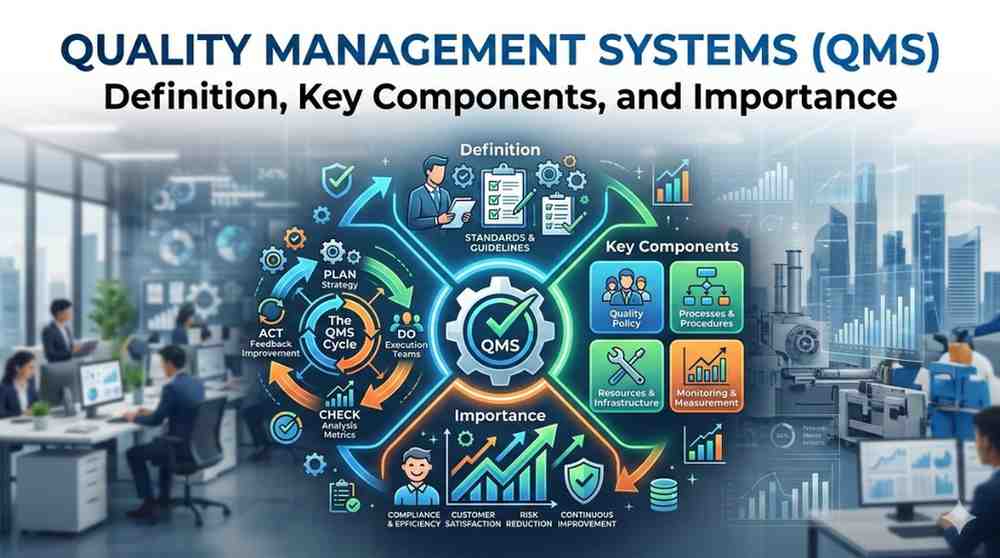
A Quality Management System (QMS) is a structured framework of policies, processes, procedures, and responsibilities used by an organization to ensure that products or services consistently meet defined quality standards and customer expectations.
In practical terms, a QMS creates an internal system that ensures quality is planned, controlled, documented, monitored, and continuously improved. Rather than relying on individual practices, the QMS standardizes how work is performed across departments.
Many organizations today support their quality processes through Manufacturing Quality Management Software. These digital platforms help manage documentation, track quality events, and maintain traceability across operations.
Core Components of a Quality Management System
A robust QMS typically includes several foundational elements that together ensure consistent quality performance.
Quality Policy and Objectives
The quality policy reflects leadership’s commitment to maintaining and improving quality standards. It sets the direction for the organization’s quality goals and defines expectations for employees, suppliers, and partners.
Quality objectives translate this policy into measurable targets, such as improving customer satisfaction, reducing process errors, or improving CAPA closure timelines.
Documented Processes and Procedures
Standardized procedures ensure that critical activities are performed consistently. These documented processes may include:
- Operational procedures
- Standard Operating Procedures (SOPs)
- Work instructions
- Quality manuals
Document control systems maintain version management, approval workflows, and traceability. Many organizations manage these records through Enterprise Quality Management Software, which provides structured document control and audit trails.
Quality Planning
Quality planning involves defining how the organization will meet quality requirements.
This may include:
- Establishing process controls
- Defining product specifications
- Identifying required resources
- Planning verification activities
Effective planning helps prevent quality problems rather than reacting to them after they occur.
Resource Management
Quality performance depends on the availability of appropriate resources.
Resource management includes:
- Skilled personnel and training
- Equipment and technology
- Infrastructure and work environment
Organizations increasingly integrate training management and competency tracking within their EQMS platforms to ensure employees remain qualified for assigned responsibilities.
Quality Assurance
Quality assurance focuses on preventing defects through systematic controls.
Typical quality assurance activities include:
- Process standardization
- Internal reviews
- Compliance monitoring
- Risk assessments
These proactive activities help ensure that processes operate consistently and align with established quality standards.
Quality Control
Quality control involves monitoring outputs to confirm they meet defined requirements.
Examples include:
- Inspection of finished products
- Testing and verification procedures
- Performance monitoring against quality metrics
While quality assurance focuses on preventing issues, quality control focuses on detecting and correcting problems before products reach customers.
Continuous Improvement
Continuous improvement is a central principle of modern quality management. Organizations regularly analyze process performance, customer feedback, and audit findings to identify improvement opportunities.
Two key mechanisms supporting continuous improvement include:
-
CAPA management, which addresses root causes of quality issues and prevents recurrence
- Audit management, which evaluates system effectiveness and identifies potential risks
When supported by Enterprise Quality Management Software, these activities can be tracked and analyzed through centralized dashboards and reporting tools.
Common Standard: ISO 9001
The most widely adopted global framework for QMS is ISO 9001.
ISO 9001 provides structured requirements for designing, implementing, and improving a quality management system. The latest version, ISO 9001:2015, emphasizes:
- Process-based management
- Risk-based thinking
- Leadership involvement
- Continuous improvement
Organizations across industries pursue ISO 9001 certification to demonstrate that their quality systems meet internationally recognized standards.
Some industries may also align with additional frameworks such as IATF 16949 for automotive quality systems.
Role of Digital QMS and EQMS Platforms
As organizations grow, managing quality through manual processes becomes difficult. Enterprise Quality Management Software (EQMS) helps centralize quality operations by supporting:
- Document control
- CAPA management
- Audit management
- Training and compliance tracking
- Risk and change management
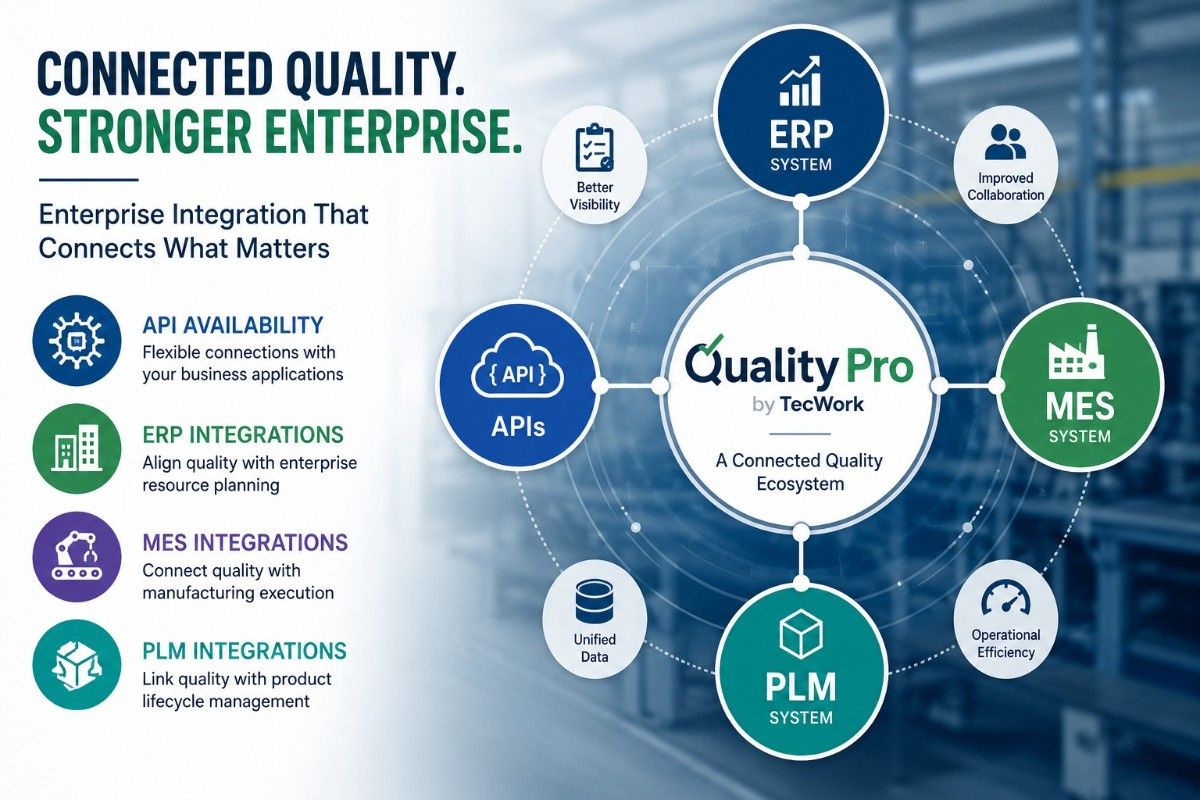
Several vendors provide EQMS solutions used in regulated and manufacturing environments, including ETQ, QualityPro, MasterControl, Veeva, TrackWise, and QT9. These platforms help organizations maintain consistent quality processes across multiple teams or locations.
For industries handling electronic records, systems may also need to support regulatory requirements such as FDA 21 CFR Part 11.
Why Implement a QMS?
Implementing a QMS provides several important benefits:
Customer and Market Benefits
Consistent product or service quality
Improved customer trust and satisfaction
Stronger market credibility
Operational Benefits
Standardized processes
Reduced errors and waste
Better data-driven decision making
Organizational Benefits
Clear roles and responsibilities
Improved internal accountabilityA culture of continuous improvement
Adoption of QMS in India
Across India, organizations in multiple sectors—including manufacturing, laboratories, government institutions, and service providers—have adopted ISO 9001-based QMS frameworks.
The adoption of structured quality systems helps organizations:
- Improve governance and accountability
- Strengthen operational discipline
- Enhance trust with customers and stakeholders
- Align with international standards
In larger organizations, digital platforms such as Enterprise Quality Management Software (EQMS) are increasingly used to support document control, CAPA management, and Audit management across distributed teams.
Final Perspective
A Quality Management System provides the structural foundation for delivering consistent quality and improving organizational performance. By aligning leadership objectives, operational processes, and continuous improvement mechanisms, a QMS ensures quality is embedded into everyday activities rather than treated as an afterthought.
Frameworks such as ISO 9001 provide the structure, while tools such as Enterprise Quality Management Software (EQMS) help organizations manage documentation, track CAPA management activities, and coordinate Audit management across departments.
When implemented effectively, a QMS not only improves compliance but also strengthens operational reliability, customer trust, and long-term organizational performance.