
How to Rank in Google AI Overviews (AIO): What Actually Works Now
-

- Published Updated
- 1,346 views
Problem:
Your content ranks on page one, yet Google AI Overviews skip it completely.
Agitation:
Instead of links, users see AI-generated answers pulled from other sites. Traffic leaks. Authority erodes. And classic SEO tactics feel oddly ineffective.
Solution:
Ranking in Google AI Overviews (AIO) requires a different approach. This is not keyword SEO. It’s entity-based optimization, passage clarity, and trust engineering. This article breaks down how Google selects sources and how to structure content AI systems choose to cite.
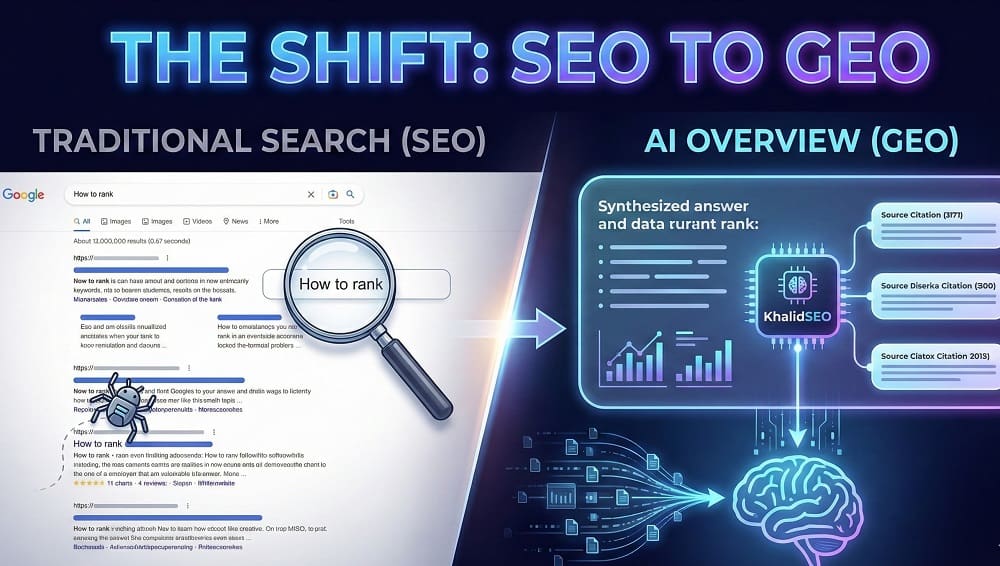
What Are Google AI Overviews (And Why SEO Has Changed)
Google AI Overviews are AI-generated answer summaries that appear above traditional search results. Instead of ranking pages, Google synthesizes responses from multiple trusted sources.
Key differences from classic results:
- Pages are referenced, not ranked
- Answers are built from passages, not entire articles
- Authority comes from contextual trust, not link volume
These summaries rely on Gemini, entity understanding, and Knowledge Graph grounding.
How Google AI Overviews Choose Which Sources to Cite
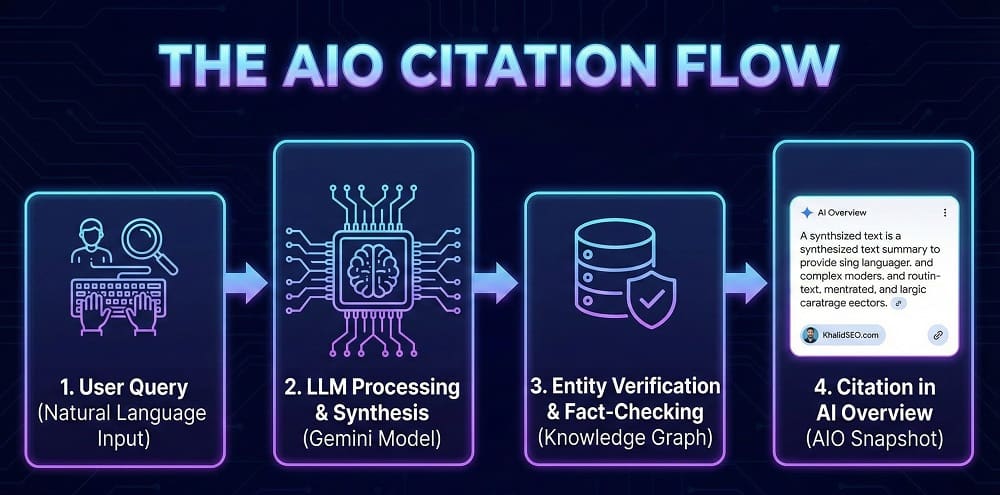
Google AI Overviews follow a selection process, not a ranking system.
Here’s the simplified logic:
- Content is crawled and parsed
- Entities and relationships are extracted
- Trust and expertise are evaluated
- Context relevance is matched
- AI synthesizes answers and assigns citations
If a passage clearly explains a concept and aligns with known entities, it becomes citation-ready.
Core Ranking Signals for Google AI Overviews
Several factors consistently influence AIO inclusion.
The most impactful signals:
- Strong topical authority
- Clear E-E-A-T indicators
- Explicit entity definitions
- High factual consistency
- Alignment with the Helpful Content System
Backlinks still help, but they support trust rather than drive visibility.
Traditional SEO vs Google AI Overviews SEO
Element |
Traditional SEO |
AI Overviews |
|---|---|---|
Focus |
Keywords |
Entities |
Ranking unit |
Page |
Passage |
Output |
Blue links |
AI summaries |
Authority |
Links |
Trust + expertise |
Goal |
Rank |
Be cited |
Entity-Based SEO: The Real Foundation of AIO Visibility
AI Overviews operate on entities, not keyword strings.
An entity is a clearly defined concept, person, or system recognized in Google’s Knowledge Graph. The stronger your entity clarity, the easier it is for AI to trust your content.
Effective entity optimization includes:
- Defining concepts precisely
- Using consistent terminology
- Linking subtopics logically
- Avoiding vague explanations
This is where most generic SEO content fails.
How to Write Content AI Systems Can Cite (LLMO)
AI Overviews extract answers at the passage level. Structure determines visibility.
AI-citable content typically:
- Answers questions directly under headings
- Uses lists and definitions early
- Avoids filler and metaphors
- Keeps sentences self-contained
If a paragraph works out of context, AI can use it.
Structured Data, Authorship, and Trust Signals That Matter
Trust is critical in AI-driven search.
Google cross-validates content using:
- Author credibility
- Site transparency
- Structured data clarity
Key trust assets include:
- Author bios tied to expertise
- About and editorial policy pages
- Schema.org markup (Article, Author, Organization)
For deeper implementation examples and strategy, see
👉 https://khalidseo.com/rank-in-google-ai-overviews/
Can Smaller Websites Rank in Google AI Overviews?
Yes. Site size is not the deciding factor.
Smaller sites succeed when they:
- Go deep into one topic
- Demonstrate hands-on expertise
- Build tight content clusters
- Maintain factual precision
Topical depth often beats brand authority in AIO results.
How to Measure and Future-Proof AIO Visibility
AI Overviews don’t behave like classic rankings.
What to monitor instead:
- Citation appearances in AI summaries
- Growth in branded searches
- Engagement quality signals
- Coverage consistency across topics
Visibility inside answers is the new metric.
FAQ: Google AI Overviews & Ranking
What are Google AI Overviews?
Google AI Overviews are AI-generated summaries that synthesize answers from trusted sources and cite individual passages instead of ranking full pages.
They aim to answer queries directly using context and entity validation.
How does Google select websites for AI Overviews?
Google selects sources based on entity relevance, topical authority, and E-E-A-T signals.
Clear explanations and factual consistency improve citation likelihood.
Can small websites appear in AI Overviews?
Yes. Small sites can appear if they demonstrate strong topical depth and trust signals.
Brand size matters less than clarity and expertise.
Is SEO different for AI Overviews?
Yes. AIO SEO prioritizes entities, passage clarity, and trust over keyword density.
The goal is citation, not ranking alone.
How do I optimize content for AI search results?
Use direct answers, structured formatting, and strong entity relationships.
This makes content easier for AI systems to extract and attribute.
Final Perspective
Ranking in Google AI Overviews isn’t about trends or hacks.
It’s about being the clearest, most trustworthy explanation in the room.
When AI understands your content, visibility follows.
