React Native App Development Services: How Businesses Build Apps for iOS and Android
-

- Published Updated
- 116 views
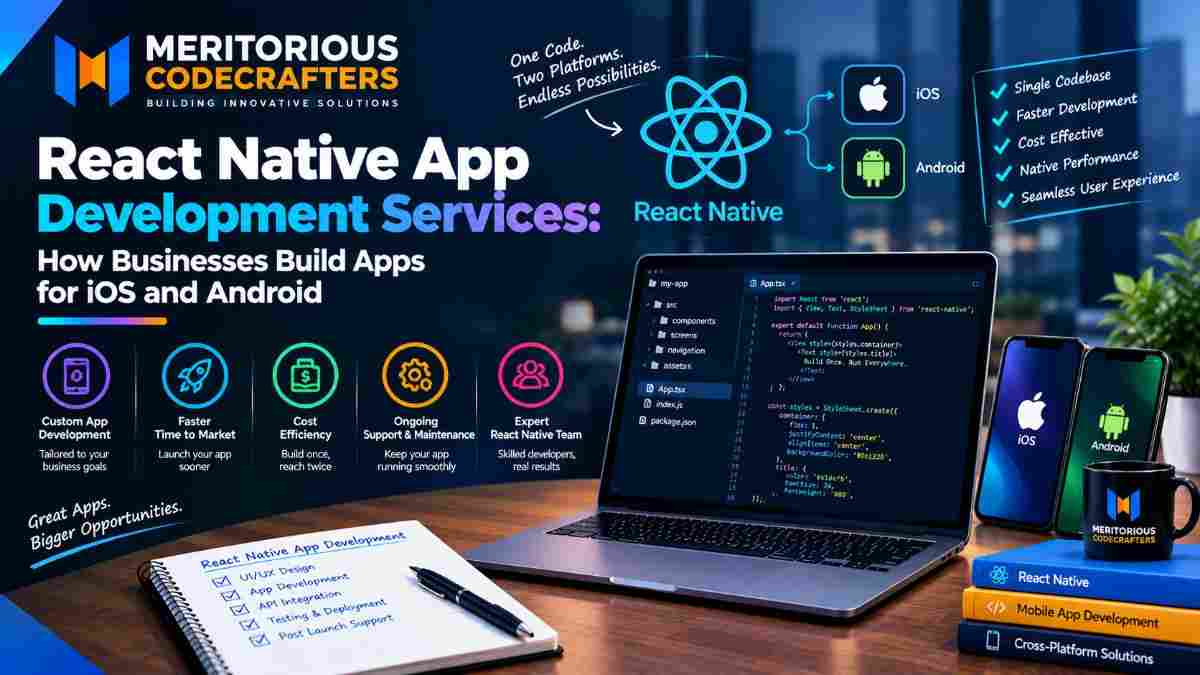
Quick Answer: React Native app development services help businesses build mobile applications for iOS and Android using a shared JavaScript or TypeScript codebase. This approach can reduce duplicated development effort, simplify maintenance, and accelerate releases, making React Native a practical option for businesses that need cross-platform mobile applications without maintaining two entirely separate codebases.
Why Are Businesses Choosing React Native App Development Services?
React Native allows businesses to share much of their application code across iOS and Android, although some platform-specific development may still be necessary. This shared-code approach can reduce duplicated effort when compared with building two completely independent native applications. Businesses can use React Native to develop customer portals, ecommerce apps, booking platforms, on-demand services, and internal business applications. Teams can also reuse components, share business logic, and maintain consistent user experiences across supported devices. However, the actual savings depend on application complexity, native integrations, performance requirements, and the experience of the development team. Meritorious CodeCrafters helps businesses evaluate whether React Native fits their product requirements, expected user experience, delivery timeline, and long-term maintenance plans.
Should You Choose React Native or Native iOS App Development?
Native iOS development is often appropriate when an application requires deep Apple-platform integration, while React Native can be effective when a business needs both iOS and Android applications. Native applications are typically built with Swift or SwiftUI for Apple platforms, allowing developers to work directly with Apple's frameworks and platform-specific capabilities. React Native offers a shared-code approach that can make cross-platform development more efficient when the application has similar functionality on both operating systems. Businesses investing in iOS App Development Services should consider performance requirements, hardware integrations, accessibility, user-interface expectations, and the need for platform-specific features before choosing an architecture. For some projects, a hybrid approach that combines shared React Native code with native modules can provide the right balance. The best decision depends on product goals and technical requirements rather than assuming that one framework is universally better.
How Do Flutter and React Native Compare for Mobile App Development?
Flutter and React Native are both established cross-platform development options, but they differ in their programming models, UI approaches, and ecosystem choices. Flutter uses Dart and its own rendering system, while React Native uses JavaScript or TypeScript and integrates with native platform capabilities. Businesses planning to Hire Flutter Developers may prefer Flutter when its rendering approach, widget ecosystem, or existing team expertise aligns with the product requirements. React Native may be a natural fit for organizations with React and JavaScript experience that want to share knowledge and tooling across web and mobile development. Both frameworks can support production applications, but the decision should account for available libraries, third-party integrations, team skills, testing requirements, and expected maintenance. A technology comparison should therefore focus on the application's actual needs instead of relying on general claims about development speed or performance.
What Should Businesses Look for When Hiring React Native Developers?
A strong React Native team needs expertise in mobile architecture, API integration, testing, performance optimization, and app-store deployment—not just JavaScript syntax. Developers should understand component design, application state management, navigation, authentication, secure storage, error handling, and integration with backend services. Businesses looking to Hire React Developers can also benefit from engineers who understand reusable components and frontend architecture, particularly when the product includes a React-based web application alongside the mobile app. However, mobile development requires additional knowledge of device permissions, application lifecycle management, push notifications, platform-specific behavior, and release requirements. Before selecting a team, businesses should evaluate previous mobile projects, code quality, testing practices, communication processes, and post-launch support. These factors help determine whether the team can deliver a reliable product rather than simply produce an initial working prototype.
How Does Mobile App Development Support Long-Term Business Growth?
A successful mobile application requires ongoing maintenance, monitoring, security updates, and feature improvements after its initial release. Businesses should plan for API changes, operating-system updates, device compatibility, user feedback, analytics, and performance improvements from the beginning. A well-designed React Native application can share much of its business logic across platforms, but teams must still test critical workflows on supported iOS and Android devices. Organizations investing in Mobile App Development Services should also consider backend scalability, data protection, accessibility, release management, and the ability to introduce new features without destabilizing existing functionality. Meritorious CodeCrafters can help businesses plan mobile applications around both immediate product goals and future development needs. This lifecycle-oriented approach helps ensure that the application remains maintainable as customer expectations and business requirements evolve.
FAQ: React Native App Development
What is React Native app development?
React Native is a framework for building mobile applications using JavaScript or TypeScript and React concepts. It enables developers to share much of the code between iOS and Android applications while retaining access to native platform capabilities.
Is React Native suitable for business applications?
Yes. React Native can support ecommerce platforms, customer portals, booking applications, on-demand services, and many enterprise mobile applications. Suitability depends on the required features, performance expectations, integrations, and platform-specific needs.
Is React Native better than Flutter?
Neither framework is universally better. React Native may suit teams with JavaScript and React expertise, while Flutter may be attractive for teams that prefer Dart and Flutter's widget-based development approach.
Can React Native applications use native features?
Yes. React Native applications can integrate with native platform capabilities through supported libraries and native modules. The amount of platform-specific work depends on the features and device integrations the application requires.
Conclusion
React Native provides businesses with a practical way to build and maintain mobile applications across iOS and Android while sharing much of the underlying code. However, successful delivery depends on selecting the right architecture, understanding platform requirements, maintaining code quality, and planning for long-term support. Businesses should compare React Native with native iOS development and Flutter based on their product goals, technical constraints, team expertise, and maintenance expectations. With the right development partner, a mobile application can become a dependable channel for customer engagement, service delivery, and business growth.
Build Your Next Mobile Application with Meritorious CodeCrafters
Meritorious CodeCrafters helps businesses evaluate and develop mobile applications around their functional requirements, target platforms, integrations, and future growth plans. Whether your project calls for React Native, native iOS development, Flutter, or a combination of mobile technologies, the first step is to establish the right technical direction. A structured development process can help align design, engineering, testing, deployment, and ongoing maintenance with your business objectives. Contact Meritorious CodeCrafters to discuss your mobile application requirements and explore the most suitable approach for your next project.