Retrofit Emission Control Devices for DG Sets and CPCB Environmental Norms: A Path to Cleaner Power
-

- Published Updated
- 9,295 views
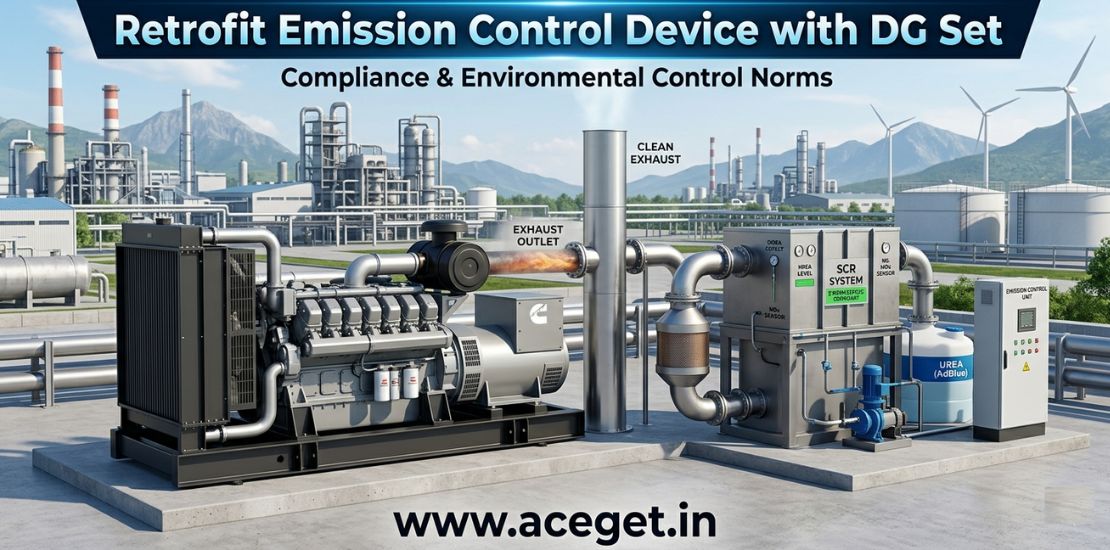
In India’s rapidly urbanizing and industrializing landscape, diesel generator (DG) sets remain a critical backup power source. From residential complexes to hospitals and industrial units, DG sets ensure uninterrupted operations during power outages. However, this reliability comes at a cost of significant air pollution. Emissions from DG sets contribute to particulate matter (PM), nitrogen oxides (NOx), carbon monoxide (CO), and hydrocarbons (HC), all of which degrade air quality and impact human health.
To address this growing environmental concern, regulatory authorities such as the Central Pollution Control Board (CPCB) have introduced stringent emission norms. One of the most effective solutions to meet these norms especially for older DG sets is the adoption of Retrofit Emission Control Devices (RECDs).
Understanding DG Set Emissions and Their Impact
Diesel generators operate by burning fuel, which produces exhaust gases containing harmful pollutants. In densely populated regions like Delhi-NCR, DG sets are considered a major contributor to localized air pollution, particularly during power shortages or peak demand periods.
The primary pollutants emitted include:
Particulate Matter (PM): Fine particles that penetrate deep into lungs
Nitrogen Oxides (NOx): Contribute to smog and respiratory issues
Carbon Monoxide (CO): A toxic gas affecting oxygen delivery in the body
Hydrocarbons (HC): Lead to ground-level ozone formation
Given these risks, regulatory intervention has become essential.
CPCB Emission Norms for DG Sets
The CPCB, under the Ministry of Environment, Forest and Climate Change, has established emission standards to regulate DG set pollution. These norms have evolved over time and are becoming increasingly stringent.
Key Features of CPCB Norms
Emission Limits:
DG sets must comply with specified limits for PM, NOx, CO, HC, and smoke opacity.Applicability:
New DG sets must meet updated CPCB IV+ emission standards
Existing DG sets (manufactured between July 2004 and June 2023) are often required to be retrofitted with emission control devices
Implementation Timeline:
Updated norms are expected to be mandatory for new gensets from July 2025 onward.
Stack Height Requirements:
Proper exhaust and stack height must be maintained to ensure dispersion of pollutants.
Certification and Testing:
DG sets must be tested and certified by authorized agencies such as ARAI or ICAT.
Non-compliance can lead to penalties, operational restrictions, or even shutdown orders by environmental authorities.
What is a Retrofit Emission Control Device (RECD)?
A Retrofit Emission Control Device (RECD) is an add-on pollution control system installed on existing DG sets to reduce harmful emissions without replacing the generator.
These devices are particularly useful for older DG sets that were manufactured before stricter emission norms came into force.
Key Functions of RECD
Reduces particulate matter and gaseous pollutants
Improves combustion efficiency
Ensures compliance with CPCB standards
RECDs can reduce emissions by up to 70-96% depending on technology and operating conditions.
Working Principle of RECD
RECD systems use a combination of filtration and catalytic processes to clean exhaust gases:
Filtration:
Diesel particulate filters (DPF) capture soot and fine particlesOxidation:
Catalysts convert CO and HC into less harmful substancesReduction:
Advanced systems reduce NOx emissionsRegeneration:
Self-cleaning mechanisms burn accumulated particles to maintain efficiency
These processes ensure that emissions released into the atmosphere are significantly cleaner.
Types of RECD Technologies
Depending on the DG set capacity and application, different RECD technologies are used:
Dry Type Systems: Use catalytic converters and filters
Wet Type Systems: Use scrubbing solutions to remove pollutants
Hybrid Systems: Combine multiple technologies for enhanced performance
These systems can be installed across a wide range of DG capacities, typically from 25 kVA to over 2500 kVA.
CPCB Compliance Through RECD Installation
The installation of RECDs is not just a technical upgrade—it is a regulatory requirement in many cases.
Mandatory Requirements
DG sets manufactured between July 2004 and June 2023 must install RECDs in regulated regions
Devices must be CPCB-approved and tested as per prescribed procedures
Installation must be documented and verifiable during inspections
Importance of CPCB Approval
Using a CPCB-approved RECD ensures:
Verified emission reduction performance
Compliance with regulatory standards
Acceptance during inspections by pollution control boards
Non-approved devices may lead to rejection even if they function technically.
Benefits of Retrofit Emission Control Devices
1. Environmental Benefits
RECDs significantly reduce air pollutants, contributing to improved air quality and reduced health risks.
2. Regulatory Compliance
They help organizations meet CPCB norms and avoid penalties or operational disruptions.
3. Cost-Effective Solution
Retrofitting is far more economical than replacing an entire DG set with a new compliant model.
4. Extended Equipment Life
Improved combustion and reduced soot buildup can enhance the lifespan of DG sets.
Challenges in Implementation
Despite their benefits, RECD adoption faces certain challenges:
Initial Investment: Installation costs may deter small operators
Awareness Gaps: Many DG set owners are unaware of updated norms
Compliance Monitoring: Enforcement remains inconsistent in some regions
Technical Compatibility: Not all DG sets are easily retrofitted
However, increasing regulatory pressure and awareness are gradually overcoming these barriers.
Conclusion
Retrofit Emission Control Devices (RECDs) represent a practical and effective solution to reduce emissions from existing diesel generator sets. As CPCB norms become stricter and enforcement intensifies, industries and institutions must proactively adopt these technologies to ensure compliance.
Beyond regulatory obligations, RECDs contribute to a larger environmental mission reducing air pollution and safeguarding public health. In a country where energy reliability and environmental sustainability must coexist, retrofitting DG sets is not just a compliance requirement but a responsibility toward cleaner air and a sustainable future.
For More Info Click Here - https://aceget.in/retrofit-emission-control-device/
For Visit: https://aceget.in/