Fit, Function and Protection: Rethinking Safety Footwear for Different Industries
-

- Published Updated
- 136 views
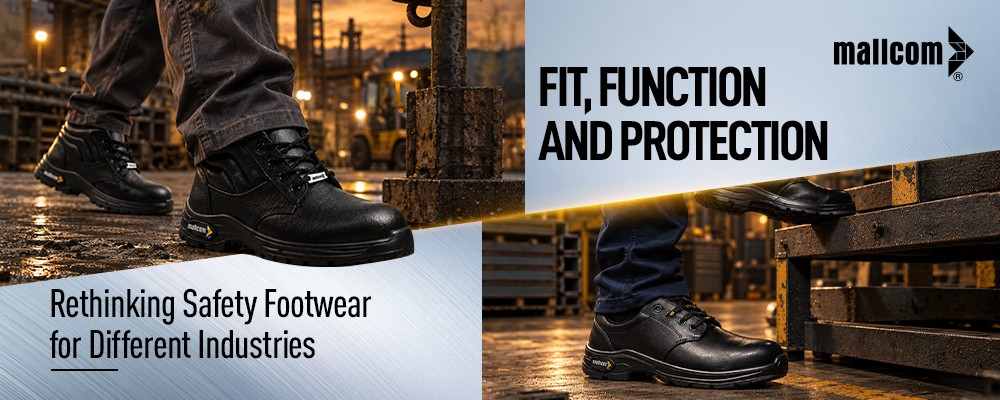
Industrial foot protection in modern times goes beyond the mere consideration of conventional protective features like the toe cap and the upper. What modern workplaces demand is slightly more nuanced than just that. They call for safety footwear which don’t just protect but also optimise functionality by fitting the wearer precisely.
A men's leather safety footwear that pinches the toes, compromises stability or lacks the right grip for the concerned working environment can create a different set of risks altogether. This is why industrial footwear selection requires a closer examination of three interconnected principles: fit, function and protection.
Why The Right Fit Forms The First Layer Of Protection In Anti-Skid Footwear?
From steel toe to anti-skid safety footwear - no industrial footwear can perform optimally if chosen in an incorrect size. You can find below a brief breakdown of the disadvantages associated with the wrong fit.
The Size |
The Disadvantage |
| Undersized footwear |
|
| Oversized footwear |
|
Trusted PPE manufacturers design industrial safety footwear as per the sizing norms determined by recognized certification standards. Mallcom leads by example by producing safety leather footwear for men which are sized in accordance with IS 15298.
For workers who spend eight to nine hours traversing industrial landscapes daily, selecting the correct footwear size is non-negotiable. Identifying the same is a matter of a few crucial steps:
- Place the foot on a blank sheet of paper
- Mark the tip of your toe and the back of your heel
- Measure the same to determine the foot length
- Select its corresponding size as indicated in sizing charts made available by known PPE suppliers including Mallcom
The ideal safety footwear allows adequate toe room without causing excessive movement inside the footwear. It secures the heel in a stable position while enabling natural mobility throughout the day.
Apart from following the measurement process, knowledge of different toe and ankle cuts in a steel toe safety footwear is also imperative for finding the functional fit.
From High To Low Ankle - Which Safety footwear Is Cut Out For You?
Foot construction varies from one worker to the next and consequently calls for variation in the footwear structure too. If your profession demands slip-resistant safety footwear, apart from determining its protective ability, you should also consider the different cuts that footwear is available in.
The cut selection should be based on:
- Foot structure
- Nature of work
Workers with a wide toe profile require more toe room than the rest. They should opt for steel toe safety footwear with a broad toe to avoid discomfort and excessive pressure in the toe region. Such safety footwear, however, can result in a loose fit for professionals with a streamlined toe construct. What they require instead is a narrow toe anti-skid footwear.
The ankle coverage is another functional consideration to keep in mind. Professionals situated in industries like construction and mining need greater ankle coverage for navigating uneven surfaces, heavy physical movement and higher debris exposure.
High ankle safety footwear, such as Docker by Mallcom, form the optimum choice for them. Low ankle safety footwear, on the contrary, are designed to offer greater freedom around the ankle region. They are suitable for indoor workspaces where agility and ease of movement are key priorities. Workers in industries like warehousing, logistics and assembly operations benefit significantly from low ankle safety footwear, such as Mallcom’s Doxle safety footwear.
From sizing to footwear structure - making a calculated choice across these aspects boosts comfort and ease of mobility for prolonged wear on challenging worksites. Whether you choose a low ankle or a high ankle safety footwear, there are certain protective features which you must mandatorily prioritise for reliable safety. The amalgamation of such features with the right fit and a functional construct results in a superior industrial safety footwear.
How To Optimise Foot Safety During Industrial Work?
From construction sites to warehouses, every industrial worksite calls for the prioritisation of some distinct safety features for optimum performance. It is essential to think about high and low ankle safety footwear along the lines of such features.
Durable Upper Construct
The upper forms a primary layer of protection in any industrial safety footwear. A holistic upper blends durability with breathability and flexibility. Professionals can choose from a varied selection of upper materials, each of which has its own distinct properties.
Leather safety footwear for men with a high ankle construct, for instance, offer an exceptional degree of durability. They find prime usage in heavy-duty industries like construction, heavy engineering and the like. Synthetic upper materials, on the other hand, are more known for their breathable quality and are ideal for prolonged mobility.
Impact & Compression Resistance
Protecting the toe bones from crushing under the impact of heavy falling objects is indispensable in hazardous industries. It calls for the usage of steel toe safety footwear which guards the toes effectively. For lightweight impact protection, professionals can also opt for leather safety footwear with an aluminium, composite or plastic toe cap.
Slip Resistance
Enduring ladder grip with efficient resistance to slips and skids is increasingly essential on uneven or greasy terrains. A well-designed pair of slip resistant or anti-skid footwear provides traction on surfaces where oil, water, dust and other similar contaminants may compromise stability. They enable a sturdy grip on unpredictable landscapes which make stable motion difficult.
Electrical Hazard Protection
Electricians, utility workers and people in similar professions require an additional layer of protection against electrical hazards. This is where ESR or Electric Shock Resistant footwear stand as a superior choice. They employ non-conductive materials, like rubber, in the sole and heel to prevent the passage of electric current between the ground and the wearer’s feet.
Pave The Safe Way Forward With The Best Safety Footwear Manufacturers
The best safety footwear manufacturers incorporate key safety features in a functional design for enhanced productivity and comfort. Through continuous research and development, Mallcom supplies a nuanced portfolio of leather safety footwear for men.
From slip resistant footwear to steel toe safety footwear - Mallcom offers certified and reliable safety solutions which cater to varying industries. These leather safety footwear for men are further available in both broad and narrow toe alternatives as well as high and low ankle cuts. The curated range of options ensures that workers can find their functional fit which balances safety with comfort.
Mallcom inspires all PPE manufacturers to treat safety footwear not as an isolated product but as an engineered solution - one where fit, foot shape, movement, hazard and working environment all come together as key factors influencing the footwear design.
FAQs
Q. How to Choose between High Ankle and Low Ankle Safety Footwear?
The choice relies on the working conditions one is surrounded by. High ankle safety footwear offer the superior ankle support that’s needed in demanding work environments with uneven terrains. Low ankle safety footwear is a better alternative for facilitating comfortable and flexible motion in indoor workspaces.
Q. What do I Get in Anti-skid Footwear?
Anti-skid footwear are specifically designed for industrial zones with uneven, wet or slippery conditions. They comprise a high-traction sole with grooves and channels which, combined together, prevent slips and falls on risky landscapes.
Q. When should I Wear Steel Toe Safety Footwear?
Steel toe safety footwear is engineered with a highly durable steel toe cap that exhibits exceptional impact and compression resistance. These footwear are ideal for heavy-duty industries, like construction and automotive, where the risk of getting injured by hazardous falling objects is severely high.
Q. How should Leather Safety Footwear for Men Combine Protection with Comfort?
The best leather safety footwear for men constitute durable materials, right from the upper to the outsole. They are ideal for both impact and slip resistance. They simultaneously pose a lightweight, breathable construct for prolonged usage and are available in different cuts to match varying foot shapes.