Does a Running Engine Increase Scrap Car Value? Here’s What Actually Matters
-

- Published Updated
- 4,955 views
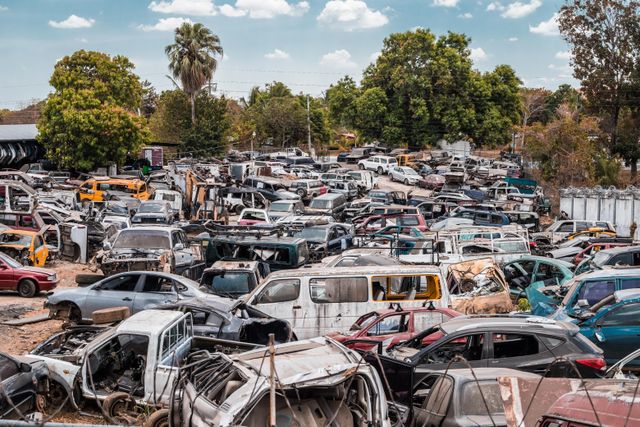
There is a very specific kind of optimism that appears when someone is about to scrap an old car.
The paint is fading. The seats have seen better decades. One door only opens if you pull the handle while whispering a small prayer. The dashboard is lit up like a Christmas tree.
But then someone turns the key.
Vroom.
And suddenly the conversation changes.
“Wait. The engine still runs.”
That little sound can make an owner wonder whether they have been sitting on a hidden treasure all along.
Unfortunately, a running engine doesn't automatically turn an old car into a valuable vehicle. It can help, but how much it helps depends on what else the car brings to the table.
A scrap buyer isn't simply paying for the fact that the engine makes noise. They're looking at the vehicle as a combination of recyclable metal, usable components, parts demand, weight, condition, and current market value.
So, does a running engine increase scrap car value?
Usually, yes—but perhaps not for the reason you think.
A Running Engine Is a Bonus, Not a Golden Ticket
Let's imagine two identical 2008 cars sitting side by side.
Car A starts immediately. The engine sounds reasonably healthy, the transmission works, the catalytic converter is still there, and most of the important components are intact.
Car B hasn't run in two years. The engine is seized, several parts are missing, and the vehicle has been sitting outside collecting rust, leaves, and an impressive ecosystem of spiders.
Which one is worth more?
Probably Car A.
But here's where people sometimes get carried away.
They assume:
“My engine runs, so my scrap car must be worth a lot more.”
Not necessarily.
A scrap vehicle isn't valued the same way as a used car being sold privately. If you were selling a functioning vehicle to another driver, the fact that it runs would be a major selling point.
With a scrap car, the buyer may be more interested in the total package.
That means your perfectly functioning engine is competing for attention with the vehicle's weight, catalytic converter, transmission, body condition, recyclable metals, and other usable components.
Your engine isn't the entire show.
It's one of the performers.
Why Does the Engine Matter in the First Place?
A running engine can have value because it may still be useful.
Depending on the vehicle, a functioning engine could potentially be:
- Reused in another vehicle
- Sold as a replacement component
- Rebuilt
- Dismantled for parts
- Evaluated alongside other mechanical components
And that last point is important.
Sometimes the value isn't simply “Does the engine run?”
It is:
“What kind of engine is it, and how useful is it?”
A working engine from a common vehicle with plenty of similar cars still on the road may attract more interest than a working engine from an obscure model that nobody seems to be looking for.
That's why there isn't a universal “running engine bonus.”
A 200,000-kilometre engine that starts today isn't automatically worth a fixed amount.
The Engine Could Be Running—and Still Be in Bad Shape
Here's where things get interesting.
Technically, an engine can be “running” while being one bad Tuesday away from retirement.
Maybe it starts after three attempts.
Maybe there's blue smoke pouring from the exhaust.
Maybe the temperature gauge climbs faster than your blood pressure in traffic.
Maybe it makes a deep knocking sound that definitely wasn't part of the manufacturer's original design.
Or maybe the engine runs beautifully but leaks enough oil to leave a small environmental statement in your driveway.
So when assessing a running vehicle, the question isn't simply:
“Does it start?”
A more useful question is:
“What condition is the engine actually in?”
Things such as oil leaks, overheating, unusual noises, excessive smoke, rough idling, poor compression, and warning lights can all tell a different story.
A scrap buyer may consider the overall condition when determining what the vehicle is worth.
What About a Car That Drives?
Now we're getting somewhere.
There is a difference between a car that starts and a car that actually moves under its own power.
If the engine starts but the transmission is completely finished, you've got a different situation.
If the engine runs, the transmission engages, the brakes work, and the vehicle can move safely, that may make the car more useful than one that needs to be loaded onto a truck like a very heavy piece of furniture.
But again, don't confuse “drives” with “valuable.”
An old vehicle can be mechanically functional and still have reached the point where keeping it makes little financial sense.
That's particularly true when major repairs are waiting around the corner.
The Biggest Mistake: Repairing the Car Just to Scrap It
This is where some owners accidentally turn a bad financial decision into a much worse one.
Let's say you have an old car worth around $800 as a scrap vehicle.
The engine has a problem.
You are told that repairs will cost $2,500.
The thinking goes:
“If I fix it, it'll be worth more.”
Technically, it might.
But will it be worth $2,500 more?
Probably not.
This is why you should never look only at the potential increase in vehicle value. Look at the cost of creating that increase.
Spending thousands of dollars repairing an old vehicle doesn't make sense simply because you want to get a better scrap offer.
The math needs to work.
Otherwise, you're essentially putting expensive lipstick on a car that's already written its retirement speech.
Your Car Has More Valuable Pieces Than You Think
The engine gets most of the attention, but it isn't the only component that can influence a scrap vehicle's value.
Depending on the vehicle's condition, other parts may still have usefulness.
These can include:
Transmission
A functioning transmission can be an important component, particularly if the vehicle is relatively common and replacement parts are in demand.
Catalytic Converter
Catalytic converters contain precious metals, including platinum, palladium, and rhodium. Their value can vary depending on the type of converter and current market conditions.
If yours is still attached, don't assume it's worthless just because the rest of the vehicle has seen better days.
Wheels and Tires
Good wheels can potentially have value beyond the basic scrap-metal value of the vehicle.
Tires can also matter, although their condition, size, tread, and demand all affect their usefulness.
Electronics
Modern vehicles contain an absurd amount of electronics compared with older cars.
Control modules, sensors, infotainment equipment, wiring, and other components may have value depending on the vehicle and condition.
Body Panels and Interior Components
Doors, mirrors, headlights, seats, and other components can sometimes be reused.
In other words, your old car isn't necessarily one giant block of worthless metal.
It's more like a collection of components that happens to be held together by rust, bolts, plastic clips, and questionable engineering decisions.
Then There's the Metal
At the end of the day, scrap is still scrap.
A large part of a vehicle's value comes from the recyclable materials it contains.
The vehicle's weight matters.
Metal prices matter.
Market conditions matter.
A heavier vehicle can contain significantly more recyclable material than a tiny compact car, although the exact value depends on the vehicle and current market conditions.
This is also why scrap prices can change over time.
If metal markets move, scrap vehicle values can move with them.
So if someone tells you that every running car of a certain age is worth exactly $X, be suspicious.
There isn't a universal price tag hanging from the rear-view mirror.
What Happens If the Engine Is Completely Dead?
Here's the part that surprises many people:
A dead engine does not automatically make a scrap car worthless.
A vehicle with a blown or seized engine can still have considerable recyclable material and potentially useful components.
The body contains metal.
The transmission may still be usable.
The catalytic converter may still be present.
The wheels may have value.
The electrical components may be intact.
And depending on the vehicle, other parts may still be worth recovering.
So if your engine has died, don't immediately assume the entire vehicle is worthless.
And please don't spend thousands of dollars replacing the engine just because you heard that running cars get better scrap offers.
Get the numbers first.
What About Rust?
If you're in Ontario, rust deserves some serious attention.
Road salt is fantastic at helping keep winter roads usable.
It is considerably less fantastic for your car.
Years of exposure can lead to corrosion underneath the vehicle, around wheel arches, on body panels, and eventually in structural areas.
Light surface rust may not dramatically change the situation.
Severe corrosion is different.
If the vehicle has extensive structural rust, its condition may reduce the usefulness of certain components and affect how it is handled.
In other words, your engine could be purring like a kitten while the rest of the car is slowly becoming a collection of orange flakes.
So How Much More Is a Running Engine Worth?
This is the question everyone wants answered.
And unfortunately, there isn't a magic number.
A running engine might increase the vehicle's value by a meaningful amount in one situation and make a relatively small difference in another.
Why?
Because the final value can depend on:
- Vehicle make and model
- Year
- Engine type
- Engine condition
- Transmission condition
- Vehicle weight
- Catalytic converter
- Missing parts
- Overall condition
- Current scrap-metal prices
- Demand for specific components
The engine is important.
It just isn't operating in isolation.
Should You Mention That the Engine Runs When Getting a Quote?
Absolutely.
If you're getting quotes for your old vehicle, provide as much accurate information as possible.
Tell the buyer whether:
- The engine starts
- The vehicle drives
- The transmission works
- The catalytic converter is present
- Major parts are missing
- The vehicle has serious damage
- The car has been sitting for a long time
Don't exaggerate.
If the engine starts but knocks loudly, say so.
If the car runs but can't be driven because the brakes are unsafe, mention that too.
Accurate information helps create a more realistic quote and avoids unpleasant surprises later.
One More Thing: Don't Drive a Car Just to Prove It Runs
This sounds obvious until you remember how many people are willing to take an old car on one “last trip” when they know something is wrong with it.
If your brakes are bad, tires are unsafe, the steering is unreliable, or the vehicle has serious mechanical problems, don't put yourself—or everyone else on the road—at risk just to demonstrate that the engine still starts.
A scrap car does not need a farewell tour.
If you've reached the point where the vehicle is no longer worth keeping, a service such as Scrap Car Buyer Mississauga can arrange scrap car removal through their website, giving you a practical way to move on without spending heavily on repairs that may never pay you back.
The Real Question Isn't “Does It Run?”
This is probably the most important takeaway.
When people ask whether a running engine increases scrap car value, they're often asking the wrong question.
The better question is:
“What is this entire vehicle worth in its current condition?”
A running engine can certainly help.
A healthy transmission can help.
A complete catalytic converter can help.
Good wheels, usable parts, vehicle weight, and current metal prices can all help.
But none of these factors guarantees a huge offer on its own.
And if your old car needs $3,000 in repairs to increase its value by $500, you've already done the math backwards.
Sometimes the engine is worth saving.
Sometimes the whole car is worth selling privately.
And sometimes that faithful old engine has done enough.
It started your car for years, survived countless cold mornings, endured traffic jams, carried groceries, hauled passengers, and probably consumed more oil than you'd like to admit.
If the rest of the vehicle has reached the end of the road, a running engine can be a nice bonus—but it doesn't have to be the reason you keep throwing money at the car.
A car doesn't become worthless just because the engine stops. And it doesn't become valuable simply because the engine starts.
The real value is in the vehicle as a whole.