How Businesses Can Build Long-Term Growth With a Practical SEO Strategy
-

- Published Updated
- 2,741 views
Having a website does not automatically mean customers will find it. A business can spend weeks designing a clean, functional site, publish it online, and still see almost no visitors arrive through search engines. This is one of the most common frustrations for small business owners, startups, and marketers alike: the website exists, but it is invisible where it matters most — in search results.
This is where SEO services and a well-thought-out SEO strategy come in. Search engine optimization is not a quick trick or a one-time task. It is a long-term approach to making a website easier to find, understand, and trust — both for search engines and for the people using them. Businesses that treat SEO as an ongoing discipline, rather than a checkbox, tend to build more stable and sustainable organic search visibility over time.
This article walks through what SEO actually does, which areas of it deserve attention, how to build a practical strategy, and how to know when outside help might be worth considering.
What Is SEO and Why Does It Matter?
Search engine optimization is the practice of improving a website so it is easier for search engines to discover, understand, and rank pages that genuinely match what people are searching for. At its core, SEO is not about tricking an algorithm — it's about closely aligning a website's content and structure with real user needs.
Search engines work by sending automated programs, often called crawlers or bots, across the web to find and read pages. Once a page is crawled, it gets indexed, meaning it's stored and evaluated so it can potentially appear in relevant search results. When someone searches for something, the search engine tries to match that query with the most helpful, relevant, and trustworthy pages it has indexed.
This matters for businesses because search is often the starting point of a customer's journey. Someone searching for a product, a service, or an answer to a problem is expressing clear intent. If a business's website doesn't show up — or shows up but doesn't answer the searcher's question well — that opportunity is lost to a competitor whose site does a better job of meeting that need.
The Business Benefits of a Strong SEO Strategy
A well-executed SEO strategy offers several practical advantages, though it's worth being upfront: none of these are guaranteed outcomes. SEO improves the conditions for visibility and growth; it doesn't promise a specific result.
Better organic visibility. Optimized pages have a stronger chance of appearing for relevant searches, which increases the likelihood of being discovered by people actively looking for what a business offers.
More relevant website visitors. Because SEO is built around search intent, the traffic it brings tends to be more aligned with what a business actually sells or offers, compared to broad, untargeted traffic.
Stronger online credibility. Websites that load quickly, work well on mobile devices, and provide clear, accurate information tend to earn more trust from both users and search engines.
Better user experience. Many SEO improvements — clearer navigation, faster pages, more readable content — also make the site more pleasant to use, which benefits every visitor, not just those arriving from search.
Sustainable traffic opportunities. Unlike paid advertising, which stops generating visits the moment spending stops, well-optimized content can continue attracting visitors over an extended period.
Improved discovery across important search queries. A thoughtful content and keyword approach helps a business show up across the different questions and terms its potential customers are actually searching for.
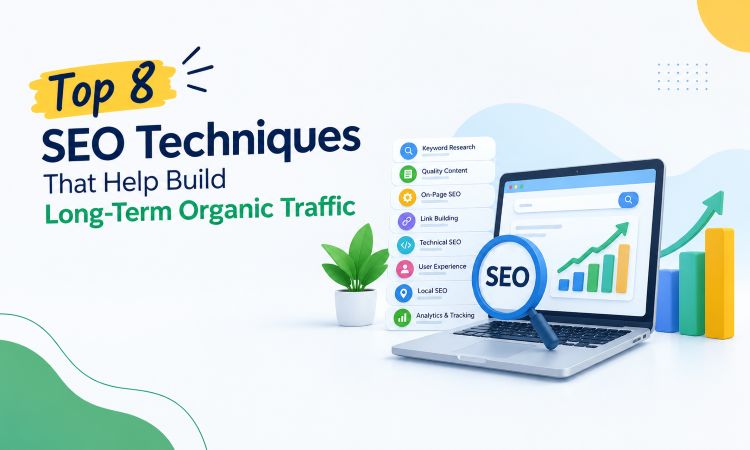
The Core Areas of SEO
SEO is often broken into a few interconnected categories. A practical strategy usually pays attention to all of them, rather than focusing on just one.
On-Page SEO
On-page SEO covers everything on an individual page that can be optimized directly. This includes page titles that clearly describe the content, logical heading structures, well-organized content, thoughtful internal linking between related pages, and — most importantly — content that actually satisfies the search intent behind a query. Helpful, well-organized content is the foundation everything else builds on.
Technical SEO
Technical SEO focuses on how easily a search engine can access and understand a website. This includes crawlability (can search engines reach all the important pages?), proper indexing, mobile usability, a logical site architecture, and overall page experience — things like loading speed and stability. Structured data, where appropriate, can also help search engines understand what a page is about more precisely.
Off-Page SEO
Off-page SEO involves the signals that build a website's authority and reputation outside of the site itself. This includes relevant mentions across the web, digital PR efforts, and quality backlinks from credible, related sources. These signals help demonstrate that other parts of the internet recognize a website as a trustworthy source.
Local SEO
For businesses that serve specific geographic areas, local SEO is essential. This involves optimizing for location-based searches, keeping business information (name, address, phone number) consistent across directories, ensuring local relevance in content, and encouraging genuine customer reviews where appropriate.
Keyword Research
Keyword research should be guided by relevance and search intent, not just search volume. A keyword with high search volume but little connection to what a business actually offers is far less valuable than a more specific term that closely matches what a business's real customers are searching for.
How to Build an Effective SEO Strategy
A practical SEO strategy generally follows a logical sequence:
1. Website and SEO audit. Start by understanding the current state of the site — what's working, what's broken, and what's missing.
2. Keyword and search-intent research. Identify the terms and questions relevant to the business, and understand the intent behind them.
3. Technical improvements. Fix crawlability issues, improve site speed, and ensure the site works well on mobile devices.
4. Content planning. Map out the content needed to address relevant search intent across the customer journey.
5. On-page optimization. Refine titles, headings, structure, and internal links on existing and new pages.
6. Internal linking. Connect related pages so users and search engines can navigate the site logically.
7. Authority building. Pursue relevant mentions and quality backlinks that reflect genuine credibility.
8. Performance measurement. Track relevant metrics to understand what's working.
9. Continuous improvement. Treat SEO as an ongoing process, refining the approach based on real performance data rather than assumptions.
Why Search Intent Matters More Than Keyword Density
Older SEO approaches often emphasized repeating a keyword as many times as possible. That approach is outdated and can actually hurt a page's performance today. What matters far more is understanding the intent behind a search.
There are generally four types of search intent: informational (someone wants to learn something), navigational (someone is looking for a specific website or brand), commercial (someone is researching options before a decision), and transactional (someone is ready to take an action, like making a purchase).
Content that clearly satisfies the intent behind a search — answering the actual question or need — tends to perform far better than content stuffed with repeated keywords but light on real substance.
Common SEO Mistakes Businesses Should Avoid
Several recurring mistakes can quietly undermine SEO efforts:
- Keyword stuffing makes content harder to read and can appear manipulative to both users and search engines.
- Copying competitors rarely works well, since it produces content with no unique value or perspective.
- Publishing thin content — pages with little real information — tends to underperform because it doesn't meet user needs.
- Buying poor-quality backlinks can do more harm than good, since low-quality links can undermine a site's credibility.
- Ignoring technical SEO means even great content may never be properly crawled or indexed.
- Creating pages without clear search intent results in content that doesn't align with what anyone is actually searching for.
- Expecting immediate results sets unrealistic expectations, since SEO is a gradual, cumulative process.
- Neglecting existing content wastes the value of pages that could be improved rather than left outdated.
How to Measure SEO Performance
Rankings alone don't tell the full story. A more complete picture comes from looking at several measurements together:
- Organic clicks — how many people are actually clicking through from search results
- Search impressions — how often pages appear in search results
- Relevant rankings — position for terms that genuinely matter to the business
- Organic landing-page performance — how well specific pages perform once visitors arrive
- Conversions or leads — whether organic visitors take meaningful action
- Engagement and user behavior — time on page, bounce rate, and navigation patterns
- Indexed pages and technical health — whether the site remains crawlable and free of technical errors
Looking at these measurements together, rather than fixating on rankings alone, gives a far more accurate sense of whether an SEO strategy is actually working.
When Should a Business Consider Professional SEO Services?
Not every business has the internal time, expertise, or resources to manage SEO effectively on an ongoing basis — and that's a reasonable position to be in. A few situations where professional support tends to be genuinely useful include:
- Limited internal SEO expertise, where a team understands the business but not the technical and strategic side of search
- Large or technically complex websites, where crawlability and site architecture issues become harder to manage
- Competitive industries, where a more structured, sustained approach is needed to stand out
- Major website migrations, which carry real risk of losing existing search visibility if not handled carefully
- Consistent content and optimization requirements, since SEO benefits from steady, ongoing effort rather than sporadic bursts
- The need for structured audits and monitoring, to catch issues early and adjust strategy based on real data
For businesses in any of these situations, working with a team that offers dedicated SEO services can provide the structure, technical knowledge, and consistent attention that in-house teams often struggle to maintain alongside everything else they're responsible for. The right professional support doesn't replace a business's understanding of its own customers — it complements it with the technical and strategic execution SEO requires.
Frequently Asked Questions
How long does SEO take to produce results? SEO is a gradual process. Meaningful improvements in visibility often take several months to appear, since search engines need time to crawl, index, and evaluate changes, and content needs time to build relevance and authority.
Is SEO useful for small businesses? Yes. Small businesses often benefit significantly from SEO, particularly local SEO, since it helps them get discovered by nearby customers actively searching for their products or services.
What is the difference between on-page and technical SEO? On-page SEO focuses on the content and structure of individual pages — titles, headings, and content quality. Technical SEO focuses on the underlying site infrastructure — crawlability, indexing, speed, and mobile usability.
How often should a website be audited? Many businesses benefit from a thorough audit at least once or twice a year, with lighter ongoing monitoring in between to catch technical issues early.
Are backlinks still important for SEO? Yes, quality backlinks remain an important trust and authority signal. However, a small number of relevant, credible backlinks tends to matter far more than a large volume of low-quality links.
How do businesses measure SEO success? Success is best measured by looking at multiple indicators together — organic traffic, relevant rankings, conversions, engagement, and technical health — rather than relying on any single metric.
What's the difference between organic and paid search traffic? Organic traffic comes from unpaid search results and is earned through SEO, while paid traffic comes from advertising placements that stop as soon as spending stops.
Conclusion
SEO is not about shortcuts or guaranteed outcomes — it's about consistently building a website that genuinely serves the people searching for it. Businesses that focus on creating useful content, maintaining a technically sound website, understanding real search intent, and refining their approach based on actual performance data tend to see the most sustainable results over time.
There's no single fix that transforms visibility overnight. But a practical, well-structured SEO strategy — built one improvement at a time — remains one of the most reliable ways for businesses to become genuinely easier to find, understand, and trust online.