Solar Battery Storage: Is It Worth Adding to Your South Carolina Solar System?
-

- Published Updated
- 1,629 views
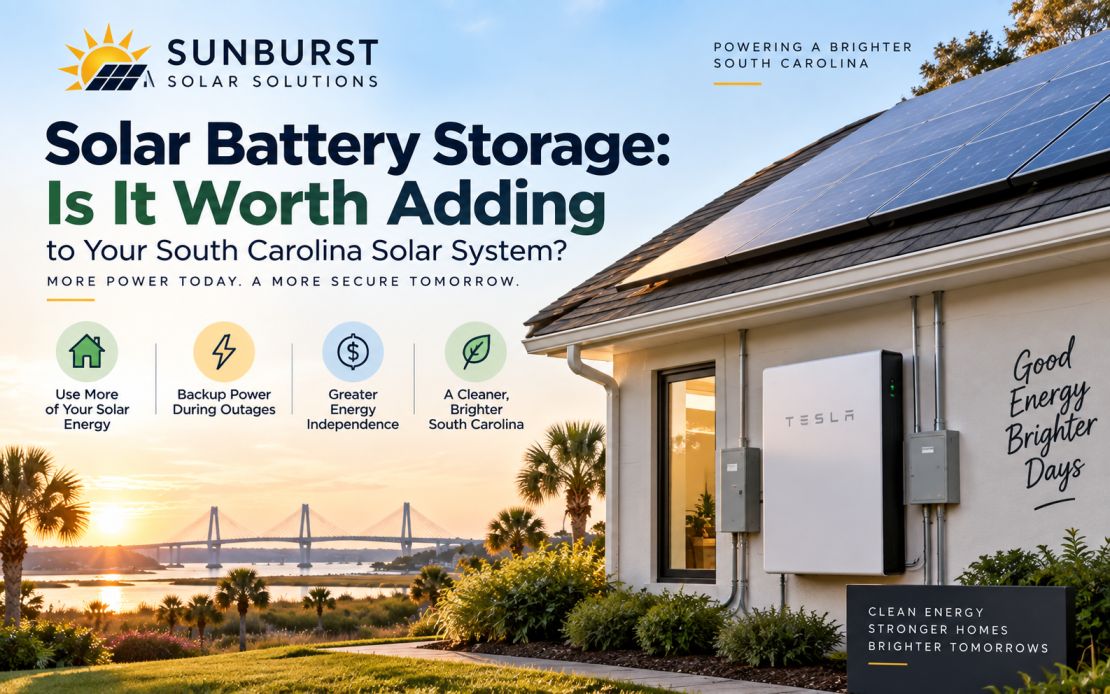
Solar panels can help South Carolina homeowners generate electricity from the sun, but there is one common question that comes up after choosing solar: What happens when the sun isn't shining?
Solar panels produce the most electricity during daylight hours, while many homes use significant amounts of electricity in the evening. A solar battery can help bridge that gap by storing electricity and making it available when it is needed.
For homeowners considering solar in South Carolina, battery storage can also provide an additional layer of energy resilience during certain power outages.
What Is Solar Battery Storage?
A solar battery is an energy-storage system that can store electricity generated by solar panels.
During the day, your solar panels produce electricity. Your home uses some of that energy, while excess electricity can potentially be stored in the battery depending on the system configuration.
Later, when solar production decreases, the stored energy can be used by the home.
This makes solar and battery storage a complementary combination rather than two completely separate technologies.
Homeowners interested in combining the two can explore battery storage solutions from Sunburst Solar Solutions.
Why Add a Battery to a Solar System?
There are several reasons a homeowner might consider battery storage.
1. Use More of Your Solar Energy
Solar production and household electricity consumption don't always happen at the same time.
A home may generate plenty of solar electricity during the afternoon but consume more electricity later in the evening.
A battery gives homeowners another way to use some of the energy generated earlier in the day.
2. Backup Power During Outages
A standard grid-connected solar system generally isn't designed to keep a home powered during a grid outage by itself.
A properly configured battery system can provide backup electricity to selected household circuits when the grid goes down.
Depending on the system and available battery capacity, homeowners may choose to prioritize important equipment such as:
- Refrigerators
- Lighting
- Internet equipment
- Security systems
- Selected electrical outlets
- Essential appliances
The exact backup capability depends on the system design, battery capacity, and household energy consumption.
How Solar Panels and Batteries Work Together
Think of your solar system as the energy producer and your battery as the energy storage system.
A simplified example might look like this:
Morning:
Solar production begins as sunlight increases.
Afternoon:
Solar panels may produce more electricity than the home is using. Some excess energy can be directed toward battery storage.
Evening:
Solar production decreases while household electricity use may increase. Stored battery energy can then help supply the home.
Power outage:
If the system is designed for backup operation, the battery can supply selected loads while the grid is unavailable.
The actual operation depends on the equipment and configuration selected for the property.
Do You Need Batteries If You Have Solar?
Not necessarily.
A solar system can operate without battery storage, and whether adding a battery makes financial and practical sense depends on your specific situation.
Some homeowners primarily want to reduce electricity purchased from the grid. Others place a higher value on backup power and energy resilience.
Your electricity usage, utility rules, solar system size, battery capacity, financing, and personal priorities should all be considered before making a decision.
That's why it's better to evaluate the entire energy system rather than choosing a battery simply because it is available.
Battery Storage Can Be Useful for High-Energy Homes
Homes with higher electricity consumption may have different energy-storage requirements than smaller households.
Air conditioning, electric water heaters, pool equipment, appliances, and other large electrical loads can consume significant amounts of energy.
A battery that is suitable for one home may not provide the same results for another.
This is why professional system sizing is important. The goal isn't simply to install the largest battery possible. Instead, the system should be designed around the home's electricity usage and the loads the homeowner wants to support.
Consider Your Home's Electrical Capacity
Adding solar, batteries, or an EV charger can change the electrical demands placed on a home.
If you're planning several upgrades, it makes sense to consider them together.
For example, a homeowner might eventually want:
- Rooftop solar
- Battery storage
- An electric vehicle
- A Level 2 EV charger
- Additional electric appliances
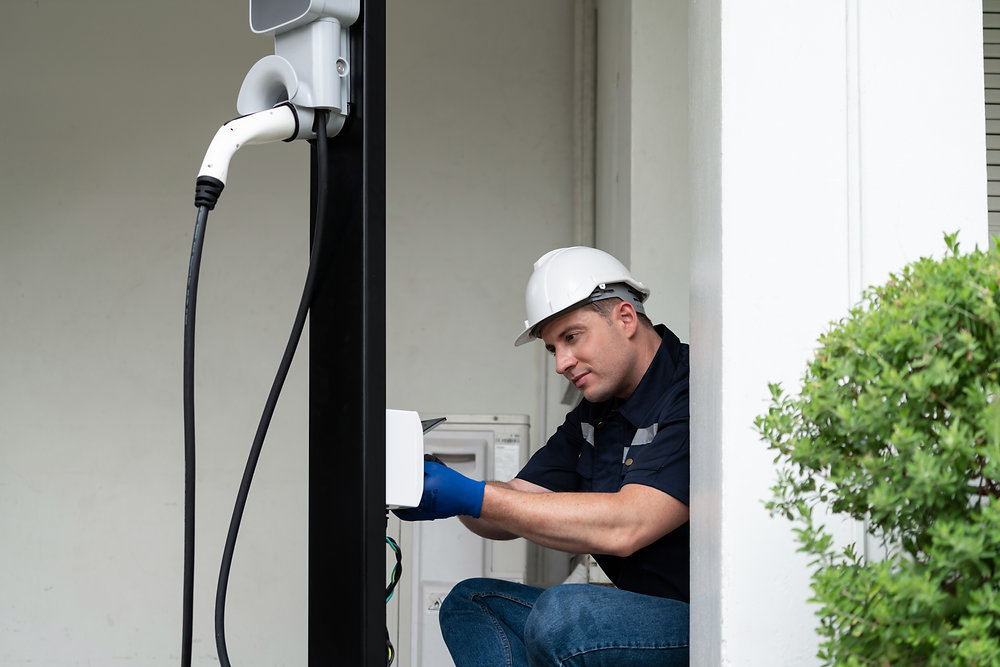
Sunburst also provides EV charger installation, making it possible to consider solar generation, energy storage, and EV charging as parts of a broader home energy plan.
What About Backup Generators?
Battery storage isn't the only option for backup power.
Some homeowners prefer or require a traditional backup generator, particularly when they need longer-duration backup capability.
Sunburst Solar Solutions also provides backup generator solutions for homeowners looking for additional protection against power interruptions.
The right choice depends on your home's energy requirements, budget, desired backup duration, and personal preferences.
In some cases, homeowners may also consider combining multiple technologies.
Is Battery Storage Worth the Investment?
There isn't one universal answer.
Battery storage can be particularly attractive to homeowners who:
- Want backup power during outages
- Want to use more of their solar-generated electricity
- Have electricity usage that extends into the evening
- Want greater energy independence
- Are building a larger home energy system
- Own or plan to purchase an electric vehicle
However, battery economics depend on factors such as system cost, electricity rates, utility policies, battery lifespan, financing, and how frequently the battery is used.
A professional assessment can help determine whether the additional investment makes sense for your property.
Choosing the Right Solar Installer
Battery storage is a long-term investment, so choosing an experienced installer is important.
Before moving forward, ask questions about:
- Battery capacity
- Usable storage capacity
- Warranty coverage
- Backup functionality
- Which circuits can be backed up
- Installation requirements
- Monitoring
- Maintenance
- Solar and battery compatibility
It is also useful to work with an installer that can look at your complete energy needs instead of treating the battery as an isolated product.
Sunburst Solar Solutions provides solar, battery storage, EV charging, backup power, and other energy solutions for homeowners and businesses across South Carolina.
Start With a Property-Specific Assessment
Every home is different.
The right battery size depends on your electricity consumption, solar production, backup requirements, and the appliances or circuits you want to keep running.
Rather than relying on a generic battery recommendation, homeowners should start with an assessment of their actual property and energy needs.
Sunburst offers a free solar assessment to help South Carolina homeowners evaluate their property and determine whether solar and related energy solutions are a good fit.
Final Thoughts
Solar panels can generate clean electricity for your home, but battery storage can make that energy more flexible by allowing electricity to be stored and used later.
For South Carolina homeowners, batteries may also provide valuable backup capability during certain power outages.
The best solution depends on your home, electricity usage, utility situation, budget, and energy goals. If you're considering solar, battery storage, EV charging, or backup power, evaluating these technologies together can help you create a more complete home energy strategy.