Is Your Property Stuck Due to Spray Foam Insulation?
-

- April 21st, 2026
- 5,770 views

FREE SEO Topical Map Generator: Find Your Next Content Ideas
The rise of spray polyurethane foam (SPF) insulation was initially hailed as a breakthrough in domestic energy efficiency. Promoted heavily through government-backed schemes and private installers, it promised to turn draughty British lofts into airtight, heat-retaining spaces. However, for thousands of UK homeowners, this "revolutionary" solution has transformed into a complex legal and financial liability. What was sold as a way to save money on heating has, in many cases, become the primary reason for collapsed property sales, rejected mortgage applications, and hidden structural decay.
The Mortgage Crisis: Why Banks are Saying "No"
The most immediate and distressing impact of spray foam insulation is felt when a homeowner attempts to sell, remortgage, or release equity. Over the last few years, major UK mortgage lenders—including several high-street giants and building societies—have tightened their criteria significantly. Many have issued what effectively amounts to a blanket warning or an outright refusal to lend on properties where spray foam is present in the roof space.
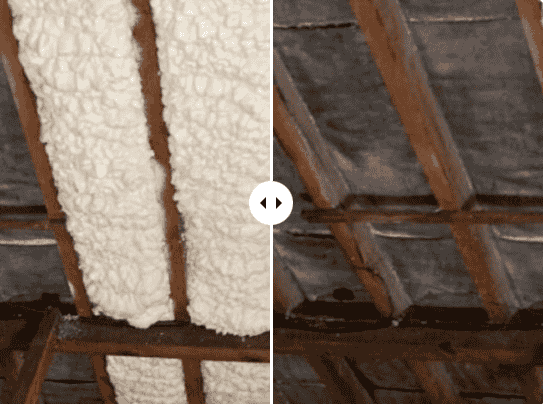
The issue stems from the perspective of the RICS (Royal Institution of Chartered Surveyors) and the lenders' risk departments. Once the foam is sprayed onto the underside of the roof, it expands and hardens, completely encasing the timber rafters. This makes it impossible for a surveyor to carry out a visual inspection of the roof’s structural integrity. Because the surveyor cannot confirm if the wood is rotting or structurally sound behind the foam, the lender views the property as a "high-risk" security for a loan. Consequently, potential buyers find their mortgage applications declined, leaving the seller with a property that is virtually unmarketable to anyone other than cash buyers.
The Hidden Threat: Moisture and Timber Decay
Beyond the financial hurdles, there is a physical risk to the building itself. Spray foam insulation comes in two primary forms: open-cell and closed-cell. While both provide insulation, they interact with moisture differently.
In the UK’s damp and cold climate, roofs need to "breathe." When spray foam is applied directly to roof tiles or felt without adequate ventilation, it can trap moisture against the timber rafters. This is often caused by interstitial condensation—where warm, moist air from inside the home hits the cold surface of the roof. If the foam prevents this moisture from escaping, the timber begins to rot silently behind the insulation. By the time the damage becomes visible (often through sagging roof lines or damp patches on ceilings), the structural repair costs can be astronomical.
The Pitfalls of "DIY" and Uncertified Alterations
For many, the first instinct upon discovering these issues is to attempt a DIY removal. This is strongly discouraged by industry experts. Spray foam is an incredibly resilient material; it is designed to stick permanently to the surfaces it touches. Attempting to scrape or pull it away without the proper tools often results in significant damage to the roof felt and the delicate timber rafters.
Furthermore, older types of spray foam can release harmful chemical particles or dust when disturbed, posing a respiratory risk to anyone in the attic space without professional-grade PPE. A botched removal job can actually make the situation worse, as lenders may still refuse to lend if they see evidence of foam residue or damaged rafters, requiring a second, more expensive professional intervention.
The Professional Path: Accredited Removal and Remediation
Correcting a spray foam installation requires a strategic, professional approach. Certified removal specialists in the UK use a combination of mechanical tools and, in some cases, chemical softening agents to carefully peel the foam away from the rafters.
The process typically follows a strict protocol:
Initial Assessment: A specialist identifies the type of foam and the extent of the coverage.
Feasibility Study: An inspection is carried out to see if the timbers have already sustained damage.
Controlled Removal: Technicians remove the material in sections, ensuring the vapor barriers and roof membrane remain as intact as possible.
Timber Treatment: Once exposed, the rafters are dried, cleaned, and treated to prevent future rot.
Certification: Most importantly, reputable companies provide a "Post-Removal Certificate." This document acts as a clean bill of health, proving to surveyors and lenders that the foam has been removed and the roof is structurally sound.
Proactive Steps for Homeowners
The worst time to discover a spray foam issue is during the "under offer" stage of a house sale. This often leads to a chain collapse, causing immense stress and financial loss. If your home has spray foam—perhaps installed through a previous energy-saving grant or by a previous owner—the smartest move is to seek an expert assessment immediately.
Acting early allows you to address the problem on your own terms, rather than in the high-pressure environment of a property transaction. By restoring your roof to its original state, you protect the market value of your home and ensure that your property remains a viable asset for the future.
If you suspect your property is at risk or you are facing a mortgage rejection due to insulation, reaching out to an experienced specialist is the first step toward resolution. For professional guidance and accredited removal services, you can consult with experts at
Visit Us: https://elitesprayfoaminsulationremoval.co.uk/