SSC CHSL 2026 Preparation: A Practical Study Roadmap
-

- Published Updated
- 556 views
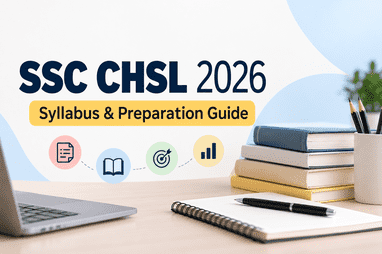
Preparing for SSC CHSL 2026 becomes much easier when you have a clear study roadmap instead of jumping between different books, videos, notes, and practice resources. A well-organized preparation strategy helps candidates understand what needs to be studied, how much time should be given to each topic, and when to focus on revision and mock tests.
The best place to begin is by understanding the SSC CHSL 2026 syllabus. Once the syllabus is clear, candidates can divide the preparation into manageable targets and gradually build their knowledge, practice, speed, and accuracy.
Candidates can check the complete SSC CHSL syllabus resource here:
https://ifasonline.com/ssc-exam/ssc-chsl-syllabus/69e74ac7dee415247300a51f/6aa244a8374c4b6a41f74d43/69e74b54dee415247300a5d2
Understand the Syllabus Before Starting
Many candidates begin preparation by collecting study material without first checking the complete syllabus. This can make preparation unnecessarily complicated.
Before starting, go through the syllabus and identify the major subjects and topics that need to be covered. Divide them into smaller sections and mark topics according to your level of understanding.
Once you know what you need to study, creating a practical timetable becomes much easier.
Create a Study Plan That You Can Follow
A study timetable should be realistic. There is little benefit in creating a schedule that requires extremely long study hours but becomes difficult to maintain after a few days.
Divide your available time between learning, practice, revision, and analysis.
A simple daily structure could include:
Concept learning and topic study
Topic-wise question practice
Revision of previously studied topics
Practice of difficult questions
Review of mistakes
The exact number of hours can vary from one candidate to another. Consistency should be the main priority.
Divide Large Topics Into Smaller Targets
A large syllabus can sometimes feel overwhelming. Instead of trying to complete several chapters at once, break the preparation into smaller targets.
For example, set weekly goals rather than simply deciding to “finish the syllabus.” You can assign specific topics to each week and review your progress at the end of that period.
This approach makes preparation easier to track and also helps identify unfinished or difficult areas early.
Practice Questions Regularly
Learning concepts is only one part of preparation. Regular question practice is equally important.
After completing a topic, solve questions related to it. This helps you understand whether you can actually apply the concepts you have studied.
While practicing, maintain a record of mistakes. Instead of simply checking the correct answer, understand why your answer was wrong. Some mistakes may occur because of a conceptual gap, while others may happen because of calculation errors, misreading, or poor time management.
Identifying the reason behind mistakes can make future practice more effective.
Use Previous-Year Questions
Previous-year questions are valuable for understanding question patterns and the type of problems candidates may encounter.
Include them regularly in your preparation instead of leaving them entirely for the final stage. Once a topic has been studied, solving relevant previous-year questions can help reinforce the concepts.
You can also use previous-year questions during revision to identify topics that require additional attention.
Make Revision a Continuous Process
Revision should not be postponed until the final weeks.
A simple revision cycle can make a significant difference. Revise recently studied topics regularly and revisit older topics at longer intervals.
For example:
Daily: Review important formulas, concepts, vocabulary, or mistakes.
Weekly: Revise the topics covered during the week.
Monthly: Revisit weaker areas and solve mixed questions.
Short notes and mistake lists can also be useful during the final revision phase.
Take Mock Tests and Analyze Them
Mock tests should be treated as preparation tools rather than just score-checking exercises.
After completing a mock test, analyze your performance carefully. Check which questions were incorrect, which questions took too much time, and which topics caused repeated mistakes.
Pay attention to:
Accuracy
Time management
Section-wise performance
Repeated mistakes
Questions left unanswered
Topics requiring additional revision
The purpose of mock-test practice is to gradually improve your overall performance.
Work on Speed and Accuracy
SSC CHSL preparation requires candidates to balance speed with accuracy. Solving questions quickly is useful only when the answers are correct.
Initially, focus on understanding concepts and maintaining accuracy. Once you become comfortable with the topics, start practicing under time limits.
With regular timed practice, you can gradually improve your ability to identify questions, choose an appropriate solving approach, and manage the available examination time.
Avoid Changing Resources Too Frequently
Another common problem during competitive exam preparation is resource overload. Candidates may switch between multiple books, websites, videos, and notes without completing any of them properly.
Choose reliable study resources and use them consistently. Your preparation should focus more on learning, practice, revision, and improvement rather than continuously searching for new material.
Review Your Progress Every Week
Take some time at the end of each week to evaluate your preparation.
Ask yourself:
Which topics did I complete?
Which topics are still difficult?
How many questions did I practice?
What mistakes am I repeating?
Has my mock-test performance improved?
What should I change next week?
This weekly review keeps the preparation organized and prevents small gaps from becoming bigger problems.
Final Preparation Strategy
SSC CHSL 2026 preparation does not have to be complicated. Start with the syllabus, divide it into manageable targets, follow a realistic study routine, practice questions consistently, solve previous-year questions, revise regularly, and use mock tests to measure your progress.
The most important factor is consistency. A simple plan followed regularly is more useful than an ambitious timetable that cannot be maintained.
By keeping preparation structured and learning from your mistakes, you can gradually improve your subject knowledge, confidence, speed, and accuracy for SSC CHSL 2026.