How Advanced Technology Is Improving Tooth Extraction Procedures in Dubai
-

- February 23rd, 2026
- 1,095 views
The following article explains common technologies used during tooth extraction procedures in Dubai, how they affect treatment planning and patient experience, and what regulatory oversight patients and providers should expect. The primary keyword "tooth extraction procedures in Dubai" is used to describe local practice and available tools.
- Modern tooth extraction care in Dubai commonly uses digital imaging (CBCT), intraoral scanning, guided-surgery planning, lasers and piezosurgery to improve precision and minimize trauma.
- Regulatory oversight and infection-control protocols are managed by the Dubai Health Authority and international clinical standards.
- Technology influences diagnosis, procedural accuracy, pain management, and post-operative monitoring, while costs and access can vary by clinic.
Role of digital imaging and planning in tooth extraction procedures in Dubai
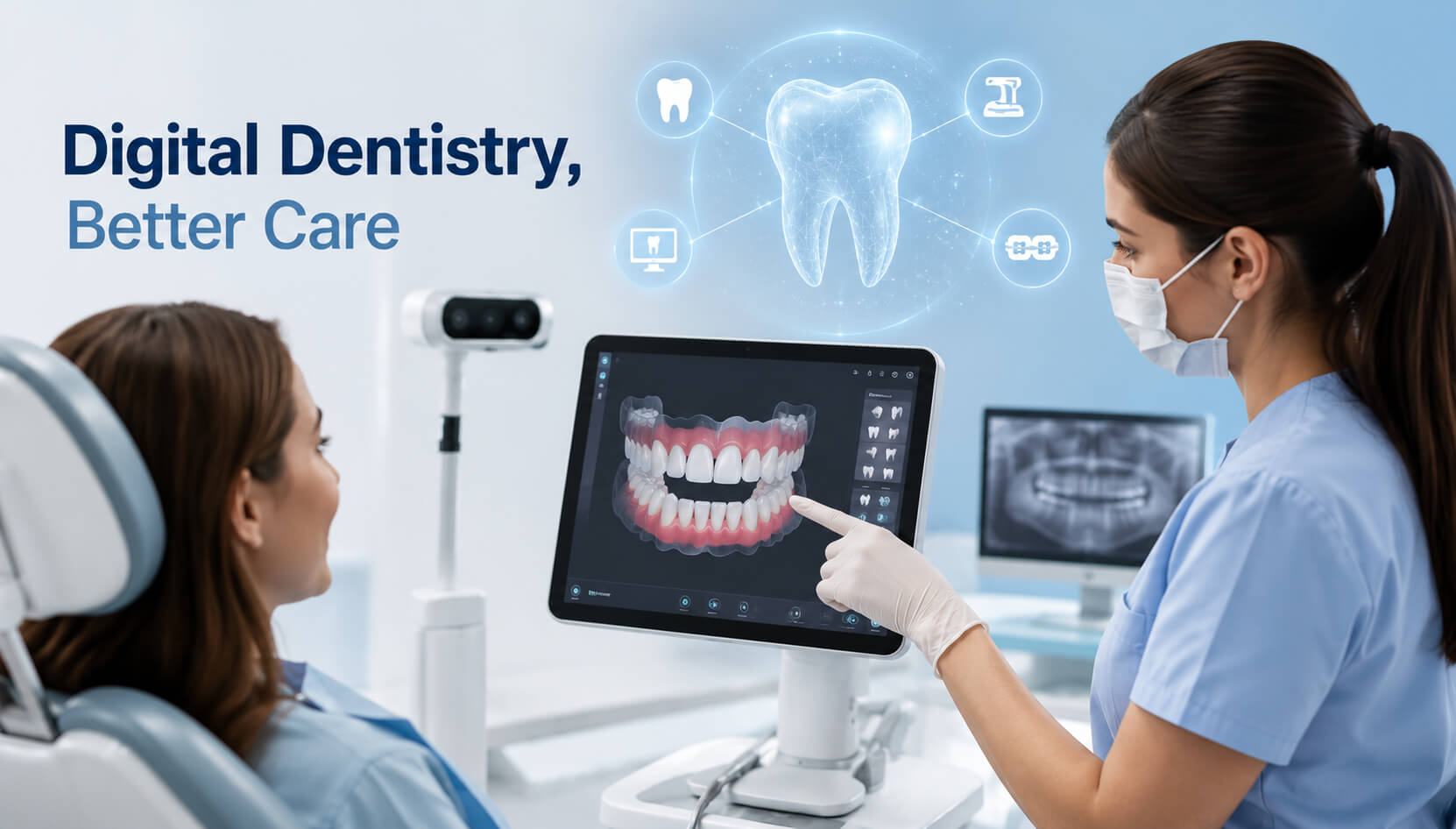
High-resolution imaging such as cone-beam computed tomography (CBCT) and digital panoramic X-rays are widely used to evaluate anatomy before extractions. These tools allow clinicians to visualize root position, proximity to nerves and sinuses, and bone volume—factors that influence whether a simple extraction or a surgical approach is safer. Digital planning software can combine CBCT data with intraoral scans to generate 3D models for guided surgery or to assess options like simultaneous implant placement.
Minimally invasive technologies and instruments
Piezosurgery
Piezosurgery uses ultrasonic microvibrations to cut hard tissue while preserving soft tissue, offering greater control around nerves and blood vessels. Peer-reviewed literature indicates piezoelectric devices can reduce intraoperative trauma and improve postoperative healing for some surgical extractions, though operator experience is a key factor.
Lasers
Dental lasers may be used for soft-tissue management during extractions and in adjunctive roles for disinfection and hemostasis. Lasers do not replace mechanical tooth removal but can aid incision design, gingival recontouring, and post-operative microbial control in selected cases.
Surgical microscopes and magnification
Magnification by operating microscopes or loupes enhances visibility for complex extractions, improving precision when removing fractured roots or performing procedures near critical structures such as the inferior alveolar nerve.
Guided extraction and 3D-printed surgical guides
Computer-aided design (CAD) and 3D printing enable the fabrication of surgical guides that help translate digital plans to the clinical procedure. Guides are more commonly used when extraction is paired with implant placement or when avoiding vital anatomy is critical. Guided approaches reduce guesswork and can shorten procedure time in appropriately selected patients.
Anesthesia, sedation and patient monitoring technology
Local anesthetic delivery systems, computer-controlled infusion devices, and monitoring equipment for oxygenation, heart rate and blood pressure are part of modern care for extractions that require anxiety management or sedation. Clinics typically follow sedation protocols and monitoring standards set by local regulators and clinical guidelines from professional sedation societies.
Digital records, tele-dentistry and care coordination
Electronic health records (EHRs) and secure imaging archives improve information sharing between specialists, general dentists and hospitals. Tele-dentistry can be used for pre-operative assessment, triage and post-operative follow-up to identify complications earlier and reduce unnecessary clinic visits. Interoperability with regulatory reporting systems aids quality assurance under regional health authorities.
Infection control, sterilization and safety tech
Instruments and environmental systems—autoclaves with traceable logs, HEPA filtration in clinic airflow systems, and digital sterilization records—support infection prevention. The Dubai Health Authority and international bodies publish standards for sterilization, instrument reprocessing and clinic hygiene; clinics operating in Dubai are expected to meet local licensing requirements and routine inspections.
Regulation, training and quality assurance
Clinical practice and facility licensing in Dubai are overseen by government bodies focused on patient safety and professional standards. The Dubai Health Authority regulates healthcare facilities, practitioner licensing and inspections; clinicians are expected to maintain professional training and comply with evidence-based guidelines. Academic institutions and continuing-education programs provide training for new technologies such as CBCT interpretation, piezosurgery and laser safety.
For official information on licensing and facility standards, refer to the Dubai Health Authority: Dubai Health Authority.
Patient considerations: access, cost and informed consent
Advanced technology can increase precision and comfort but may also increase treatment costs. Patients should receive clear information about the expected benefits, alternatives, potential risks and follow-up requirements. Informed consent procedures typically include explanation of imaging findings, proposed techniques (for example, whether guided-surgery or piezosurgery will be used), anesthesia options and post-operative care instructions. Clinicians should follow local informed-consent regulations and document discussions in the patient record.
Future directions
Emerging applications include augmented reality for surgical visualization, artificial intelligence to assist image interpretation and predictive analytics for complication risk. Ongoing clinical research and local adoption will shape how these tools integrate into routine extraction workflows in Dubai and internationally.
Conclusion
Technology influences diagnosis, procedural planning, intraoperative precision and post-operative care for tooth extraction procedures in Dubai. While digital imaging, guided approaches, lasers and piezosurgery can improve outcomes in many cases, clinical judgment, operator skill and adherence to regulatory standards remain central to safe care.
Frequently asked questions
What technologies are commonly used in tooth extraction procedures in Dubai?
Common technologies include CBCT imaging, intraoral scanning, surgical guides, piezosurgery, dental lasers, magnification (loupes or microscopes), computerized anesthesia delivery and electronic health records. Use depends on case complexity and clinic capabilities.
Do advanced technologies make extractions less painful or faster?
Technologies that improve precision and planning can reduce tissue trauma and, in some cases, shorten procedure time. Pain and recovery are influenced by procedure type, patient factors and post-operative care; technologies are one of several contributing factors.
How are clinics in Dubai regulated when using new dental technologies?
Clinics and practitioners are regulated by regional authorities such as the Dubai Health Authority, which sets licensing, facility and safety standards. Professional guidelines and accredited training programs inform safe adoption of new technologies.
Can tele-dentistry be used for follow-up after a tooth extraction?
Tele-dentistry can be useful for remote follow-up to check healing progress, assess symptoms and triage complications, reducing the need for in-person visits when appropriate.
Will using technologies like CBCT or guided surgery increase the cost of an extraction?
Advanced imaging and guided techniques can add cost due to equipment, planning time and materials (for example, 3D-printed guides). Cost varies across providers and should be discussed during treatment planning.
Are there clinical studies supporting technologies such as piezosurgery and lasers for extractions?
Peer-reviewed studies and systematic reviews evaluate benefits and limitations of specific technologies. Clinical evidence should be considered alongside practitioner experience and individual case factors when choosing a technique.