How to Choose a Third Party Cardiac Diabetic Product Manufacturer in India
-

- Published Updated
- 2,169 views
India has become an important pharmaceutical manufacturing destination, offering businesses access to a wide range of manufacturing capabilities and pharmaceutical expertise. Among the many therapeutic segments, cardiac and diabetic healthcare products represent an important area for pharmaceutical companies, distributors, marketers, and entrepreneurs.
For businesses that do not want to establish their own manufacturing infrastructure, partnering with a Third Party Cardiac Diabetic Product Manufacturer in India can provide a practical way to develop and supply branded pharmaceutical products.
However, choosing a manufacturing partner requires more than comparing prices. Product quality, compliance, manufacturing capacity, documentation, packaging, communication, and delivery performance should all be considered.
Understanding the Third-Party Manufacturing Model
Under third-party manufacturing, a client company works with a pharmaceutical manufacturer to produce selected medicines or healthcare products according to agreed specifications.
The client may be responsible for brand development, marketing, distribution, and sales, while the manufacturing partner manages production.
This arrangement can help pharmaceutical businesses access manufacturing capabilities without building their own production facility.
CardioVends describes third-party manufacturing as a model in which products are manufactured by a certified pharmaceutical company and marketed under the client's brand.
Why Cardiac and Diabetic Manufacturing Is Important
Cardiac and diabetic conditions require long-term healthcare management, creating continuing demand for pharmaceutical products in these therapeutic areas.
For B2B businesses, this creates opportunities to build specialized product portfolios aimed at healthcare providers, distributors, retailers, and other pharmaceutical stakeholders.
However, because these products are associated with important healthcare applications, manufacturing quality and regulatory compliance must remain a priority.
Key Factors to Consider Before Selecting a Manufacturer
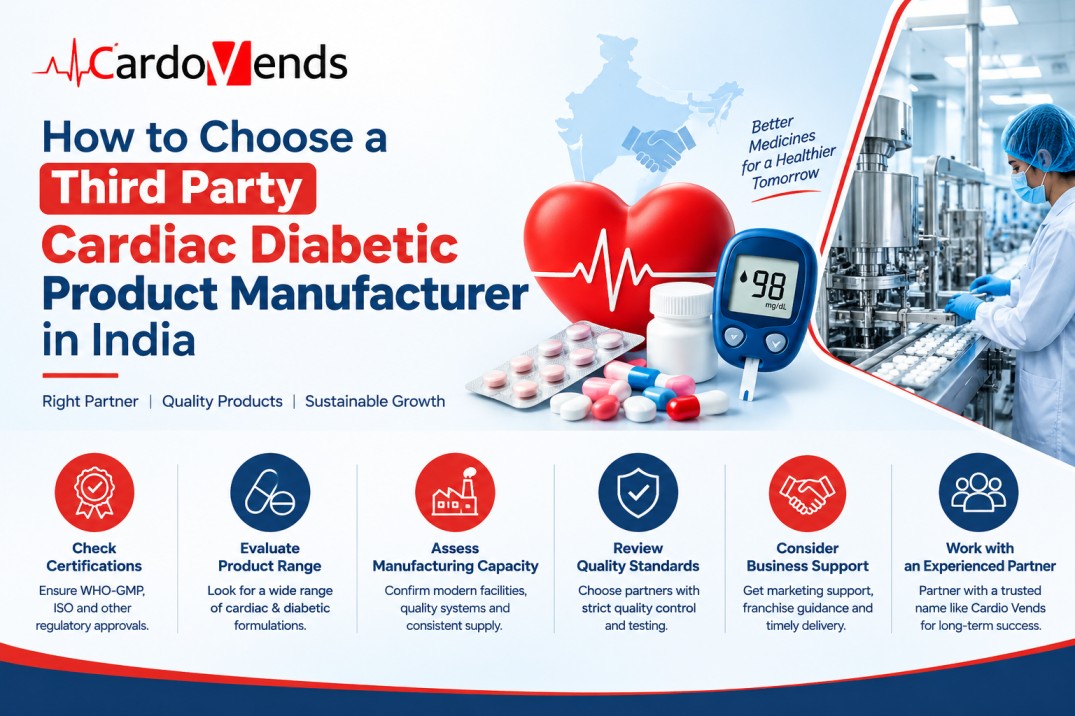
Manufacturing Certifications
One of the first things to investigate is the manufacturer's quality and manufacturing certifications.
Businesses should request current documentation and verify that the certifications are relevant to the facility and products being considered.
A manufacturer's certification status should never be accepted solely on the basis of promotional claims.
Product Portfolio
Look for a manufacturer whose portfolio matches your business requirements.
If you plan to develop a cardiac and diabetic portfolio, working with a partner that specializes in these therapeutic categories may simplify product selection and procurement.
Manufacturing Capacity
Production capacity is important when your business grows.
A manufacturer should be able to handle the required order quantities within an agreed timeline. Ask whether the manufacturer supports both initial and larger-scale commercial orders.
Quality Control
A dependable manufacturer should have appropriate quality-control procedures throughout the manufacturing cycle.
Important areas include:
- Raw-material quality
- Production controls
- In-process testing
- Finished-product testing
- Packaging checks
- Batch documentation
- Storage conditions
These processes help maintain consistency from one batch to another.
Private-Label and Branding Support
Many businesses choose third-party manufacturing because they want to establish products under their own brand identity.
Therefore, packaging and labeling support can be important.
Before starting production, clarify:
- Brand name requirements
- Packaging design
- Pack sizes
- Label information
- Regulatory details
- Printing requirements
- Packaging materials
Clear communication at this stage can help prevent delays later in the production cycle.
Product Forms and Manufacturing Flexibility
A manufacturer may offer multiple pharmaceutical dosage forms depending on its infrastructure and approvals.
CardioVends' third-party manufacturing page mentions tablets, capsules, syrups, injectables, and other product formats within its cardiac-diabetic manufacturing services.
Businesses should confirm whether the specific dosage form they need is available before finalizing the project.
Cost Considerations
Price is naturally an important factor in third-party manufacturing, but it should not be the only deciding factor.
A low manufacturing quotation may not provide the best overall value if it comes with limitations in quality, packaging, documentation, production timelines, or customer support.
Instead, buyers should evaluate the total commercial package.
Consider:
Product cost + packaging cost + documentation + logistics + MOQ + production timeline + quality requirements
A transparent quotation makes it easier to compare manufacturers fairly.
Minimum Order Quantity
MOQ is another important consideration.
New businesses may prefer smaller initial quantities so that they can test market demand. Established pharmaceutical companies may require much larger production volumes.
Ask the manufacturer about:
- Product-wise MOQ
- Packaging MOQ
- Repeat-order quantities
- Custom packaging requirements
- Production lead time
Getting these details in writing can prevent misunderstandings.
Delivery and Supply Reliability
A good manufacturing relationship does not end after production.
Reliable supply is essential for pharmaceutical distributors and marketing companies because stock shortages can affect customer relationships.
Before choosing a partner, ask about manufacturing lead times, dispatch schedules, logistics support, and procedures for handling delays.
CardioVends emphasizes timely delivery and business support as part of its third-party manufacturing positioning.
Benefits of Partnering With an Experienced Manufacturer
Working with an established manufacturer can offer several advantages.
Reduced Capital Requirement
Businesses can avoid the major investment associated with establishing their own production infrastructure.
Faster Product Launch
Existing manufacturing infrastructure can simplify the process of taking products from planning to commercial production.
Professional Manufacturing Support
An experienced partner can provide technical and production support based on the agreed product requirements.
Business Scalability
As demand increases, businesses can potentially increase production volumes without constructing a new facility.
Focus on Marketing and Distribution
Outsourcing manufacturing allows the client company to concentrate on sales, marketing, distribution, customer relationships, and brand development.
Why CardioVends?
CardioVends focuses on the cardiac and diabetic B2B pharmaceutical segment and provides third-party manufacturing services for businesses looking to source cardiac and diabetic products. Its platform also connects pharmaceutical businesses with manufacturers, suppliers, traders, and exporters operating in these categories.
Its third-party manufacturing page highlights product manufacturing, packaging, quality systems, and delivery support, making it relevant for businesses exploring outsourced cardiac and diabetic production.
Businesses considering a partnership should still evaluate their specific product requirements, regulatory documentation, commercial terms, and manufacturing specifications before placing an order.
Conclusion
Selecting a Third Party Cardiac Diabetic Product Manufacturer in India can be an effective strategy for pharmaceutical companies that want to expand their product portfolio without establishing their own manufacturing infrastructure.
The right partner should provide more than competitive pricing. Quality systems, appropriate certifications, manufacturing capabilities, product range, packaging support, documentation, MOQ, and delivery reliability should all be evaluated.
For pharmaceutical entrepreneurs, distributors, marketing companies, and established pharma businesses, a carefully selected third-party manufacturing partner can support sustainable product development and long-term business growth in the cardiac and diabetic healthcare segment.
Frequently Asked Questions
1. What should I check before choosing a third-party manufacturer?
Check certifications, manufacturing facilities, product portfolio, quality-control procedures, MOQ, packaging options, documentation, pricing, production timelines, and delivery capabilities.
2. Can I manufacture products under my own brand?
Yes. Third-party manufacturing commonly allows businesses to manufacture products for their own brands, subject to applicable pharmaceutical regulations, labeling requirements, and approvals.
3. What dosage forms are available?
Availability depends on the manufacturer's facilities and regulatory permissions. Common forms can include tablets, capsules, syrups, injections, suspensions, sachets, and drops.
4. Why choose a specialized cardiac and diabetic manufacturer?
A specialized manufacturer may already have relevant product expertise, manufacturing processes, quality systems, and therapeutic portfolios, potentially making it easier to develop and manage cardiac and diabetic product lines.