Time Attendance System Dubai | Smart HR Solutions | EITS
-

- Published Updated
- 72 views
Time Attendance System Dubai: A Practical Guide for Businesses
Managing employee attendance sounds simple until your business starts growing. One employee forgets to clock in, another works a night shift, and your HR team spends hours checking spreadsheets before payroll.
These small problems can create confusion about working hours, late arrivals, overtime and employee records.
A time attendance system in Dubai helps businesses record employee check-in and check-out times, organize attendance information and prepare more accurate reports.
But choosing the right system involves more than buying a fingerprint scanner. Businesses need to consider shift patterns, employee numbers, payroll requirements, data privacy and how the system will work in daily operations.
This guide explains the different attendance technologies, essential features, installation considerations and what Dubai businesses should check before investing.
What Is a Time Attendance System?
A time attendance system is a combination of hardware or software used to record when employees start and finish work.
Depending on the solution, employees may clock in using a fingerprint, facial recognition, RFID card, PIN or mobile application.
The system records attendance events and can organize them into reports showing working hours, late arrivals, absences and overtime.
For example, a company with 40 employees working different shifts can use attendance software to review clock-in records instead of manually comparing paper timesheets.
However, attendance records are not automatically payroll calculations. The system must be configured according to the company's approved schedules, leave policies and applicable employment rules.
Types of Employee Attendance Systems in Dubai
Different businesses need different attendance methods.
1. Biometric Attendance Systems
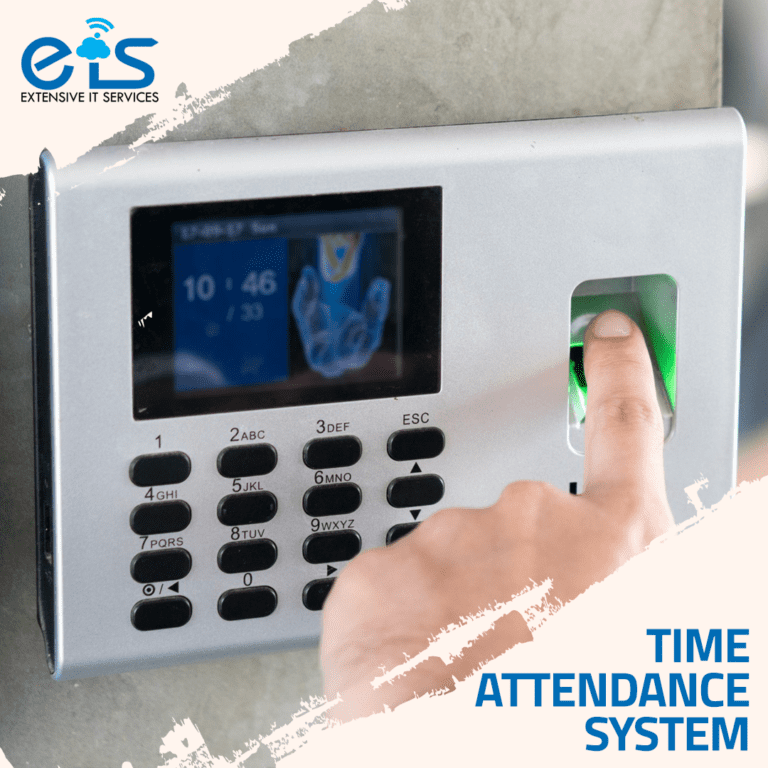
A biometric attendance system in Dubai identifies enrolled employees using physical characteristics such as fingerprints or facial features.
Biometric verification can reduce dependence on shared cards or PINs, but it also introduces privacy and accessibility considerations.
Fingerprint readers may struggle with damaged or worn fingerprints. Facial recognition performance may vary with lighting and device capabilities.
Businesses should provide a suitable alternative where biometric authentication cannot be used reliably.
2. RFID Card Attendance Systems
An RFID attendance system allows employees to register attendance using compatible cards or key fobs.
Card-based systems can be convenient for offices, retail businesses and workplaces with multiple employees.
However, cards can be lost or shared. Companies should have a clear process for issuing, replacing and deactivating credentials.
3. Facial Recognition Attendance
Facial recognition devices can verify enrolled users without requiring a physical card.
Some devices offer contactless check-in, which may be useful in busy workplaces.
Before choosing this technology, review the device's accuracy, enrollment process, privacy controls and operating environment.
4. Mobile and Cloud Attendance Software
Some employee attendance platforms allow authorized clock-ins through mobile applications or web-based systems.
Depending on the software, features may include location restrictions, remote employee attendance, approval workflows and cloud reporting.
These options can suit businesses with field staff or multiple branches, but device compatibility, internet availability and employee privacy must be considered.
Biometric vs RFID vs Mobile Attendance: Which Is Better?
There is no single attendance technology that works best for every organization.
| System | Main advantage | Important consideration |
|---|---|---|
| Fingerprint | Biometric identity verification | Enrollment, privacy and sensor reliability |
| Facial recognition | Contactless authentication | Lighting, privacy and accuracy |
| RFID card | Simple employee credential management | Lost or shared cards |
| PIN | No physical card required | Shared or disclosed codes |
| Mobile attendance | Flexible for suitable remote or field teams | Location permissions and device policies |
An office may prefer a fixed attendance terminal, while a business with employees visiting multiple customer locations may need mobile attendance.
The correct choice depends on how employees work, not simply which device has the most features.
Essential Features of a Time Attendance System
Before purchasing an employee attendance system in Dubai, check whether it supports your actual HR processes.
Shift and Schedule Management
The software should accommodate the schedules your business uses, including fixed hours, rotating shifts and overnight work where required.
Late Arrivals and Early Departures
Attendance reports can identify employees who clock in late or leave before their scheduled time.
However, payroll deductions or disciplinary actions should follow company policy and applicable employment law rather than being applied automatically.
Overtime Reporting
Some systems calculate potential overtime based on configured schedules.
HR should review and approve these records before using them for payroll because recorded time on-site does not always equal approved overtime.
Leave and Absence Records
Integration with leave-management software can help distinguish approved leave from unexplained absences.
Payroll Integration
A compatible system may export approved attendance data to payroll software, reducing repetitive manual entry.
Before purchasing, verify the exact payroll integration or export formats supported.
Multiple Branch Management
Businesses operating across Dubai or other Emirates may benefit from centralized reporting, provided the chosen system supports multiple locations.
Why UAE Labour Rules Matter for Attendance Tracking
Attendance software should reflect the employment rules that apply to the organization.
Under the UAE's general private-sector labour framework, normal working hours are generally eight hours per day or 48 hours per week, subject to sector-specific and employee-category exceptions. Normal daily working hours are reduced by two hours during Ramadan for covered employees.
Breaks, overtime, weekly rest and other arrangements also require proper consideration.
These rules are explained by the UAE Government and the Ministry of Human Resources and Emiratisation (MOHRE).
An attendance system should therefore support configurable schedules and HR review instead of assuming that every employee follows identical working hours.
Companies operating under special employment regimes, including certain financial free zones, should verify the rules applicable to them.
Important: Attendance software helps record time; it does not independently guarantee compliance with UAE Labour Law.
Employee Privacy and Biometric Data Protection
Employee attendance information is personal data. Fingerprints and facial-recognition information require particular care.
The UAE Personal Data Protection Law establishes requirements concerning personal information, including biometric data, subject to its scope and applicable exceptions.
Businesses considering biometric attendance should evaluate:
Why biometric information is needed
What information the device stores
Whether biometric templates or images are retained
Who can access attendance records
How long information is kept
How employee data is secured
How records are deleted when no longer needed
Whether a suitable non-biometric alternative is available
Employers should establish an appropriate legal basis for processing personal data and obtain specialist guidance where necessary.
Security and privacy should be considered before employees are enrolled.
How Time Attendance System Installation Works
A professional time attendance system installation in Dubai should begin with understanding the workplace.
Step 1: Review Employee and HR Requirements
Identify employee numbers, working schedules, branch locations, attendance policies and reporting needs.
Step 2: Select Suitable Devices and Software
Choose the appropriate biometric, RFID, PIN or mobile attendance solution based on the working environment.
Step 3: Install and Configure
Install the required attendance terminals and configure user enrollment, schedules, administrator access and relevant software settings.
Step 4: Test Attendance Records
Test check-in and check-out events, overnight shifts, missed punches and reporting accuracy.
Step 5: Train Administrators
HR personnel should understand how to enroll employees, correct records with an audit trail, review reports and export approved attendance data.
A short parallel test against existing attendance records can help identify configuration issues before the system becomes the primary source for payroll preparation.
How Much Does a Time Attendance System Cost in Dubai?
The time attendance system cost in Dubai depends on the hardware, software and installation requirements.
Major pricing factors include:
Number of employees and locations
Fingerprint, facial recognition, RFID or mobile technology
Number of attendance terminals
Software licensing or subscription fees
Cloud or local deployment
Payroll or HR integration requirements
Installation, configuration and training
Maintenance and technical support
A small office using one standalone terminal may have different requirements from a company operating multiple branches with centralized HR reporting.
Request a quotation that clearly separates equipment, software, installation and recurring charges.
Common Attendance System Mistakes to Avoid
A time attendance system can still produce unreliable reports if it is poorly configured.
Incorrect shift settings: Overnight employees may appear absent when their shift crosses midnight.
Uncontrolled manual corrections: Attendance changes without an approval record can create payroll disputes.
No backup plan: Device or network failure may prevent employees from recording attendance.
Unverified payroll integration: Data exports may not match the payroll system's required format.
Weak administrator security: Too many users with full access can expose sensitive employee records.
Testing these situations before rollout helps reduce operational problems.
Choosing a Time Attendance Solution for Your Dubai Business
Before selecting a provider, ask whether the proposed solution supports your employee count, shift arrangements, reporting requirements and existing HR software.
Also confirm how attendance data is stored, what happens during internet or power interruptions, how records are backed up and what support is available.
Extensive IT Services (EITS) offers business technology and IT solutions in Dubai, including time and attendance systems within its wider business software offering.
For an EITS quotation, confirm the available attendance hardware, supported software, integration options and installation scope for your particular project.
The right solution should fit your workplace rather than require employees and HR teams to work around unnecessary system limitations.
Frequently Asked Questions
1. What is the best time attendance system for a small office in Dubai?
A small office may use a fingerprint, RFID or PIN-based attendance device. The best choice depends on employee numbers, privacy requirements, working schedules and reporting needs.
2. Can biometric attendance integrate with payroll software?
Some biometric attendance systems support payroll integration or attendance-data exports. Compatibility depends on the specific software and must be verified before purchase.
3. Can a time attendance machine work without internet?
Some devices can store attendance records locally and synchronize later. Others depend on network connectivity. Offline operation varies by model and software.
4. Is biometric attendance mandatory for UAE businesses?
There is no general requirement for every UAE business to use biometric attendance. Employers should maintain appropriate employment records and comply with applicable laws.
5. Can a time attendance system calculate overtime?
Many systems can report or calculate potential overtime using configured rules. HR must still verify approved overtime and apply the employment rules relevant to each employee.
Find the Right Time Attendance System in Dubai
An attendance system should make employee time tracking clearer, not create more administrative work.
Whether your business needs fingerprint attendance, RFID cards, shift reporting or payroll-ready attendance records, begin by reviewing how your employees work and what your HR team needs.
Track Attendance Clearly. Make Every Working Hour Count.
Contact Extensive IT Services (EITS) to discuss your business requirements and request information about suitable time and attendance solutions in Dubai.
Website: https://eits.ae/
Email: [email protected]