Best Time to Visit India: Weather Guide by Region & Season
-

- Published Updated
- 4,269 views
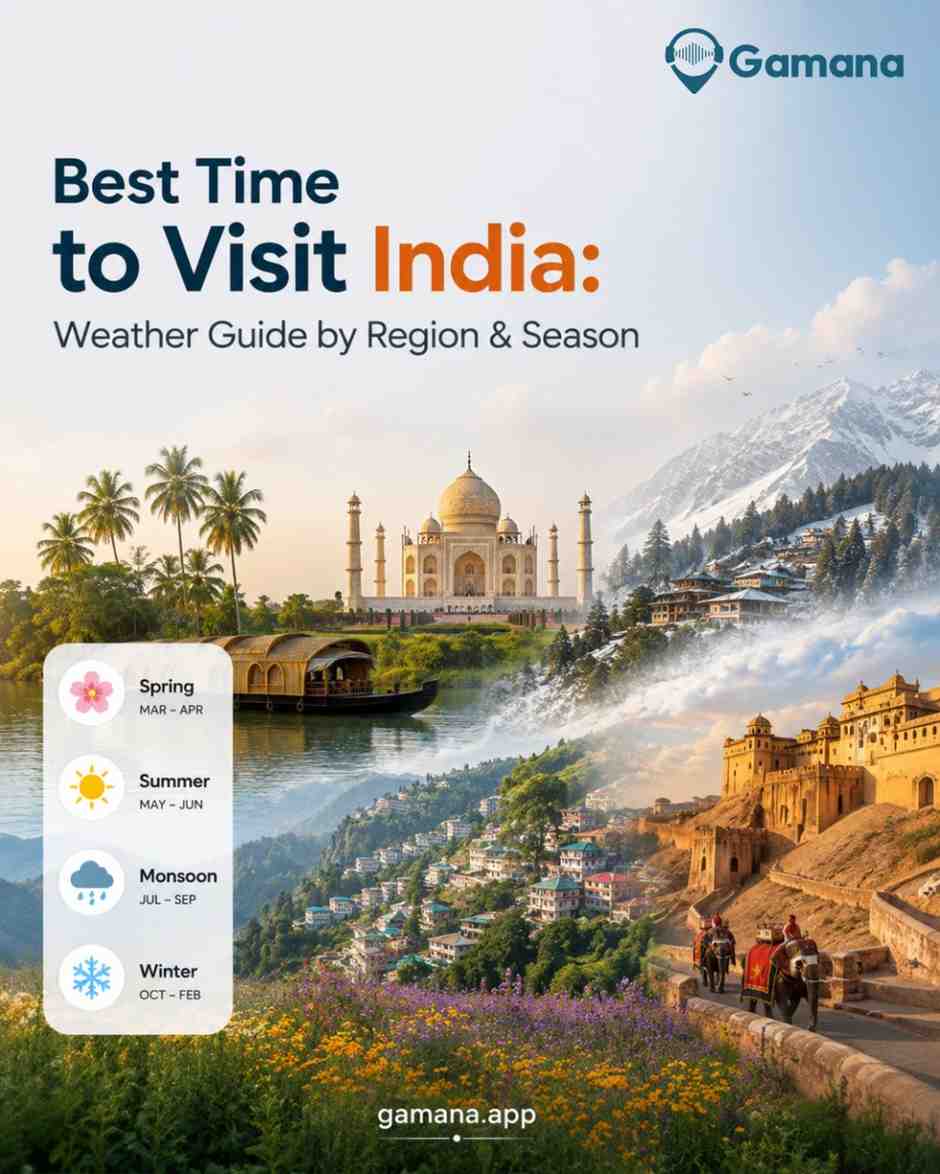
India is a vast and geographically diverse country, offering everything from snow-covered Himalayan landscapes and sunny beaches to tropical forests, deserts and vibrant cities. Because of this diversity, there is no single best time to visit every part of India. The ideal travel season depends largely on the region you want to explore and the experiences you have in mind.
India generally experiences distinct seasonal patterns, including winter, summer, monsoon and transitional periods. Understanding these seasons can help you choose destinations, plan activities and pack appropriately for your journey.
Whether you are planning a cultural holiday, mountain adventure, beach escape, wildlife trip or city tour, knowing the weather by region can make your travel experience more comfortable.
Best Time to Visit India by Season
Winter: December to February
Winter is one of the most popular periods for travelling across many parts of India. Northern and central regions generally experience cooler and more comfortable conditions, making sightseeing and outdoor activities enjoyable.
The Himalayan region can become very cold, with snowfall in several destinations. This makes winter particularly attractive for travellers interested in snow activities and mountain experiences.
Popular winter destinations include Rajasthan, Delhi, Agra, Gujarat, Goa and several parts of South India. The northern mountains are also popular for travellers looking for snow-covered landscapes and winter sports.
Spring: March to April
Spring brings changing weather conditions across India. Northern areas gradually become warmer, while several southern destinations continue to experience relatively comfortable conditions.
This season can be a good choice for travellers interested in festivals, nature, cultural experiences and selected Himalayan destinations. India’s official tourism information highlights spring as a period associated with pleasant weather and colourful festivals.
Summer: May to June
Summer can be hot across many plains and inland areas of India. However, the country's hill stations provide cooler alternatives for travellers looking to escape the heat.
Destinations such as Shimla, Darjeeling, Ooty and Munnar can offer refreshing mountain or hill-country experiences during warmer months.
If you are travelling during summer, plan outdoor sightseeing around the cooler parts of the day and stay hydrated.
Monsoon: July to September
The monsoon transforms many parts of India with lush greenery, waterfalls and refreshed landscapes. However, rainfall patterns vary considerably from region to region, and heavy rain can affect travel plans in some areas.
For travellers who enjoy dramatic landscapes, greenery and a quieter atmosphere, the monsoon can offer a unique travel experience. It is important to check regional weather conditions before travelling, especially when planning road trips or outdoor activities. The India Meteorological Department provides current monsoon information and rainfall updates.
Autumn and Post-Monsoon: October to November
October and November are often attractive months for exploring many parts of India as the monsoon begins to retreat and conditions become more comfortable in several regions.
This period can be particularly appealing for sightseeing, cultural trips, photography and exploring cities and heritage destinations. However, weather can still vary by region, so checking local conditions before travelling is recommended.
Best Time to Visit North India
North India includes destinations such as Delhi, Agra, Rajasthan, Himachal Pradesh, Uttarakhand, Jammu & Kashmir and Ladakh. The best travel period depends on the specific destination.
For cities, heritage sites and desert destinations, the cooler months from October to March are generally more comfortable for sightseeing. Rajasthan, Agra and Delhi can be particularly appealing during this period.
For Himalayan destinations, the ideal season varies. Winter is suitable for snow experiences, while spring and summer can be better for hiking and exploring many mountain areas.
Best Time to Visit South India
South India has a diverse climate influenced by its coastline, hills and tropical landscapes. Kerala, Karnataka, Tamil Nadu, Andhra Pradesh and Telangana can experience different weather patterns.
The cooler and drier months can be suitable for sightseeing, heritage tours and outdoor activities. Kerala and other coastal destinations can also have distinct monsoon periods, which may appeal to travellers who enjoy lush landscapes but can require additional planning.
Always check the weather for your specific destination before finalising your itinerary.
Best Time to Visit East India
East India includes West Bengal, Odisha, Bihar and neighbouring areas. The region offers a mix of cultural attractions, historical sites, beaches, forests and wildlife destinations.
The cooler months can be comfortable for sightseeing and exploring major attractions. Monsoon conditions can bring significant rainfall to parts of the region, so travellers planning outdoor activities should consider local forecasts and rainfall conditions.
Best Time to Visit West India
Western India includes destinations such as Maharashtra, Gujarat, Goa and Rajasthan's western areas. The region offers diverse experiences, from beaches and heritage sites to wildlife and urban attractions.
Winter is generally a popular time to explore many western destinations because temperatures can be more comfortable for outdoor sightseeing. Coastal destinations can also have their own seasonal patterns, so checking local conditions is advisable.
Best Time to Visit Northeast India
Northeast India is known for its mountains, forests, tea gardens, waterfalls and distinctive cultures. The region receives substantial rainfall in several areas, particularly during the monsoon.
For travellers interested in trekking, sightseeing and exploring mountain landscapes, the drier and more comfortable periods may be preferable. However, the ideal timing varies considerably between destinations, so destination-specific weather information is important.
How to Choose the Best Time for Your India Trip
The best travel season ultimately depends on what you want to experience. Consider these factors before planning:
· Destination: Weather differs considerably across India's regions.
· Activities: Trekking, wildlife safaris, beaches and sightseeing may have different ideal seasons.
· Rainfall: Check monsoon conditions if you are planning outdoor travel.
· Temperature: Choose cooler months if you prefer comfortable sightseeing.
· Crowds: Popular travel seasons can be busier at major attractions.
· Local events: Festivals and cultural events can add a special dimension to your trip.
· Travel flexibility: A flexible itinerary can be useful when weather conditions change.
Plan Your India Trip with Gamana App
India offers memorable travel experiences throughout the year, but choosing the right season can make your journey more comfortable and enjoyable. From winter sightseeing in North India to summer escapes in the hills and monsoon landscapes in greener regions, every season has something different to offer.
With the Gamana App, travellers can make trip planning more convenient by organising their travel plans and discovering experiences based on their interests. Before you travel, combine your itinerary with destination-specific weather information so you can make informed decisions about when and where to go.
Whether you are planning your first trip to India or exploring a new region, understanding seasonal weather is an important step towards creating a smoother and more enjoyable journey.