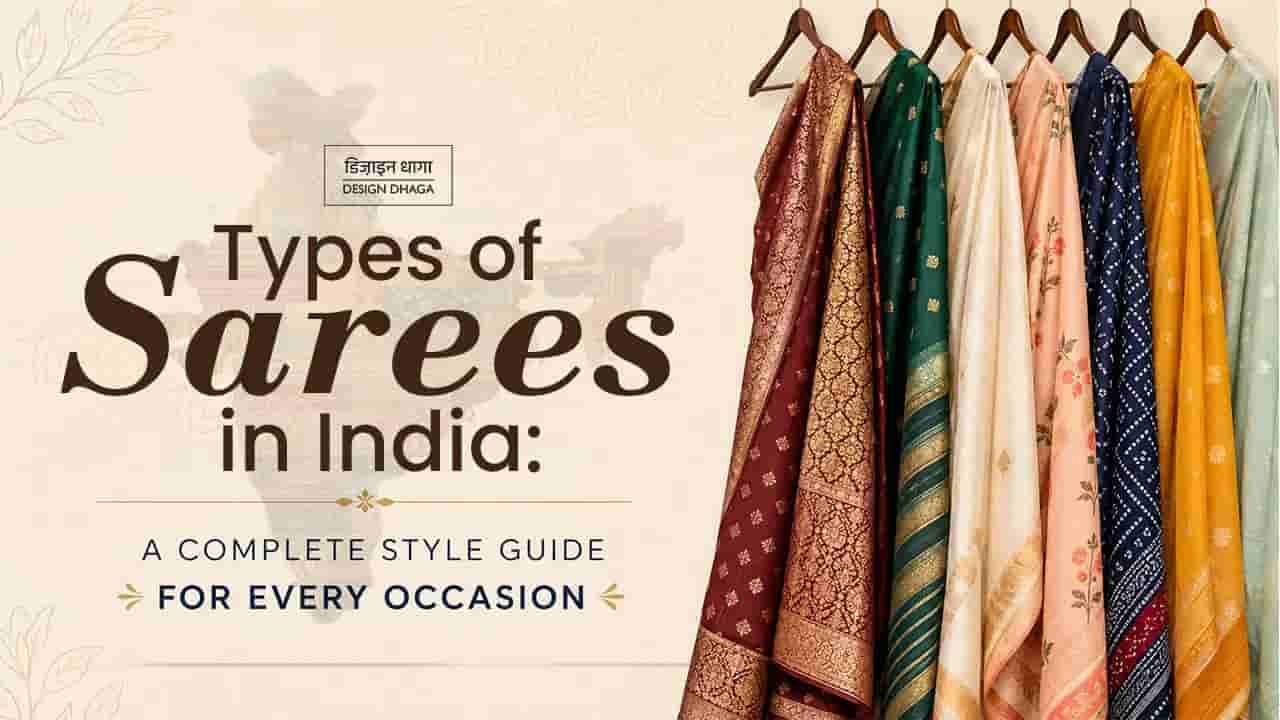
Types of Sarees in India: A Complete Style Guide for Every Occasion
-
- Published Updated
- 6,028 views
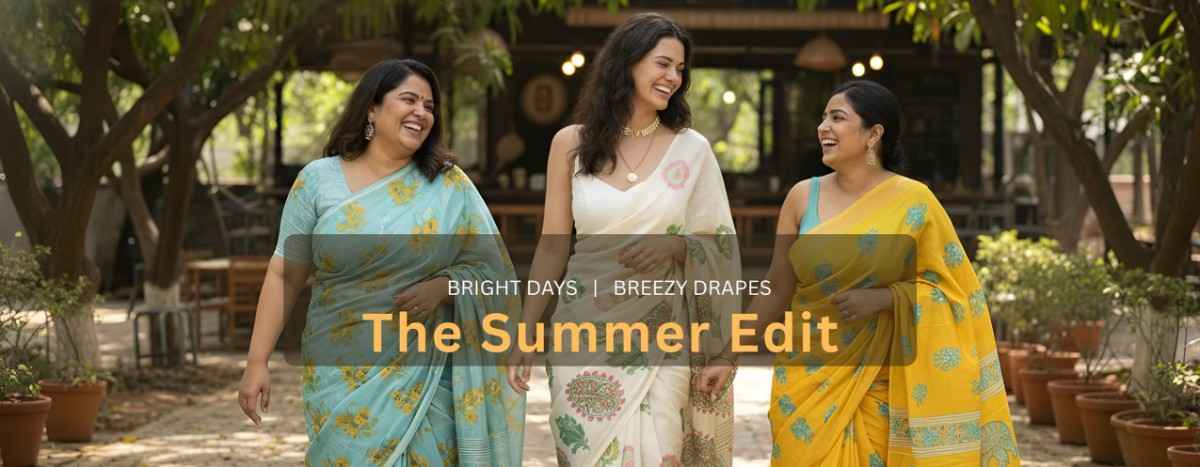
The saree is one of the few garments in the world that has stayed relevant for thousands of years without ever needing to be reinvented. What changes from region to region, and sometimes from town to town, is the weave, the border, and the way it’s worn. If you’ve ever stood in front of a saree section overwhelmed by names like Banarasi, Kanjivaram, Bandhani, and Chanderi, this guide breaks down every major type so you know exactly what makes each one different — and which one fits your occasion.
Why Saree Variety in India Is So Vast
India doesn’t have one saree tradition, it has dozens, shaped by local weaving techniques, climate, and the textiles available in each region. A saree from Banaras looks nothing like one from Kanchipuram, and a saree from Bengal is built for a completely different climate than one from Rajasthan. Here’s a region-by-region, fabric-by-fabric breakdown so you can navigate the variety with confidence.
Banarasi Silk Saree
The Banarasisaree comes from Varanasi (Banaras) and is known for its rich silk base and intricate gold or silver zari work, often inspired by Mughal-era motifs like florals and paisleys. It’s heavier than most other silk sarees, which is exactly why it’s a wedding and festive staple rather than everyday wear. If you’re shopping for a bridal or reception saree, a Banarasi silk saree is one of the safest, most universally recognized choices.
Kanjivaram / KanjeevaramSaree
Kanjivaramsarees originate from Kanchipuram in Tamil Nadu and are considered one of the finest silk weaves in the country. They’re recognizable by their thick silk, contrasting wide borders, and temple-inspired motifs. Traditionally, the body and the border of a Kanjivaramsaree are woven separately and then joined a technique that makes the saree exceptionally durable. These are the sarees you’ll see at South Indian weddings, but they’ve become popular pan-India for their sheer richness.
South Indian SareesBeyondKanjivaram
“South Indian saree” is often used as an umbrella term, but it covers a wide range of styles:
• Mysore silk: lighter than Kanjivaram, with a soft sheen and simpler zari borders, popular for daily festive wear in Karnataka.
• Pochampallyikat:from Telangana, known for its geometric tie-dye patterns woven directly into the silk or cotton thread before weaving.
• Gadwalsaree: a cotton body with a contrasting silk zari border, traditionally woven so the border can be detached and reused.
• Uppadasaree: from Andhra Pradesh, prized for being lightweight despite intricate jamdani-style weaving.
• Kasavusaree: Kerala’s signature off-white or cream cotton saree with a gold-toned border, worn widely during Onam and other festivals.
If you want a South Indian look without the heavier silk weight, a kasavu-style cotton saree is a lighter, more breathable alternative that still carries the traditional aesthetic.
Bandhani / BandhejSaree
Bandhanisarees come from Gujarat and Rajasthan and are made using a resist tie-dye technique tiny sections of fabric are tied with thread before dyeing, creating the dotted, kaleidoscope-like patterns the style is known for. They’re typically lightweight cotton or georgette, making them a popular choice for festive daytime wear, especially during Navratri.
PatolaSaree
Patola is a double-ikat weave from Patan, Gujarat, where both the warp and weft threads are dyed in the exact pattern before weaving even begins. It’s one of the most technically demanding and expensive weaves in India, a single saree can take months to complete, which is why Patolasarees are treated as heirloom pieces and are common in Gujarati and Jain bridal trousseaus.
Chanderi and MaheshwariSarees
Both come from Madhya Pradesh and share a light, sheer quality that makes them comfortable for warmer climates.
• Chanderi is woven with silk, cotton, or a silk-cotton blend, known for its translucent texture and delicate gold buttis (small motifs) scattered across the body.
• Maheshwarisarees are slightly heavier, with distinctive reversible borders and a check or stripe pattern in the body.
Both work well for daytime festive events, office wear, and anywhere you want a traditional look without silk’s weight.
Tussar and Bhagalpuri Silk Sarees
Tussar silk, largely produced in Bihar, Jharkhand, and parts of Chhattisgarh, has a distinctive raw, textured feel and a natural golden-beige tone since it’s made from wild silk rather than the cultivated mulberry variety. Bhagalpuri silk, named after the Bihar town where it’s woven, is a related style often finished with simple embroidery or block prints. Both are breathable enough for daytime wear yet textured enough to look festive.
BaluchariSaree
Balucharisarees come from Bengal and are known for one standout feature: figurative pallus depicting mythological scenes, court life, or even trains and steamboats from the colonial era, all woven (not embroidered) directly into the silk. They’re heavier and more formal, typically reserved for weddings and special occasions.
Bengal Tant and JamdaniSarees
• Tant is a traditional Bengali cotton saree, lightweight and breathable, usually with a contrasting border and a thin gold or colored line running through it, a staple for everyday and festive wear across Bengal.
• Jamdani is a finer, more intricate handloom technique where motifs are woven directly into the fabric using extra weft threads, rather than printed or embroidered on afterward. Authentic jamdani is painstaking to produce and considerably more expensive than plain tant.
SambalpuriSaree
From Odisha, Sambalpurisarees use a tie-dye ikat technique similar in spirit to Patola, but with bolder, more graphic motifs conch shells, wheels, flowers woven into both cotton and silk versions. The technique is sometimes referred to as “Bandha” and the finished fabric has a distinctive textured, almost threedimensional look to its patterns.
PaithaniSaree
Paithanisarees from Maharashtra are immediately recognizable by their peacock motifs and richly colored pallu, often in a contrasting shade to the body. They’re woven in pure silk with real gold or silver zari and are considered one of the most luxurious silk weaves in the country, traditionally passed down as heirlooms.
Assam Silk Sarees (Muga and Eri)
Assam produces two distinctive silks rarely seen elsewhere in India:
• Muga silk has a natural golden sheen that actually deepens with age and washing, making it one of the only silks that improves over time.
• Eri silk is a matte, textured silk, often called “non-violent silk” since the process traditionally allows the silkworm to complete its lifecycle.
Both are woven into sarees with simple, elegant borders and are a distinctive choice if you want something outside the more commonly seen silk varieties.
ChikankariSaree
Chikankari is a delicate, white-on-white (or pastel-on-pastel) hand embroidery technique that originated in Lucknow. Traditionally done on fine cotton, georgette, or chiffon, it’s known for its subtlety rather than boldness making chikankarisarees a popular choice for daytime weddings, summer events, or anyone who prefers understated elegance over heavy embellishment.
Contemporary Fabric Sarees: Georgette, Chiffon, Net, and Organza
Not every saree in an Indian wardrobe is a traditional handloom weave. These contemporary fabrics have become wardrobe staples for modern occasions:
• Georgette: has natural drape and a slight crinkle texture, easy to manage and popular for parties and receptions.
• Chiffon: sheer, flowy, and lightweight, a long-time favorite for both daily wear and elegant evening looks.
• Net: sheer and often heavily embellished with sequins or embroidery, typically reserved for parties and receptions rather than everyday wear.
• Organza: crisp and structured rather than flowy, increasingly popular for contemporary festive wear and receptions.
Linen and Cotton Sarees for Everyday Wear
For daily wear and office settings, linen and handloom cotton sarees (including plain weaves from Bengal, Tamil Nadu, and Andhra Pradesh) are the most practical choice breathable, easy to maintain, and suited to long days without the weight of silk.
How to Choose Based on Occasion
• Weddings and receptions: Banarasi silk, Kanjivaram, Paithani, or Patola all are built to carry heavy embellishment and photograph well under bright lighting.
• Festive or puja wear: Lighter handloom cottons like jamdani, sambalpuri, or bandhani offer a traditional look without the weight.
• Everyday or office wear: Simple cotton, linen, tant, or chanderisarees in solid colors or subtle prints work best for comfort through a full day.
• Guest at someone else’s wedding: A partywearsaree in georgette, net, or silk-blend fabric, rich enough to fit the occasion, but lighter than full bridal silk.
• Summer daytime events: Chikankari, kasavu cotton, or tussar silk for breathability without sacrificing a festive look.
A Note on Draping
The weave is only half the story, how a saree is draped changes its entire look.
• Nivi drape is the most common pan-Indian style and suits Banarasi and Kanjivaramsarees particularly well.
• Bengali drape uses pleats at the back instead of the front and pairs naturally with tant and jamdanisarees.
• Coorgi drape is worn with the pleats at the back and the pallu pinned at the shoulder, giving a distinctive regional silhouette.
• Gujarati/SeedhaPallu drape brings the pallu over the right shoulder instead of the left, traditionally paired with Bandhani and Patolasarees.
Trying a regional drape style is a simple way to get a more distinctive look out of a saree you already own.
Want Something No One Else Has? Hand-Painted and Custom Sarees
Every saree above is defined by its weave but there’s a newer category that’s defined by the artist instead: hand-painted sarees. Rather than a printed or woven motif, the design is painted directly onto the fabric by hand, which means no two pieces ever turn out exactly alike. It’s a good fit if you already own a few traditional silks and want something in your wardrobe that’s genuinely one-of-a-kind rather than mass-produced.
This is also where custom wearable clothing comes in. Instead of picking a saree as-is, you choose the base fabric, the color palette, and the motif, and an artisan hand-paints it to your specification right down to matching a blouse or even a twinning set if you’re coordinating an outfit with someone else. It’s less “which traditional type do I buy” and more “what do I want this saree to say,” which makes it a popular choice for festive shoots, anniversaries, or gifting.
Final Thoughts
There’s no single “best” saree the right one depends on the occasion, the climate, and how much weight and embellishment you want to carry through the day. If you’re building a wardrobe from scratch, start with one heavier silk saree (Banarasi, Kanjivaram, or Paithani) for weddings, one tie-dye or ikat piece (Bandhani or Sambalpuri) for festive events, and one or two lighter handloom cottons (tant, chanderi, or kasavu) for everyday festive wear.
Explore our full collection of traditional, partywear, and wedding sarees including Banarasi silk and Kanjivaram styles or go the hand-painted route and turn your saree into wearable art, customized exactly how you want it, in the Design DhagaSaree Collection.
Internal links to add once published:
• Link to Post #2 (Wedding Saree guide) when live
• Link to Blouse pillar hub (saree-blouse pairing)
FAQ
Q: What is the difference between Kanjivaram and Banarasisarees?
Kanjivaramsarees are woven in Tamil Nadu with thick silk and contrasting temple-motif borders woven separately and joined to the body. Banarasisarees come from Varanasi and feature intricate gold/silver zari work with Mughal-inspired florals, woven directly into a lighter silk base.
Q: Which saree is best for a South Indian wedding?
Kanjivaram silk is the traditional choice for South Indian weddings, prized for its durability and rich temple-border designs.
Q: Are Banarasisarees suitable for everyday wear?
Not typically their weight and zari work make them better suited to weddings and festive occasions. For daily wear, lighter cotton or handloom sarees are more practical.
Q: What’s the difference between Bandhani and Patolasarees?
Bandhani is created by tying small sections of fabric before dyeing, producing a dotted pattern, and is generally more affordable. Patola uses double-ikat, where both thread directions are pre-dyed before weaving, making it far more labor-intensive and expensive.
Q: Which saree fabric is best for summer?
Cotton, linen, chanderi, kasavu, and chikankarisarees are the most breathable options, all suited to warmer weather and daytime events.
Q: How do I find a good saree shop near me?
Look for shops that specialize in your preferred weave (Banarasi, Kanjivaram, Bandhani, or regional handloom) and can show you the saree’s border and pallu in natural light before buying, since silk sarees can look different under store lighting.
Q: What is a hand-painted saree, and how is it different from a printed one?
A hand-painted saree has
its design applied directly onto the fabric by an artisan, brushstroke by
brushstroke, so no two pieces are identical. A printed saree uses a mechanical
or block-printing process that reproduces the same pattern across multiple
sarees.
For Shop hand painted articles like Saree, Dupatta, Blouse, sleeveless design blouse Visit : https://www.designdhaga.com/shop/women