Top Universities with AR VR Labs: Exploring Virtual Reality Labs in Education
-

- Published Updated
- 8,854 views
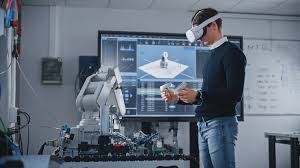
The landscape of higher education is undergoing a transformative shift as institutions worldwide embrace immersive technologies. The growing demand for universities with AR VR labs reflects a fundamental change in how students learn, researchers innovate, and academic institutions prepare the workforce for tomorrow. As virtual reality labs and augmented reality labs become essential infrastructure in modern campuses, they're reshaping everything from medical training to architectural design.
What Are AR VR Labs in Universities?
An AR VR lab represents a dedicated space where students and researchers can explore immersive technologies through hands-on experience. These facilities combine cutting-edge hardware like VR headsets, AR glasses, and haptic devices with sophisticated software platforms to create interactive learning environments.
The distinction between an AR lab and a virtual reality lab lies primarily in their technological focus. While AR labs emphasize overlaying digital information onto the physical world, VR labs create fully immersive digital environments. However, most modern VR/AR labs integrate both technologies, recognizing that the future of immersive learning requires fluency in multiple platforms.
These spaces serve multiple functions: they're classrooms where students learn to develop immersive applications, research facilities where scholars push technological boundaries, and innovation hubs where interdisciplinary teams collaborate on groundbreaking projects.
Why Universities Are Investing in AR VR Labs
The proliferation of AR VR labs across academic institutions isn't simply following a trend, it's a strategic response to evolving educational needs. Virtual reality research labs enable scholars to conduct experiments that would be impossible, dangerous, or prohibitively expensive in the physical world. From simulating dangerous chemical reactions to recreating historical events, these labs expand the boundaries of academic inquiry.
Student engagement represents another compelling driver. Traditional lecture formats struggle to compete with immersive experiences that place learners directly into scenarios they're studying. Medical students exploring a virtual reality anatomy lab can examine organs from impossible angles, while engineering students can deconstruct complex machinery in three-dimensional space.
Augmented reality labs also facilitate crucial industry partnerships. Technology companies seek academic collaborators who understand emerging platforms, creating symbiotic relationships that benefit both students and industry partners. These collaborations often lead to internships, research funding, and post-graduation employment opportunities.
Top Universities with AR VR Labs Around the World
Leading Institutions
The Harvard AR VR lab stands among the most prestigious facilities globally, focusing on how immersive technologies can enhance learning outcomes across disciplines. Their AR VR research lab Harvard has produced influential studies on presence, embodiment, and the cognitive benefits of immersive learning experiences.
The Stanford AR VR lab takes a multidisciplinary approach, connecting computer science researchers with scholars from psychology, education, and communication studies. This collaborative model has yielded insights into how virtual environments influence human behavior and decision-making.
In New York City, the NYU AR VR lab emphasizes creative applications of immersive technology, particularly in media, arts, and storytelling. Their work bridges technical innovation with artistic expression, producing graduates who can craft compelling experiences across platforms.
Penn State's AR VR lab focuses on practical applications in fields like architecture, engineering, and construction. Students learn to use immersive tools for design visualization, collaborative planning, and project management skills directly transferable to professional practice.
Research & Innovation Labs
The brain computer interface lab MIT AR VR represents the cutting edge of immersive technology research, exploring how neural signals can control virtual environments. This groundbreaking work could revolutionize accessibility, enabling individuals with mobility limitations to interact with digital spaces through thought alone.
Specialized facilities like the i-lab AR VR studio and i-lab AR VR studio virtual demonstrate how dedicated innovation spaces can accelerate entrepreneurship. These labs provide resources, mentorship, and technical support for student startups developing immersive applications, transforming academic research into commercial products.
AR VR Labs in India
India's educational institutions are rapidly adopting immersive technologies, with AR VR labs in India appearing across premier universities and technical institutes. The growth of VR labs in India reflects both government initiatives promoting digital education and increasing recognition of these technologies' importance in global competitiveness.
Indian universities implementing AR VR labs often focus on democratizing access to advanced learning tools. By creating shared facilities that serve multiple departments, they maximize resource utilization while exposing diverse student populations to immersive technologies. This approach builds broader technological literacy essential for India's growing role in the global digital economy.
Technologies Used in University AR VR Labs
Modern VR labs integrate sophisticated hardware ecosystems. High-end facilities feature room-scale tracking systems, haptic feedback devices, and specialized input controllers that enable natural interaction with virtual objects. Display technologies range from tethered headsets offering maximum fidelity to standalone devices providing mobility and convenience.
The virtual reality lab software stack is equally complex. Universities typically deploy game engines like Unity and Unreal Engine as development platforms, complemented by specialized tools for 3D modeling, motion capture, and spatial audio. Cloud-based collaboration platforms enable remote teamwork, essential for distributed research projects.
Advanced AR/VR lab setups increasingly incorporate artificial intelligence and machine learning capabilities. These systems can adapt experiences based on user behavior, provide intelligent tutoring, and analyze interaction patterns to improve educational outcomes.
Applications of AR VR Labs in Higher Education
Virtual reality science labs revolutionize experimental education by allowing students to conduct sophisticated experiments without physical resource constraints. Students can repeat procedures unlimited times, make mistakes without consequences, and explore variations impossible in traditional labs due to cost or safety concerns.
The virtual reality anatomy lab exemplifies immersive technology's transformative potential in medical education. Students can examine anatomical structures at any scale, practice surgical procedures repeatedly, and visualize complex physiological processes in real-time. This hands-on practice builds confidence and competence before students ever work with actual patients.
Virtual reality research labs extend beyond science and medicine into social sciences, humanities, and arts. Historians recreate ancient civilizations, psychologists study behavior in controlled virtual environments, and architects walk through buildings before construction begins.
Collaboration with Tech Companies
Strategic partnerships with industry leaders amplify university AR VR labs' impact. Initiatives like IBM AR VR labs collaborations bring cutting-edge enterprise applications into academic settings, exposing students to real-world challenges and professional-grade tools.
The meta AR VR labs partnerships reflect social media giants' investments in immersive futures. These collaborations provide universities with early access to emerging platforms, research funding, and internship opportunities while giving companies access to academic talent and fresh perspectives on technological development.
Corporate partnerships also address the AR VR reality labs challenge of rapidly evolving technology. Industry support helps universities maintain current equipment and software, ensuring students graduate with relevant, marketable skills.
Challenges in Implementing AR VR Labs in Universities
Despite their benefits, establishing comprehensive VR lab setups presents significant challenges. Initial capital investment remains substantial, covering hardware, software licenses, physical space modifications, and ongoing maintenance. Budget-conscious institutions must carefully prioritize which technologies and applications will deliver maximum educational value.
Technical expertise represents another hurdle. Effective AR VR lab operations require staff who understand both the technology and pedagogical applications. Universities need AR VR lab assistants and technicians who can troubleshoot hardware issues, support faculty adopting immersive teaching methods, and guide students through complex technical challenges.
Content creation poses ongoing difficulties. While commercial VR applications proliferate, educational content specifically designed for academic objectives remains limited. Faculty often must develop custom experiences, requiring time and technical skills many educators lack.
Future of AR VR Labs in Universities
The trajectory of universities with AR VR labs points toward increasingly sophisticated and ubiquitous immersive learning environments. As hardware costs decline and wireless technologies improve, institutions will transition from dedicated lab spaces toward distributed models where students access immersive experiences anywhere on campus or even remotely.
Integration with artificial intelligence will enable personalized learning pathways that adapt to individual student needs. Virtual teaching assistants could provide 24/7 support, while AI-driven analytics help educators understand which immersive experiences produce optimal learning outcomes.
The convergence of AR VR reality labs with other emerging technologies blockchain for credentialing, IoT for physical-digital integration, 5G for seamless connectivity will create entirely new educational paradigms that we're only beginning to imagine.
Conclusion
The rise of universities with AR VR labs represents more than technological adoption; it signals a fundamental reimagining of higher education's purpose and methods. These facilities transform passive learning into active exploration, abstract concepts into tangible experiences, and isolated study into collaborative discovery.
As virtual reality labs and augmented reality labs become standard infrastructure rather than experimental novelties, they'll democratize access to experiences previously available only to privileged few. A medical student in a developing nation can practice procedures in the same virtual operating room as peers at elite institutions. Engineering students anywhere can disassemble jet engines, explore molecular structures, or walk through architectural masterpieces.
The question facing higher education isn't whether to invest in immersive technologies, but how quickly institutions can build the infrastructure, expertise, and pedagogical frameworks to harness their full potential. Universities that lead in creating comprehensive AR VR labs will attract top students, produce groundbreaking research, and shape the future of learning itself.