How to Use a Tensile Strength Tester: Step-by-Step User Guide
-

- Published Updated
- 1,588 views
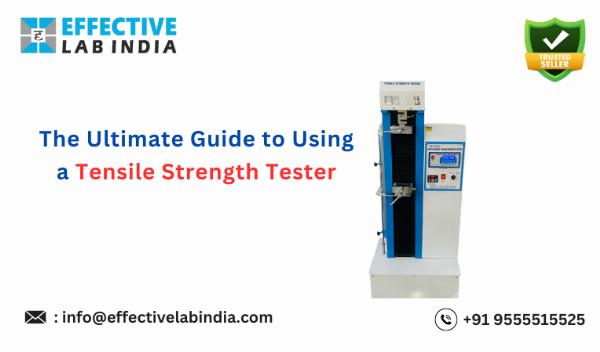
A tensile strength tester measures the force required to pull a material until it fractures and reports values such as ultimate tensile strength (UTS), yield strength, and elongation. This guide explains how to prepare, run, and interpret tests on a tensile strength tester, and how to maintain and calibrate equipment in line with common standards.
- Understand specimen type and dimensions before testing.
- Calibrate load cell and verify extensometer or strain measurement.
- Select grips, set crosshead speed, and follow a recognized standard (for example ASTM E8 or ISO 6892).
- Record UTS, yield, modulus, and elongation; maintain traceability to national standards.
Overview of tensile testing and instruments
Tensile testing evaluates mechanical properties under uniaxial tensile load. Typical measured outputs include ultimate tensile strength (UTS), yield strength, percentage elongation, and modulus of elasticity. Common components of a tensile strength tester include a load frame, load cell, grips or fixtures, crosshead, extensometer or strain gauge, and data acquisition software. Standards such as ASTM E8 (metal) and ISO 6892 (metallic materials) describe test methods and specimen geometries.
Choosing a tensile strength tester
Select appropriate capacity and accuracy
Match the tester's rated load capacity and load cell accuracy to the expected forces of the specimen. Overloading a machine can damage the load cell; very low-force tests require high-resolution load cells and sensitive extensometers.
Consider grips and fixtures
Choose grips compatible with the material and specimen geometry (flat, round, or threaded). Self-tightening or hydraulic grips reduce slippage for ductile materials, while wedge grips or serrated faces may suit rigid materials. Use alignment fixtures to avoid bending moments.
Preparing specimens and test parameters
Specimen preparation
Prepare specimens to the dimensions and surface finish specified by the applicable standard. Mark gauge length for extensometer placement if required. Inspect specimens for defects that could cause premature failure.
Set test parameters
Set crosshead speed or strain rate according to the standard and material type. Define data sampling rate, load limits, and displacement or strain indicators. For metals, strain-controlled and displacement-controlled modes are common; polymers may require temperature control.
Setting up and performing the test
Machine and sensor checks
Verify machine zeroing, tare the load cell, and confirm extensometer zero. Check alignment of grips to ensure the load path is straight. Confirm safety guards and emergency stops are functional.
Executing the test
Mount the specimen securely, start data acquisition, and apply load at the selected rate until failure or until the required endpoint. Monitor the test for slippage, off-axis loading, or premature indications of fixture failure. Save raw data files and a summary report including UTS, yield point (if measurable), modulus, and elongation at break.
Interpreting results and common calculations
Key outputs
Commonly reported values include ultimate tensile strength (maximum engineering stress), yield strength (0.2% offset for many metals), modulus of elasticity (slope of the linear portion of the stress–strain curve), and percentage elongation at fracture. Distinguish engineering stress–strain from true stress–strain when comparing results or modeling behavior.
Data quality checks
Check that load vs. displacement curves are smooth and free of spikes or obvious noise. Compare measured values to historical material data and tolerance limits. Where precise strain measurement is required, verify extensometer calibration and attachment placement.
Maintenance, calibration, and traceability
Routine maintenance
Keep moving parts clean and lubricated per manufacturer recommendations. Inspect grips, jaws, and fixtures for wear. Replace consumables such as serrated inserts to avoid specimen slippage or surface damage.
Calibration and traceability
Calibrate load cells and extensometers at intervals consistent with use and regulatory or quality-system requirements. Calibration should be traceable to national standards; many laboratories reference procedures and uncertainty statements from organizations such as the National Institute of Standards and Technology (NIST) or relevant national metrology institutes.
For guidance on materials measurement and metrology, see the NIST materials science topic page: NIST materials science.
Safety and quality considerations
Operator safety
Use protective equipment and keep clear of the test area during failure events. Ensure guards are in place to contain fragments and that emergency stop functions are accessible. Follow laboratory safety policies for handling broken specimens and sharp edges.
Quality systems
Document test procedures, specimen traceability, calibration certificates, and data retention policies. Align test methods with recognized standards such as ASTM International and ISO to support consistency and reproducibility.
Troubleshooting common problems
Slippage or premature failure
Check grip selection and tightening torque; use appropriate inserts and surface preparation. Confirm specimen geometry and inspect for machining or handling damage.
Noisy data or spikes
Verify sensor wiring and connections, ensure proper grounding, and confirm software sampling settings. Replace or recalibrate sensors if noise persists.
Unexpected low strength
Confirm specimen identity and preparation, check for corrosion or defects, and review testing speed and environmental conditions that might affect material behavior.
Further reading and standards
Refer to ASTM International, ISO technical committees, and national metrology institutes for standard test methods and guidelines. Common standards include ASTM E8/E8M and ISO 6892 for metallic materials; other standards apply to polymers, composites, and textiles.
Frequently asked questions
What is a tensile strength tester and how is it used?
A tensile strength tester is an instrument that applies a controlled uniaxial load to a specimen to measure properties such as ultimate tensile strength, yield strength, and elongation. Use involves selecting appropriate grips, preparing specimens to a standard, setting crosshead speed or strain rate, and recording load and displacement until failure.
How often should a tensile strength tester be calibrated?
Calibration intervals depend on frequency of use, tolerance requirements, and quality system rules. Many laboratories perform annual calibrations or more frequently for high-precision work; calibration should be traceable to national standards and include uncertainty statements.
Can a single tensile strength tester measure both metals and plastics?
Yes, provided the machine has appropriate load capacity, grips, and environmental controls (temperature) for the materials. Polymers may require different strain rates and extensometer setups compared with metals.
How to choose grips for a specific specimen?
Select grips based on specimen geometry, surface condition, and expected fracture mode. Use serrated or wedge grips for rigid specimens, padded or pneumatic grips for delicate specimens, and specialized fixtures for thin films or fibers.