How Viking Axes Shaped Warfare and Daily Life: New Archaeological Perspectives
-

- Published Updated
- 1,516 views
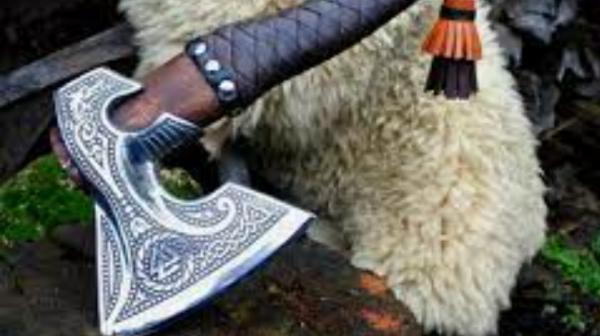
The Viking axe has long been pictured as the iconic weapon of Norse warriors, but recent archaeological research and experimental studies encourage a more nuanced view of the Viking axe as both a tool and a battlefield implement. This article examines evidence from Scandinavian burial finds, workshop remains, contemporary saga literature and laboratory testing to reassess how the Viking axe was used in everyday life and in combat.
- Archaeology shows a diversity of axe types: small utility axes, larger battle axes, and regional variations.
- Contextual evidence indicates axes functioned as household tools, status markers, and weapons.
- Experimental archaeology clarifies handling, reach, and damage patterns relevant to battlefield use.
- Interpretations combine material study with written sources; modern reconstructions should account for taphonomic bias.
Viking axe: myth, context, and the archaeological record
What the graves and hoards reveal
Excavations across Norway, Sweden, Denmark and the British Isles have uncovered thousands of axe heads from the Viking Age (c. 790–1100 CE). Many finds appear in domestic settings or as part of hoards, suggesting routine utility. Burial contexts show axes placed with individuals of varied social standing, indicating both practical and symbolic roles. Studies published in journals such as Journal of Archaeological Science and regional museum reports emphasize typological diversity rather than a single "Viking" axe type.
Bias in the surviving record
Iron preservation favors axe heads over wooden hafts, so reconstructions of length and handling often rely on comparative ethnography and experimental hafting. The survival of larger, well-crafted examples in graves or high-status deposits can skew perceptions toward oversized battle axes, while everyday small axes used for woodworking or butchery leave fewer spectacular traces.
Design, construction, and functional varieties
Blade forms and construction techniques
Viking axes range from broad-bladed, thin-forged heads suitable for cutting, to reinforced types with pronounced poll areas used for hammering. Many blades show pattern-welding or surface treatments that reflect smithing practices across Scandinavia. Evidence from smithing remains and slag suggests specialized blacksmithing, with regional workshops supplying both domestic tools and weapons.
Handle length and intended use
Short-handled axes (hand axes) were common household tools for chopping wood, carpentry and food preparation. Longer hafts—sometimes exceeding a meter—appear to be later developments or specialized forms often associated with battlefield contexts. Experimental archaeologists demonstrate that reach, momentum and control change significantly with haft length; longer axes deliver heavier blows but require different tactics and training.
Axes in battle: tactics, roles, and the evidence
Fighting techniques and contemporary accounts
Contemporary saga literature, while not strictly historical, describes a variety of combat scenarios involving axes—from single combat to shield-wall engagements. These narratives, combined with iconographic evidence (carvings and rune stones) and battlefield finds, support multiple combat roles: paired with shield for close fighting, thrown in rare instances, or used to deliver cuts and hook shields and limbs.
Experimental findings and trauma studies
Laboratory testing on replicas and analysis of skeletal trauma from archaeological cemeteries clarify probable effects of axe blows. Results indicate axes were effective at breaching shields, causing blunt and sharp trauma, and severing limbs under certain conditions. Interpretation should rely on peer-reviewed osteological studies and controlled experiments to avoid overstating capability.
Everyday life: axes as multipurpose tools and status symbols
Domestic functions
Within households, axes were indispensable for woodworking, building ships and houses, preparing food and handling animals. Archaeological contexts such as settlement layers frequently contain worn tool axes, supporting the idea of versatile daily use alongside specialized tasks.
Identity and display
Decorated axe heads, inlaid fittings and carefully hafted examples likely signaled social identity or craft skill. Weapons placed in graves or as votive deposits suggest ritual or status meanings beyond mere utility. Museums and university collections often interpret such finds through the lens of social archaeology and craft studies.
Interpreting evidence: best practices and remaining questions
Combining lines of evidence
Reliable interpretation combines typology, metallurgical analysis, osteological trauma studies, experimental replication and contextual archaeology. Collaboration among institutions—museums, universities, and heritage agencies—supports more robust conclusions. Further research is encouraged in areas such as haft reconstruction, wear-pattern analysis and regional variation studies.
Authoritative collections and research access
Major national collections preserve comparative material and publish catalogues and research; for public reference see the British Museum collections online for items and research summaries. British Museum
Conclusions
The image of a single, universally wielded "Viking axe" oversimplifies a complex picture. Evidence supports a spectrum of axe types serving domestic tasks, symbolic functions, and military roles. Archaeology and experimental research continue to refine understanding of how axes were made, carried and used across the Norse world.
How was the Viking axe used in battle?
Use in battle depended on type and haft length: shorter axes favored close combat and utility, longer or heavier axes could deliver powerful blows and break shields. Evidence from skeletal trauma, weapon finds in burial contexts, and experimental reconstructions suggests multiple battlefield roles rather than a single dominant use.
What kinds of Viking axes have been found?
Finds include small utility axes, broad-bladed cutting axes, reinforced poll axes used for hammering, and larger two-handed forms. Regional styles and decorative elements vary across Scandinavia and the Viking-age diaspora.
Are all axes found in Viking graves weapons?
Not necessarily. Some axes were functional tools placed in burials for practical or symbolic reasons; others appear deliberately crafted to signify status. Contextual analysis of graves, associated artifacts and wear patterns helps distinguish intended purpose.
Where can researchers find more information?
Consult peer-reviewed journals in archaeology and reports from national museums and heritage agencies for up-to-date research. University archaeology departments and museum catalogues provide access to primary data and specialist studies.