How Web3 Technologies Are Reshaping Digital Interaction and Online Services
-

- February 23rd, 2026
- 1,651 views
Web3 technologies are renewing interest in decentralized architectures, token-based incentives, and new models for ownership and governance across the internet. This article explains core concepts, practical use cases, technical challenges, and the evolving regulatory and standards landscape that affect adoption.
- Web3 technologies encompass blockchain, smart contracts, decentralized identity, DAOs, and tokenization.
- Use cases include decentralized finance (DeFi), digital collectibles (NFTs), supply chain tracking, and decentralized identity systems.
- Main challenges are scalability, interoperability, user experience, energy use, and legal clarity.
- Standards, governance, and regulator engagement shape long-term viability.
How Web3 technologies Are Changing Digital Interaction
The shift toward distributed ledgers, permissionless networks, and cryptographic ownership aims to change how users interact with online services. Rather than relying solely on centralized platforms, Web3 technologies introduce programmable assets, peer-to-peer value transfer, and community-managed protocols. These changes affect social media, finance, digital goods, gaming, and identity systems by changing incentives, reducing intermediaries, and enabling new economic models.
Core components and concepts
Distributed ledgers and blockchains
Blockchains provide an append-only record of transactions that supports transparency and tamper resistance. Public chains, permissioned ledgers, and Layer 2 scaling solutions each balance decentralization, throughput, and cost in different ways.
Smart contracts and programmability
Smart contracts are self-executing code that runs on a blockchain to automate agreements, token issuance, and governance operations. They enable composability, where protocols and applications can interoperate programmatically.
Tokenization and digital assets
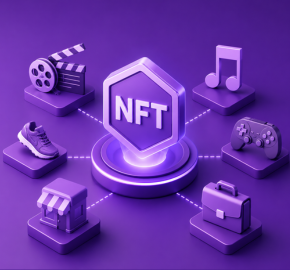
Tokenization turns rights, assets, or access into cryptographic tokens. Fungible tokens support currencies and utility assets; non-fungible tokens (NFTs) represent unique items such as digital art, collectibles, or certificates.
Decentralized identity and verifiable credentials
Decentralized identifiers (DIDs) and verifiable credentials aim to give users more control over personal data and authentication, supporting privacy-preserving reuse of identity attributes across services.
Decentralized governance and DAOs
Decentralized autonomous organizations (DAOs) use on-chain voting, token-based governance, and rules encoded in smart contracts to coordinate communities, funding decisions, and protocol upgrades.
Practical applications and industries affected
Finance and payments
Decentralized finance (DeFi) protocols offer lending, trading, and liquidity services without traditional banking intermediaries. These systems rely on smart contracts, price oracles, and on-chain collateralization models.
Digital media, gaming, and marketplaces
Web3 models support new creator economies where ownership of digital goods can be proven and traded. Gaming uses on-chain assets to enable player-driven economies and true item portability.
Supply chain and provenance
Blockchain-based tracking systems can record provenance and custody events for goods, aiding transparency for consumers and regulators across food, pharmaceuticals, and luxury goods sectors.
Technical challenges and scalability
Widespread use of Web3 technologies faces ongoing technical trade-offs. Scalability remains a central issue: increasing transaction throughput while preserving security and decentralization is an active area of research. Interoperability between chains and legacy systems is needed for seamless user experiences. Usability challenges include wallet management, transaction costs, and recovery options. Energy use and environmental impact are also material considerations for some consensus mechanisms.
Regulation, standards, and trust
Regulatory clarity and technical standards influence adoption. Policymakers and regulators in regions such as the European Union and national securities regulators examine classification of tokens, consumer protections, and anti-money-laundering obligations. Standards bodies and industry consortia contribute to best practices for interoperability, identity, and security; engagement with international standards organizations helps align technical and governance models. For information on web standards relevant to decentralized systems, see the World Wide Web Consortium (W3C) guidance on decentralized identifiers and related work Visit W3C.
Adoption drivers and barriers
Drivers
- Native digital ownership and new monetization models for creators.
- Permissionless innovation and composability of open protocols.
- Potential for more resilient and transparent infrastructure.
Barriers
- Complex user experience, custody, and recovery challenges.
- Regulatory uncertainty and compliance burdens in some jurisdictions.
- Scalability, interoperability gaps, and fragmentation across ecosystems.
Outlook: maturation rather than replacement
Expect continued incremental integration of Web3 technologies into existing services alongside new native applications. Hybrid approaches that combine centralized interfaces with decentralized backends or custody options are likely to persist during a long maturation period. Academic research, industry pilots, and regulator collaboration will shape durable practices for governance, privacy, and consumer protections.
Frequently asked questions
What are Web3 technologies and how do they differ from Web 2.0?
Web3 technologies emphasize decentralization, cryptographic ownership, and programmable assets; Web 2.0 is characterized by centralized platforms, data aggregation, and service-driven monetization models. The distinction is one of architecture, control, and incentive design rather than a single technical boundary.
Are Web3 technologies secure?
Security depends on protocol design, implementation quality, and infrastructure choices. Smart contract bugs, oracle manipulation, and private key compromise are known risks. Audits, formal verification, multi-signature custody, and mature key management practices improve security posture.
How will regulation affect the development of Web3 technologies?
Regulation can clarify obligations for consumer protection, anti-money-laundering compliance, and market integrity. Clear rules may increase institutional participation, while onerous or ambiguous frameworks could slow innovation. Ongoing dialogue between developers, industry groups, and regulators is critical.
Can Web3 technologies scale to support mass adoption?
Scaling solutions such as Layer 2 networks, sharding, and alternative consensus mechanisms aim to increase throughput and reduce costs. Adoption will depend on balancing technical trade-offs with user experience improvements and interoperability between networks.
How should organizations evaluate Web3 technologies for practical use?
Organizations should assess business needs, data privacy requirements, cost, security, and regulatory implications. Pilot projects, interoperability testing, and engagement with standards bodies or independent auditors can inform decisions while limiting exposure during early stages.
Where can readers find more authoritative standards or guidance on decentralized web technologies?
Refer to established standards organizations and policy reports from entities such as the World Wide Web Consortium, relevant national regulators, and international policy bodies for guidance on technical standards and regulatory expectations.
Related Posts