Dental Fillings Cost in Riyadh: Price Guide, Savings & What to Expect
-

- March 12th, 2026
- 707 views
Understanding the cost of dental fillings in Riyadh helps plan treatment, compare clinics, and avoid surprises. This guide explains typical price ranges, what increases or lowers costs, and concrete ways to save without risking oral health.
- Expect a wide range: simple amalgam or basic composite fillings are usually the most affordable; ceramic/onlay restorations cost more.
- Price drivers: material, tooth location, cavity size, clinic type (private vs public), dentist experience, and whether additional treatment (root canal) is needed.
- Ways to save: compare clinics, use public dental services or employer/insurance benefits, opt for bundled treatment, and confirm the full scope before consenting.
Detected intent: Informational
Cost of dental fillings in Riyadh: typical price ranges
Local prices vary by clinic, material, and complexity. A conservative estimate for dental filling prices Riyadh (for common restorative options) is:
- Amalgam (silver) filling: approximately 100–350 SAR per tooth.
- Composite (tooth-colored) filling: approximately 250–800 SAR per tooth.
- Ceramic/onlay/inlay restorations: approximately 800–2,500 SAR or more, depending on lab work.
These are ranges for planning only. Clinics in central Riyadh, hospitals, and international dental centers commonly charge toward the higher end; government clinics and teaching hospitals often offer lower rates.
What affects the final price
Material and technique
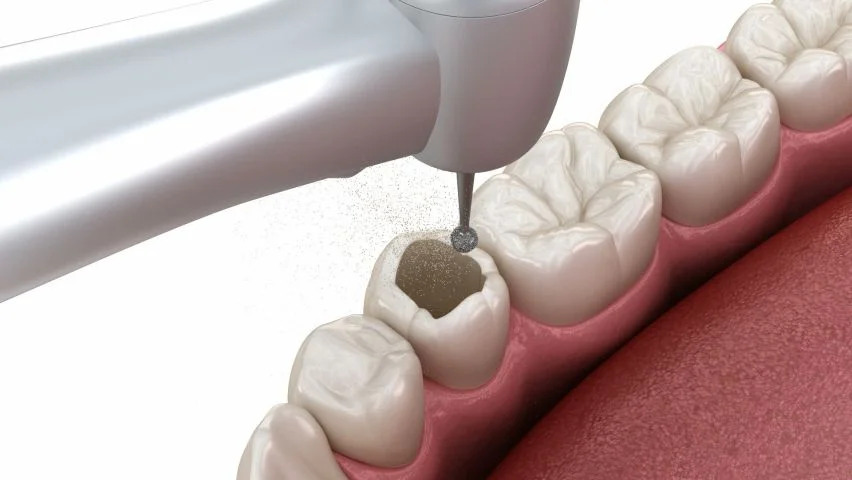
Composite resins require layering and curing with a light, adding chair time and cost. Ceramic onlays need impressions, lab work, and sometimes temporary restorations, so they cost more than direct fillings.
Tooth location, cavity size, and complexity
Molars with deep cavities or multi-surface decay take longer and thus cost more than a small front-tooth filling. If decay reaches the pulp, a root canal and crown may be required — a separate expense.
Clinic type and dentist experience
Private clinics and specialists often charge higher fees than public clinics or dental schools. Specialist restorative dentists or prosthodontists may charge premium rates for complex cases.
Insurance and employer plans
Coverage varies. Some employer health plans or private dental insurance cover a portion of restorative work; check exclusions and annual limits. Public health services may subsidize treatment for eligible residents.
FILL-SAVE Checklist (a named practical framework)
Use the FILL-SAVE checklist before consenting to treatment to compare options and reduce costs without cutting quality.
- Find price estimates in writing (itemized).
- Identify the recommended material and alternatives.
- Locate public or teaching clinics for lower-cost options.
- Look for bundled discounts (multiple fillings, family plans).
- Show insurance cards/ask about coverage.
- Ask about warranties/guarantees and follow-up care.
- Verify if temporary fillings or additional treatments are included.
- Estimate total out-of-pocket cost before treatment.
Real-world example: choosing between composite and ceramic
Scenario: A patient in Riyadh has a large bite-surface cavity on a molar. The dentist recommends either a high-grade composite filling (cost ~600 SAR) or a ceramic onlay (~1,800 SAR). Considerations:
- Composite is faster, requires one visit, and costs less. Longevity is good for moderate-size restorations if occlusion is favorable.
- Ceramic onlay is more durable for very large restorations and preserves more tooth structure than a full crown, but needs lab work and two visits.
Decision framework: If the budget is limited and the tooth has good structure, composite may be reasonable; if the bite force is high and long-term durability is the goal, the onlay could be cost-effective despite the higher initial cost.
Practical tips to save on dental filling costs
- Get written, itemized estimates from 2–3 clinics and compare materials and chair time.
- Check public dental clinics, university dental schools, or Ministry of Health programs for subsidized care.
- Ask about bundled pricing for multiple fillings or family appointments to reduce per-tooth cost.
- Confirm whether follow-up visits or complications (post-op sensitivity) are included in the price.
- Use employer or private dental benefits early in the plan year if coverage resets annually.
Trade-offs and common mistakes to avoid
Common mistakes:
- Choosing the cheapest option without confirming materials or warranty — low price can mean lower-quality materials.
- Skipping diagnosis details — not understanding whether a filling is definitive treatment or a temporary measure leads to surprise costs later.
- Ignoring clinic reputation and infection-control standards in favor of price alone.
Trade-offs to weigh: durability vs cost, esthetics vs price, and short-term savings vs long-term replacement frequency. For instance, paying more for a durable restoration may save money over years by reducing replacements.
Where to check regulations and public services
For public health guidance and information about licensed providers in Saudi Arabia, consult the Saudi Ministry of Health. The Ministry publishes standards for clinics and official public service options that may affect cost and eligibility for subsidized care: https://www.moh.gov.sa.
Core cluster questions
- How long do different dental filling materials last?
- What is the difference between a filling, inlay, and onlay?
- Do dental insurance plans in Saudi Arabia cover fillings and how much?
- How to find a reputable affordable dentist in Riyadh?
- When is a crown required instead of a filling?
FAQ
How much is the cost of dental fillings in Riyadh for a basic composite?
Typical fees for a basic composite filling range roughly from 250 to 800 SAR per tooth, depending on clinic location, the size of the cavity, and the dentist's experience. Request an itemized estimate and ask whether the price includes x-rays, anesthesia, or temporary work.
Are amalgam fillings cheaper than composite?
Yes, amalgam (silver) fillings are generally less expensive than composite tooth-colored fillings, but some patients prefer composites for esthetic reasons or due to material preferences.
Can public clinics or dental schools reduce the cost?
Public clinics and university dental hospitals typically offer lower fees. Procedures may be performed by supervised students or government-employed dentists; waiting times can be longer but costs are usually lower.
What should be included in an itemized estimate?
An itemized estimate should list consultation fees, X-rays, filling material, anesthesia, lab work (if any), follow-up visits, and any warranties or guarantees on the work.
How to avoid common mistakes when choosing a filling?
Avoid choosing solely on price. Verify the recommended material, ask about dentist experience with that material, request an itemized quote, and confirm whether additional treatments (e.g., crowns or root canals) are likely in the near future.