Why WhatsApp Has Become the Smartest Way for Businesses to Talk to Customers
-

- Published Updated
- 3,267 views
Almost everyone checks WhatsApp many times a day. It is where people talk to friends, family, and now, more and more, the businesses they trust. Emails get ignored. Calls get missed. But a WhatsApp message almost always gets seen. This shift has opened up a huge opportunity for businesses. In this guide, we will look at three WhatsApp tools that help businesses message, verify, and support customers better. We will also see how a trusted partner like Mishtel helps businesses set these tools up the right way.
Why WhatsApp Works Better Than Older Channels
People do not need to download a new app or learn a new tool to use WhatsApp. They already have it open all day. This is exactly why business messages sent here get noticed fast. Open rates on WhatsApp are much higher than email. Response times are much faster than a phone call. For a business, this means fewer missed connections and more real conversations with customers. The real question is not whether to use WhatsApp. It is how to use it the right way.
Talking to Customers Where They Already Are
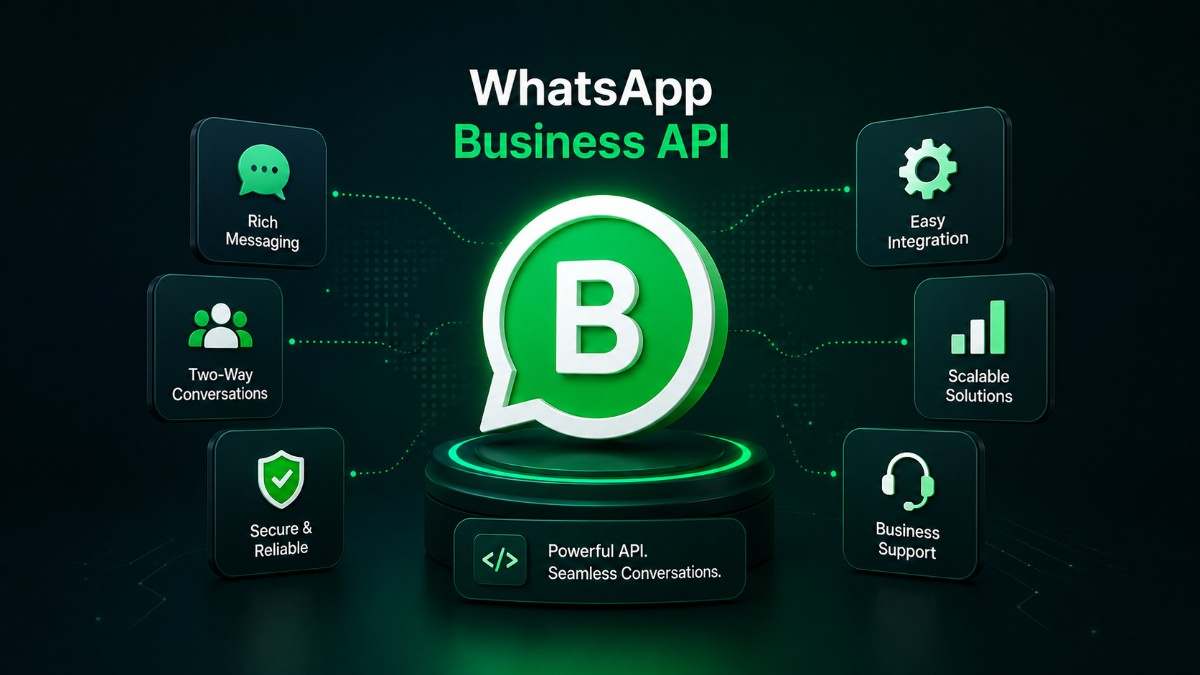
Sending updates, offers, and support replies one by one is slow and hard to manage at scale. This is where a WhatsApp Business Messaging Service helps. It lets a business send order updates, promotional offers, appointment reminders, and support replies directly through WhatsApp, all backed by proper business verification. Customers see a message from a real, verified business account, not an unknown number.
This tool works well because it feels personal, even at scale. A customer gets a message in the same app they use to talk to friends, which makes the message feel less like an ad and more like a real update. Businesses can send rich content too, such as images, product catalogs, and clickable buttons, making it easy for a customer to act right away. For businesses running sales or support at volume, this tool turns WhatsApp into a full communication channel, not just a chat app.
Making Sure Customers Are Really Who They Say They Are
Verifying a customer's identity matters a lot, especially for logins, payments, and account changes. A WhatsApp OTP Service sends a one-time password straight to a customer's WhatsApp instead of a regular SMS. This matters because SMS delivery can be slow or blocked in some cases, while WhatsApp messages tend to arrive fast and reliably.
This tool also improves customer trust. WhatsApp messages carry a business's verified name and logo, so a customer immediately knows the OTP is genuine and not a phishing attempt. This is especially valuable for banks, e-commerce platforms, and any business handling logins or payments, where a delayed or suspicious-looking OTP can directly cause a customer to abandon a transaction. A fast, trusted OTP process keeps that customer moving forward instead of dropping off.
Handling Customer Questions Without Waiting for an Agent
Not every customer question needs a human agent. Many are simple and repetitive, like checking an order status or asking about business hours. A WhatsApp Business Bot handles these common questions automatically, replying instantly at any time of day, even outside business hours. Customers get quick answers without waiting in a queue.
This tool also helps human agents focus on what actually needs their attention. Simple, repetitive questions get handled by the bot, while complex or sensitive issues get passed on to a real person smoothly. This mix of automation and human support keeps response times fast without losing the personal touch customers still expect for harder problems. For businesses handling high message volume, this balance is often the difference between happy customers and long, frustrating wait times.
Using All Three Tools Together
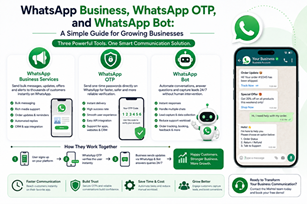
These three tools work best as one connected system. A business can use messaging to reach customers with updates and offers, OTP verification to keep logins and payments secure, and a bot to handle common questions instantly. Together, they create a smooth, trustworthy WhatsApp experience from the very first message to ongoing support. This is especially valuable for local B2B companies that want to look professional and responsive without needing a huge support team.
Getting the Setup Right With Expert Help
Setting up WhatsApp business tools correctly takes real planning. Businesses need proper account verification, well-designed message templates, and a bot flow that actually answers what customers ask, not a confusing maze of options. A poor setup can frustrate customers instead of helping them.
This is why many businesses trust Mishtel to handle this setup. With strong experience across WhatsApp messaging, OTP verification, and bot design, Mishtel helps local and national businesses build a WhatsApp presence that actually works. Their focus stays on real outcomes: faster responses, higher trust, and better customer satisfaction, rather than a generic, one-size-fits-all setup. This makes them a strong choice for any business that wants to be seen as reliable and professional on the channel customers use the most.
Final Thoughts
WhatsApp has quietly become one of the most powerful tools for business communication. Whether it is sending updates, verifying a customer's identity, or answering common questions instantly, these tools help a business stay connected and trusted at every step. Businesses that set this up the right way often see faster responses, stronger customer trust, and better overall satisfaction.
If you want your business to show up on WhatsApp the right way, it is worth talking to a team that already knows how to make it work.