How Customer Management and Billing Software for Telecom Simplifies Business Operations
-
- Published Updated
- 85 views
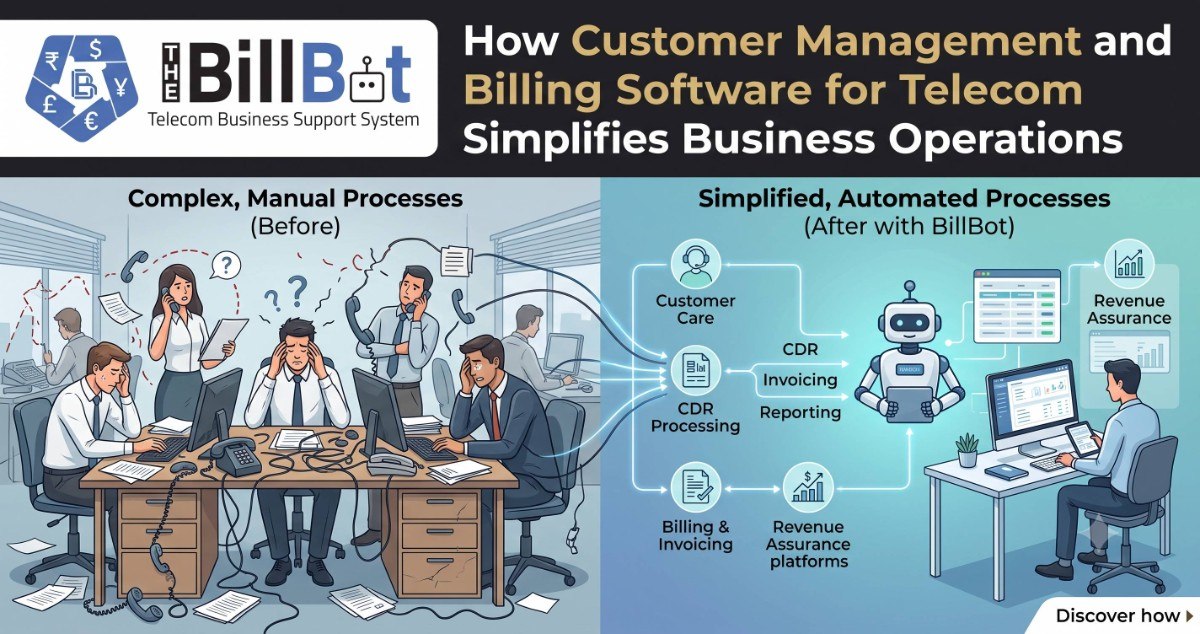
Managing a telecom business involves much more than providing communication services. Providers need to manage customer information, subscriptions, service usage, pricing, invoices, payments, support requests, and reporting—all while maintaining an efficient customer experience.
As the number of customers and services grows, handling these activities through spreadsheets, disconnected systems, or manual processes can become increasingly difficult. Data may be duplicated, billing information can become outdated, and teams may spend valuable time moving information between different tools.
This is where Customer Management and Billing Software for Telecom can help. By bringing customer management and billing processes together, telecom providers can create a more connected operational workflow, reduce repetitive tasks, and gain better visibility across their business.
What Is Customer Management and Billing Software for Telecom?
Customer Management and Billing Software for Telecom is a technology solution designed to help telecom service providers manage customer information and billing activities from a connected platform.
Instead of maintaining customer records in one system and billing information somewhere else, providers can centralise important information such as:
Customer profiles
Contacts and account details
Products and services
Subscriptions
Pricing plans
Billing cycles
Usage information
Invoices
Payments
Outstanding balances
Customer communications
Reports and analytics
This connected approach can help telecom businesses reduce information gaps between customer management and billing teams.
Why Telecom Businesses Need Connected Customer and Billing Processes
Telecom services often involve complex relationships between customers, products, packages, usage, and payments.
For example, a business customer might subscribe to a monthly communication package, use additional calling services, purchase additional numbers, and incur usage-based charges during the same billing period.
If customer and billing information is managed separately, teams may need to manually transfer information between systems.
A connected platform can bring these processes together, allowing customer information and billing data to work as part of the same operational workflow.
1. Centralise Customer Information
One of the biggest challenges for growing telecom providers is maintaining accurate customer information.
Customer details may otherwise be spread across spreadsheets, CRM systems, email conversations, billing tools, and internal documents.
Customer Management and Billing Software for Telecom can provide a centralised customer record where teams can access relevant account information from one place.
Depending on the platform, this may include customer contact details, active services, billing preferences, pricing plans, invoices, payments, and account history.
Having a centralised record makes it easier for teams to find information when they need it.
2. Simplify Customer Onboarding
Customer onboarding often involves several steps, including collecting customer information, configuring services, selecting products, assigning pricing plans, and setting up billing.
When these processes are handled manually, onboarding can take longer and create opportunities for data-entry mistakes.
With an integrated customer and billing platform, customer information can flow into the relevant billing and service processes.
This can help create a more structured onboarding experience while reducing unnecessary administrative work.
3. Manage Products and Services More Efficiently
Telecom providers may offer a wide range of products and services, including voice services, broadband, DIDs, extensions, packages, call plans, and other communication solutions.
Each service may have different pricing rules and billing requirements.
A suitable Customer Management and Billing Software for Telecom solution can help providers organise products, packages, pricing plans, and customer subscriptions in a structured way.
This makes it easier to understand which customers are using which services and how those services should be billed.
4. Automate Recurring Billing
Recurring billing is common in telecom businesses. Customers may be charged monthly, quarterly, annually, or according to another billing schedule.
Creating recurring invoices manually can become repetitive as the customer base grows.
Billing software can automate recurring billing based on configured billing cycles and customer plans.
Instead of creating each invoice manually, the system can generate invoices according to predefined rules.
This allows billing teams to spend less time performing repetitive tasks and more time managing exceptions or customer requirements.
5. Handle Usage-Based Billing
Many telecom services involve usage-based charges.
Customers may be billed according to call duration, destinations, data usage, messages, minutes, or other measurable services.
Usage information can be particularly complex when providers process large volumes of transactions.
A telecom-focused billing solution can collect and process usage data and apply configured pricing or rating rules.
For VoIP providers, this may also involve processing Call Detail Records (CDRs) before converting usage into billable charges.
Combining customer information with billing data helps ensure that usage charges are associated with the correct account and pricing configuration.
6. Improve Invoice Management
Invoices are an important part of the customer relationship.
An invoice should clearly communicate what the customer is being charged for, including recurring fees, usage charges, discounts, taxes, adjustments, and other applicable costs.
Customer Management and Billing Software for Telecom can help automate invoice creation based on customer services and billing configurations.
Providers can also maintain invoice histories, monitor invoice statuses, and access billing information when customers have questions.
This can make invoice management more organised and reduce dependence on manual processes.
7. Make Payment Tracking Easier
Generating invoices is only one part of the billing process. Telecom providers also need to know which invoices have been paid and which balances remain outstanding.
A connected billing system can provide visibility into payment status and customer balances.
Teams can use this information to identify overdue accounts, monitor collections, and follow up with customers when necessary.
Automated payment reminders can further reduce the need for teams to manually track every outstanding invoice.
8. Improve Customer Service
Customer service teams frequently need access to billing information.
A customer may ask:
What is my current balance?
Which services am I subscribed to?
Why was I charged for additional usage?
When was my last invoice generated?
Has my payment been received?
What is included in my current plan?
If customer and billing information is scattered across different systems, finding answers can take time.
With a centralised platform, authorised teams can access relevant customer and billing information more efficiently.
This can help support teams respond to customer queries with greater context.
9. Reduce Manual Data Entry
Manual data entry is one of the most common sources of operational inefficiency.
When employees repeatedly copy customer information from one system to another, mistakes can occur.
Automation can reduce the amount of repetitive information entry required across customer management and billing processes.
For example, customer information entered during onboarding can be connected with the customer's products, pricing plan, billing cycle, and invoice configuration.
This creates a smoother flow of information across the business.
10. Gain Better Business Visibility
Telecom businesses need more than operational data. They also need insights into business performance.
A modern platform can provide reporting and analytics around areas such as:
Revenue
Customer growth
Active customers
Outstanding invoices
Collections
Product performance
Usage
Billing activity
Payment trends
These insights can help management understand how the business is performing and identify areas that may require attention.
11. Support Business Growth
A billing process that works for 50 customers may become difficult to manage when the business reaches hundreds or thousands of customers.
Growth usually means more accounts, more services, more usage records, more invoices, and more payments.
Customer Management and Billing Software for Telecom can help businesses build a more structured operational foundation.
Automation reduces repetitive work, while centralised information makes it easier for teams to manage a growing customer base.
12. Connect with Other Business Systems
Telecom businesses rarely operate with a single system.
They may use CRM platforms, PBX systems, payment gateways, accounting software, provisioning systems, carrier platforms, and other business applications.
Integration capabilities can allow customer and billing data to move between relevant systems without relying entirely on manual data entry.
For example, usage information from a telecom platform can be connected with billing processes, while payment information can be reflected in customer account records.
This creates a more connected technology ecosystem.
What to Look for in Telecom Customer Management and Billing Software
When choosing a solution, telecom providers should consider whether it supports their current business model and future requirements.
Important capabilities may include:
Centralised customer management
Product and service management
Flexible pricing plans
Recurring billing
Usage-based billing
CDR processing
Automated invoice generation
Payment tracking
Payment reminders
Customer account history
Reporting and analytics
CRM and third-party integrations
Role-based access
Scalable architecture
Data security
The right features will depend on the provider's services, customer volume, billing complexity, and operational requirements.
Final Thoughts
Telecom businesses manage a constant flow of customer, service, usage, billing, and payment information. When these processes are handled through disconnected tools and manual workflows, operational complexity can quickly increase.
Customer Management and Billing Software for Telecom brings important processes together, helping providers centralise customer information, automate billing, manage usage, track payments, and improve business visibility.
For ITSPs, VoIP providers, MSPs, and other telecom service providers, connecting customer management with billing can create a more efficient operational workflow.
The goal is not simply to automate invoicing. It is to create a connected system where customer information, services, usage, billing, and payments work together—giving teams more control while creating a smoother experience for customers.
Frequently Asked Questions
1. What is Customer Management and Billing Software for Telecom?
It is software designed to help telecom providers manage customer information, products, services, billing, invoices, payments, usage, and related business processes through a connected platform.
2. Can telecom billing software manage customer information?
Yes. Telecom-focused solutions can include customer profiles, contact details, services, subscriptions, pricing plans, invoices, payments, and account history.
3. Can Customer Management and Billing Software handle recurring billing?
Yes. Many platforms support recurring billing and can automatically generate invoices according to configured billing cycles and customer plans.
4. Does telecom billing software support usage-based billing?
Yes. Telecom billing platforms can support usage-based billing for services such as calls, minutes, data, SMS, and other measurable telecom services. Some platforms can also process CDRs for usage-based charging.
5. How does integrated customer and billing software help customer support?
It gives authorised teams access to customer and billing information in one connected environment. This can make it easier to review invoices, payments, services, balances, and account history when responding to customer queries.
6. Can the software integrate with other telecom systems?
Depending on the platform, integrations may be available for CRM systems, PBX platforms, payment gateways, accounting software, carrier systems, and other business applications.
7. Is this software suitable for VoIP providers and ITSPs?
Yes. VoIP providers and ITSPs often manage recurring subscriptions, usage-based services, customer accounts, CDRs, invoices, and payments, making an integrated customer and billing platform useful for managing these processes.
8. How can customer and billing software support business growth?
By centralising information and automating repetitive processes, the software can help providers manage increasing customer and transaction volumes more efficiently while providing better visibility into billing and business performance.
Visit the website: https://thebillbot.com/features