How Wheel Alignment Affects Steering and Vehicle Control
-

- September 15th, 2026
- 2,581 views
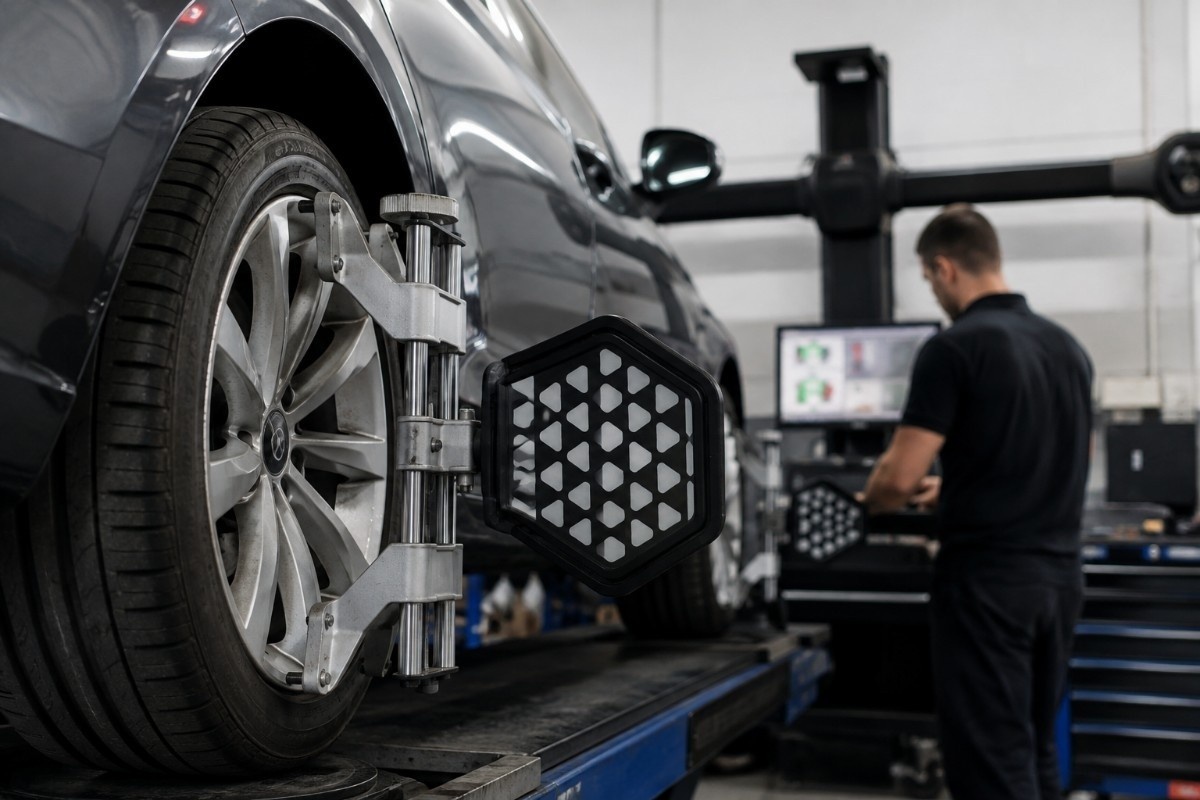
Your car is talking to you right now, through a steering wheel that pulls left on an empty highway, tires that wear thin on one edge before the other, a faint drift you correct without even noticing anymore.
Most drivers write it off as "just how the car feels." It isn't. It's your vehicle telling you its wheels have drifted out of position, and every mile you drive after that is a mile spent fighting your own car instead of steering it.
Wheel alignment is one of those maintenance basics that rarely gets attention until something goes wrong, a bald patch on your tire, a shudder in the steering wheel, a car that seems to have a mind of its own on the highway.
But alignment isn't a cosmetic fix. It's the difference between a car that responds the instant you turn the wheel and one that fights you every mile. Here's what's actually happening under your car, and why it matters more than most drivers realize.
What Wheel Alignment Actually Means
At its core, wheel alignment is about angles. Your wheels are set to precise specifications for camber, caster, and toe, three measurements that determine how your tires meet the road.
Camber is the tilt of the wheel when viewed from the front, caster affects steering balance and stability, and toe is whether your tires point slightly inward or outward relative to each other.
When these wheel alignment angles fall out of spec, even by a degree or two, your car stops behaving the way it was engineered to.
Because alignment depends on healthy suspension components, worn ball joints, tie rods, or control arms can quietly prevent your wheels from holding their correct position, no matter how many times you get them adjusted.
That's why a good alignment check often includes a look at the parts holding everything together, not just the angles themselves.
It doesn't take a major collision to throw things off, either. A pothole hit at speed, a curb scrape while parking, or simply years of ordinary driving can nudge your suspension out of position.
Manufacturing tolerances are tight for a reason, small deviations compound into real handling problems over time.
How Misalignment Shows Up Behind the Wheel
Misaligned wheels rarely announce themselves with a dramatic failure. Instead, they show up in small, easy-to-ignore signals:
A steering wheel off-center when you're driving in a straight line
The car pulling gently to one side, even on flat, calm roads
Uneven tire tread wear, with one edge wearing down faster than the rest
A vague or delayed steering response, especially in quick lane changes
Vibration through the wheel at higher speeds
Any one of these on its own might seem minor. Together, they're your car asking for an alignment inspection before the problem gets worse.
Why Alignment Is About More Than Comfort
It's tempting to think of alignment as a comfort issue — a smoother ride, a straighter drive. In reality, it's a safety and vehicle stability issue. Precision steering matters most in the moments you can't plan for: swerving to avoid debris, braking hard in traffic, driving through rain or wind.
A car with proper chassis alignment responds predictably in these moments. A misaligned one doesn't, and that unpredictability is exactly what you don't want when split-second control matters.
Alignment issues also compound quietly in the background. Poor alignment forces your engine to work harder to maintain speed, which chips away at fuel efficiency over months of driving.
It accelerates tire wear, shortening tire longevity and pushing you toward replacement sets sooner than you should need them. And it puts extra strain on suspension performance, wearing down parts that were built to last years, not months.
Alignment vs. Balancing — Know the Difference
One common mix-up: wheel balancing vs alignment. Balancing corrects uneven weight distribution across a tire and wheel assembly, usually fixing vibration at speed. Alignment corrects the angles of the wheels themselves relative to the car's frame.
They solve different problems, and a shop that only balances your tires without checking alignment angles is solving half the equation. If your symptoms include pulling, off-center steering, or one-sided tread wear, alignment correction, not balancing, is what actually fixes it.
If the issue turns out to be worn parts rather than angles, that's where suspension service comes in, replacing the components that let your wheels drift out of place to begin with.
What Proper Alignment Gives You Back
Get it corrected, and the benefits show up almost immediately. Steering response sharpens. The car tracks straight without constant micro-corrections. Tire wear evens out across the tread, stretching the life of a set you'd otherwise be replacing early.
Fuel efficiency ticks upward since your engine isn't compensating for wheels working against each other. And most importantly, you get back the kind of safe driving performance that means your car does exactly what you ask of it, exactly when you ask.
Regular alignment checks aren't about chasing a problem, they're about catching the small deviations before they become expensive ones.
A quick inspection during routine service can flag issues long before they show up as a wobble in your steering wheel or a bald spot on your tread.
Don't Delay Your Wheel Alignment Inspection
If your steering feels different than it used to, don't brush it off. Schedule an alignment inspection before uneven tire wear turns into a much bigger repair bill down the road.
Search car repair near me to find a trusted shop that can get to the root of the problem and restore your vehicle's steering precision, because a car that tracks true isn't a luxury, it's how yours was built to drive in the first place.