VISIA Skin Analysis in Riyadh: The Practical Guide to Smarter, Personalized Skincare
-

- March 11th, 2026
- 645 views

FREE SEO Topical Map Generator: Find Your Next Content Ideas
VISIA skin analysis in Riyadh delivers objective imaging and measurable insights that change how clinics diagnose and manage common concerns like pigmentation, sun damage, and early signs of aging. This guide explains what VISIA measures, why it matters for Riyadh’s climate and skin types, and how to use the results to build practical care plans.
- VISIA provides multi-spectral imaging for complexion analysis—useful for pigmentation, UV damage, porphyrins, vascular issues, and texture.
- In Riyadh, high sun exposure and warmer climate make objective mapping of UV and pigmentation especially valuable.
- Use the VISIA-CARE framework and the included checklist to turn imaging into a repeatable care plan.
Detected intent: Informational
VISIA skin analysis in Riyadh: what it measures and why it matters
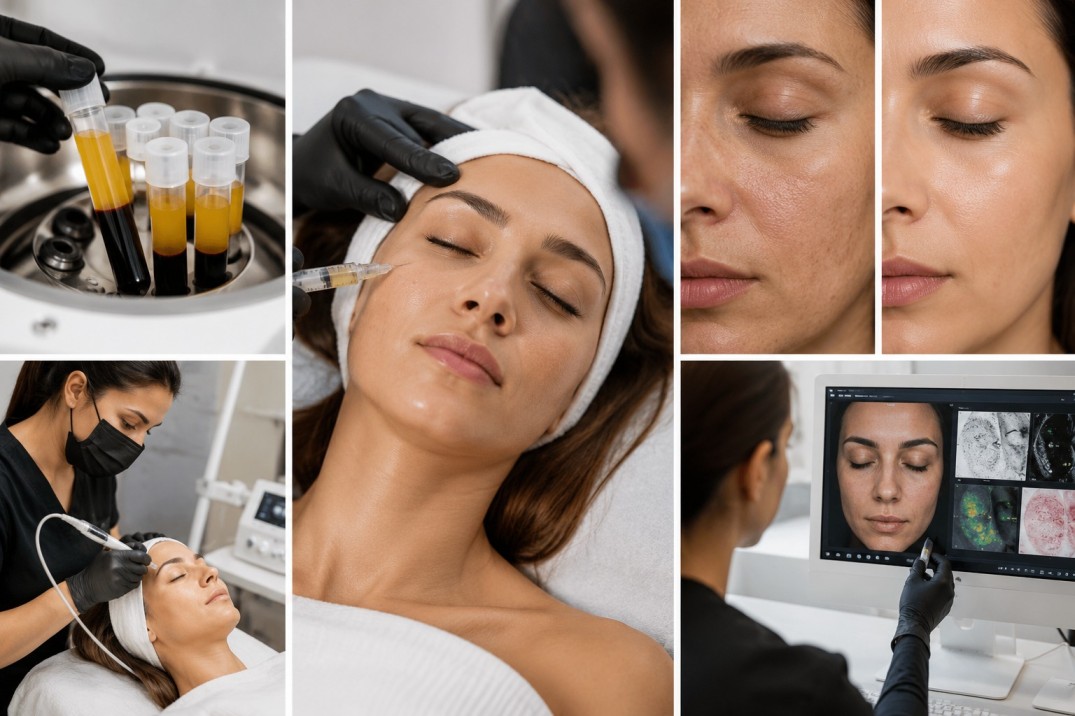
VISIA complexion imaging captures multiple data layers—standard color photos, cross-polarized images for vascular mapping, and UV fluorescence for porphyrins and sun damage. For clinics and consumers in Riyadh, this data matters because environmental factors (intense sun exposure, occasional sand-related irritation, and diverse skin phototypes) alter how pigment and vascular issues present. VISIA converts visual cues into quantifiable scores so treatment choices are based on measurable baselines rather than impressions alone.
How the technology works and related terms
VISIA uses multi-spectral lighting and software algorithms to produce maps for:
- Pigmentation and UV damage (melanin mapping)
- Porphyrin detection—bacteria-related fluorescence in pores
- Vascular mapping—redness and broken capillaries via cross-polarization
- Wrinkle and texture analysis through 3D surface imaging
Related terms and entities: melanin mapping, UV damage assessment, porphyrin detection, vascular analysis, wrinkle analysis, Fitzpatrick skin phototype, and clinical imaging standards.
How VISIA compares to other skin analysis technology Riyadh clinics use
Compared with a standard visual exam or single-spectrum photography, VISIA adds consistent lighting, repeatable positioning, and algorithmic scoring. That makes it better for tracking progress over time. It is not a replacement for clinical judgment or histological testing where biopsy is indicated, but it reduces guesswork for topical and device-based plans.
Authoritative context
Objective skin assessment aligns with dermatology best practices for monitoring treatment outcomes; for general skin-care guidance and standards, consult professional resources such as the American Academy of Dermatology.
VISIA-CARE framework: a repeatable model for clinical use
To convert imaging into action, use the VISIA-CARE framework (Capture • Analyze • Recommend • Execute • Review):
- Capture: Standardize patient positioning, lighting, and pre-imaging cleansing.
- Analyze: Review pigmentation maps, UV scores, porphyrin count, and vascular images.
- Recommend: Translate scores into prioritized interventions (sunscreen, topical retinoids, laser, peel, etc.).
- Execute: Start with low-risk interventions and clearly document protocols.
- Review: Re-image at defined intervals to measure objective change and adapt the plan.
Practical checklist (VISIA-CARE quick checklist)
- Pre-imaging: Remove makeup, record medications, note recent procedures.
- Positioning: Use chin rest, neutral expression, consistent distance.
- Baseline capture: Take full-face multi-spectral imaging and store with date/time.
- Treatment mapping: Link each VISIA score to one primary treatment and one maintenance step.
- Follow-up schedule: Reassess at 8–12 weeks for topical/device progress, 3–6 months for longer-term remodeling.
Real-world example: a short scenario from a Riyadh clinic
A 38-year-old patient living in Riyadh presents with uneven pigmentation and early periorbital lines. A VISIA assessment shows high UV-related damage in the cheeks and increased porphyrin signal in the T-zone. Using the VISIA-CARE framework, the clinic documents baseline, recommends daily high-SPF sunscreen, a topical pigment regulator, and targeted non-ablative laser for deep pigmentation. Follow-up VISIA at 3 months documents measurable reduction in UV-score and porphyrin count, which supports continued maintenance and reduces unnecessary escalation to aggressive resurfacing.
Practical tips for patients and clinicians
- Standardize imaging conditions: Always use the same room, lighting, and camera settings to make before/after comparisons valid.
- Combine VISIA data with clinical history: Imaging is complementary—consider medications, hormones, and sun exposure history when planning treatment.
- Set measurable goals: Translate VISIA scores into specific targets (e.g., reduce UV damage score by X% or porphyrin count by Y) to evaluate success objectively.
- Educate patients visually: Use side-by-side VISIA images to show unseen damage and improve adherence to sunscreen and maintenance regimens.
Common mistakes and trade-offs
Common mistakes include over-reliance on a single VISIA score without clinical correlation, inconsistent imaging technique, and confusing correlation with causation (e.g., assuming UV score alone explains all pigment issues). Trade-offs: VISIA adds cost and time to visits; it improves objectivity but does not replace biopsy or biochemical testing when those are indicated. Also, algorithmic scoring may be calibrated to particular populations—clinics should validate baseline comparisons for diverse skin phototypes common in Riyadh.
Core cluster questions (targets for related content)
- How does VISIA imaging detect UV damage compared with dermatoscopy?
- What VISIA scores indicate the need for laser vs topical therapy?
- How often should VISIA imaging be repeated to track treatment progress?
- Which skin conditions are best monitored with multi-spectral imaging?
- What are the limitations of complexion imaging for darker skin phototypes?
Implementation considerations for Riyadh clinics
Considerations include staff training, patient education materials in Arabic and English, data storage and privacy compliance, and adapting interpretation to local skin phototypes. VISIA is most valuable when integrated into a clear protocol for follow-up and when combined with patient education on sun protection—especially important in Riyadh's climate.
Measuring success and ROI
Measure success with objective VISIA score changes, patient-reported outcome measures (e.g., satisfaction with pigmentation improvement), and clinical throughput (how many patients complete recommended regimens). Return on investment depends on utilization rates, the clinic’s service mix, and how imaging is used to reduce unnecessary or ineffective treatments.
Next steps for patients
Patients considering VISIA skin analysis should ask clinics about imaging standardization, how results will be used to make a treatment plan, expected timelines for re-imaging, and whether imaging will be stored and compared over time.
Conclusion
VISIA skin analysis in Riyadh offers an evidence-based, repeatable way to detect hidden damage and measure treatment outcomes. When paired with a clear framework like VISIA-CARE and consistent protocols, imaging becomes a practical tool that improves decision-making, patient education, and measurable results—while keeping clinical judgment central.
FAQ: Is VISIA skin analysis in Riyadh suitable for all skin types?
VISIA can be used across skin phototypes, but interpretation should account for differences in melanin response and baseline scores. Clinics should validate comparative baselines for the populations they serve and use VISIA as one input among clinical assessment and patient history.
FAQ: How often should VISIA imaging be repeated?
Re-imaging intervals depend on treatment type: 8–12 weeks for topical therapies and certain devices, and 3–6 months for procedures targeting remodeling. Establishing consistent intervals improves the value of objective comparisons.
FAQ: Can VISIA predict skin cancer or replace dermatological exams?
No. VISIA assesses surface and sub-surface pigmentation, porphyrins, and vascular features but is not a diagnostic tool for malignancy. Regular clinical skin checks and referral to a dermatologist remain essential for suspicious lesions.
FAQ: Will VISIA results change the recommended skincare routine?
Yes—VISIA often clarifies hidden issues and can prioritize sunscreen, topical actives, or in-office procedures. Recommendations should balance efficacy, patient tolerance, and local environmental factors.
FAQ: How is patient data handled and stored?
Data handling varies by clinic. Confirm that imaging files are stored securely, with consent for use in records and follow-up, and that privacy practices comply with local laws and clinic policy.