WiFi Camera vs Traditional CCTV: Which Is Better for Home Security?
-

- September 09th, 2026
- 1,962 views
WiFi Camera vs Traditional CCTV
Choosing a security camera for your home or small business can be confusing because there are many options available. Among them, WiFi camera have become increasingly popular because they are easy to install, convenient to monitor, and can often be accessed through a smartphone. Traditional CCTV systems are still useful, especially for larger properties, but a WiFi camera can be a practical choice for people who want simple and flexible security monitoring.
Why Choose a WiFi Camera?
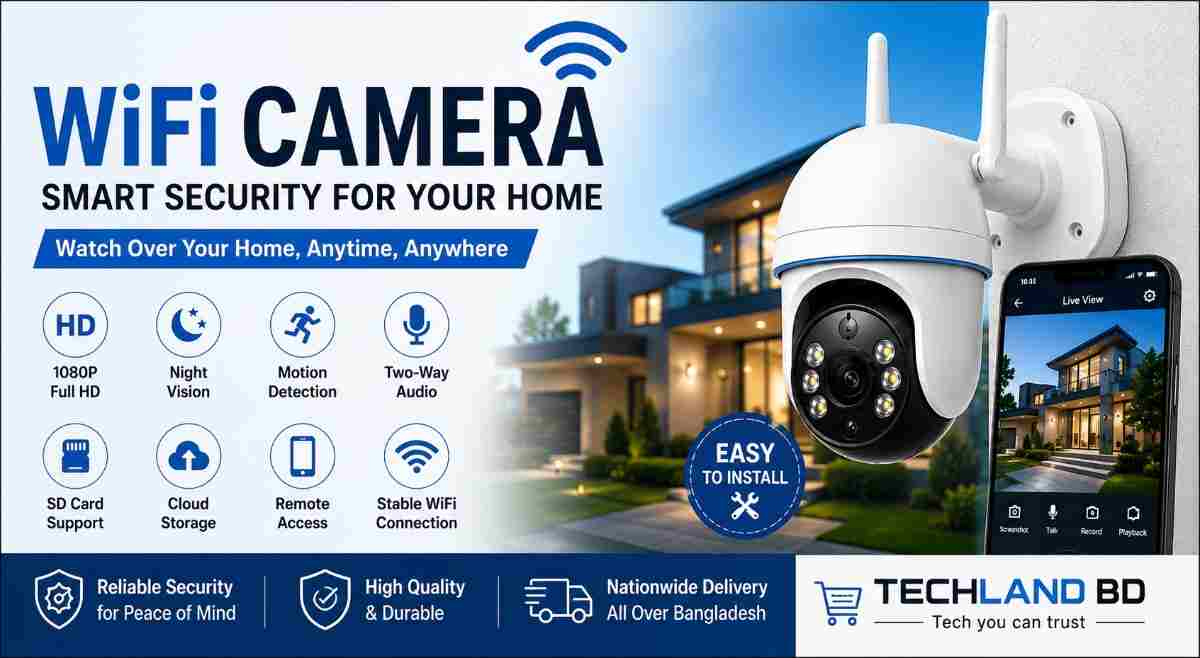
A WiFi camera connects to a wireless network and can send video to a smartphone or other connected device. Depending on the model, users can watch live footage, receive motion alerts, communicate through two-way audio, and review recorded videos. This makes WiFi cameras suitable for homes, apartments, small offices, shops, and other locations where a complicated wired installation may not be necessary. Another advantage is flexibility. If you need to change the camera's position later, a wireless setup can be easier to adjust than a system that depends on extensive network cabling.
WiFi Camera or Traditional CCTV?
The biggest difference is how the cameras connect and how the system is installed. A traditional CCTV setup generally uses cables to connect cameras to a DVR or NVR. This can provide a stable connection and is often suitable for larger surveillance systems. A WiFi camera, on the other hand, uses a wireless network for communication. This can reduce cable requirements and make installation easier. For a small home with good WiFi coverage, a wireless camera can be more convenient. For a large warehouse, factory, or commercial property with many cameras, a wired system may provide better overall stability.
Check Your WiFi Connection
Before purchasing a WiFi security camera, check the wireless signal in the location where you plan to install it. A weak signal can cause delayed video, connection drops, or problems with remote monitoring. Thick concrete walls, long distances, and interference from other wireless devices can affect performance. If the signal is weak, improving your home or office network may be necessary before installing the camera.
Consider Image Quality
Image resolution is another important factor. WiFi cameras are available in different resolutions, from basic Full HD models to higher-resolution options. A higher resolution can provide more detail, which can be helpful when monitoring entrances, driveways, shops, or larger areas. However, resolution is not the only factor affecting image quality. The camera's lens, image sensor, lighting, and installation position also play an important role.
Night Vision Matters
Security monitoring should continue after dark, so night vision is an important feature to consider. Most modern WiFi cameras offer infrared night vision. Some advanced models also provide color night vision or improved low-light performance. When selecting a camera, consider the lighting around the installation area. A camera installed near a bright entrance may require different night-vision capabilities from one installed in a dark backyard.
Smart Features Make Monitoring Easier
Many modern WiFi cameras include smart features that can make security monitoring more convenient. Motion detection can notify you when movement is detected. Some cameras can identify people or vehicles, which can help reduce unnecessary alerts. Two-way audio is another useful feature. It allows users to communicate through the camera using a smartphone. This can be helpful for speaking with family members, visitors, employees, or delivery personnel. Pan-and-tilt functionality can also be useful when a single camera needs to monitor a wider area.
Storage Options
Before buying a WiFi camera, consider how you want to store your recordings. Many models support microSD cards, allowing footage to be saved locally. This can be a simple solution for basic home monitoring. Some cameras also support cloud storage. While cloud storage can provide convenient remote access, it may require a subscription depending on the service. If you are planning a larger surveillance system, an NVR may be a better option for centralized recording.
Compare WiFi Camera Price in Bangladesh
The WiFi camera price in Bangladesh varies depending on resolution, brand, storage, night vision, smart detection, lens type, and other features. Instead of selecting a camera based only on the lowest price, compare the features that are actually important for your property. For example, an indoor camera for a small room may not need the same specifications as an outdoor camera monitoring a driveway. You can compare different WiFi camera models at Techland BD based on their features and intended use.
When Is a WiFi Camera a Better Choice?
A WiFi camera can be a good option when you want easy installation, smartphone monitoring, flexible placement, and smart features. It is particularly suitable for homes, apartments, small offices, and shops where running multiple network cables may be inconvenient. For larger properties, a wired IP camera or PoE-based surveillance system may be more appropriate because it can provide a stable connection across multiple cameras.